Manchester City embark on a new chapter this season without Pep Guardiola overseeing their campaign—a watershed moment after the Spanish tactician spent ten years reshaping the club into English football's most formidable institution. The transition represents far more than a simple managerial change; it closes the most triumphant era in City's modern history, one that accumulated six Premier League titles, a Champions League trophy, and established the club as the benchmark against which all others are measured. Guardiola's fingerprints remain embedded across every corner of the Etihad, from the playing philosophy to the recruitment strategy to the winning mentality that has saturated the dressing room. His departure creates both opportunity and vulnerability for those left behind.
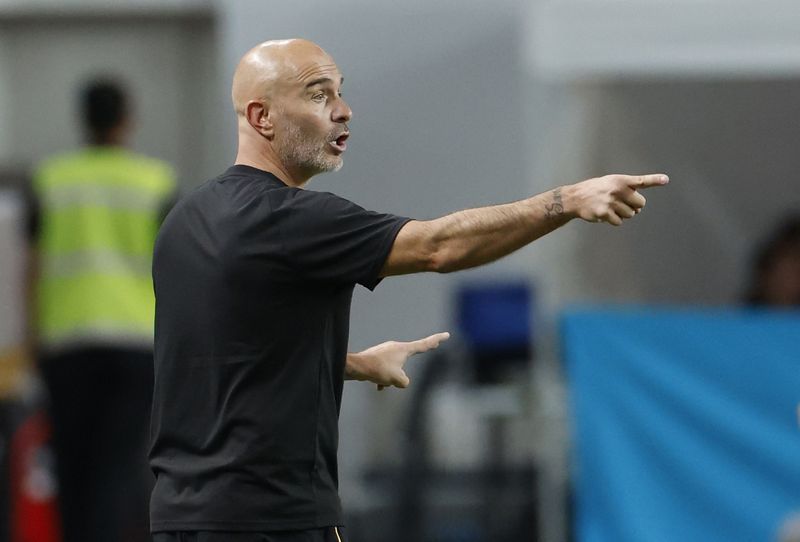
Enzo Maresca, the 46-year-old Italian who assumes control, enters the role with the advantage of intimate familiarity with City's ecosystem. He served as part of Guardiola's coaching apparatus during the club's historic treble-winning campaign, meaning he understands the intricate systems and cultural architecture that undergird the team's success. Beyond his time at City, Maresca has built an impressive resumé that strengthens his candidacy for this demanding post. He orchestrated Leicester City's return to the Premier League and tasted trophy success during his tenure at Chelsea, credentials that persuaded City's leadership he possessed the requisite acumen to navigate this delicate succession.
The recruitment of Maresca signals that City's hierarchy views the managerial transition as an evolution rather than a revolution. The club has not sought to upend Guardiola's tactical framework or philosophical approach to football. Instead, they have deliberately selected a coach whose pedigree lies within the same tradition of positional play, meticulous ball retention, and dynamic tactical adaptability that characterised City's dominance throughout the previous decade. This strategy suggests a measured approach to change—maintaining the DNA of what made the team successful while creating space for Maresca to imprint his own personality on the project.
Yet establishing a distinct identity whilst preserving continuity will prove the central tension of Maresca's early months at City. The squad he inherits represents one of Europe's most lethal football units, anchored by Erling Haaland, the Norwegian striker whose predatory finishing has made him the league's leading scorer in three of the past four campaigns. The midfield remains anchored by Rodri, a player whose blend of positional intelligence, passing range, and defensive acuity transformed Spain into World Cup champions this year, earning him the tournament's Golden Ball award. City strengthened their engine room by acquiring Elliot Anderson from Nottingham Forest for a reported £116 million, introducing additional athleticism, ball-winning qualities, and tactical depth to the centre of midfield. Emerging prospects such as Rayan Cherki and Nico O'Reilly add youthful energy to the ranks.
However, the departures of long-serving figures including Bernardo Silva and John Stones represent a genuine loss to the club's playing contingent and, perhaps more significantly, to the experienced voice within the dressing room. These weren't merely role players; they embodied the transition from Guardiola's arrival through multiple Premier League campaigns and served as cultural custodians of the club's values. Their exit creates a vacuum that younger players and newcomers must fill—a challenge that extends beyond tactical execution into the realm of leadership, mentorship, and institutional memory.
The standards Guardiola established have created an unforgiving context for his successor. Finishing second to Arsenal in the Premier League last season, even whilst securing the domestic cup double, seemed to define itself as disappointment at City. Under any other regime, such silverware would generate celebration and sustained confidence; at the Etihad, it represented a marginal campaign relative to expectations. This reality encapsulates the mountainous task confronting Maresca. He will not be judged primarily on tactical innovation, stylistic flourish, or theoretical sophistication. City's ownership, supporters, and ambitious playing squad expect immediate championship contention. Anything less than a genuine title challenge will invite scrutiny and questions about whether Maresca possesses the credentials required for the position.
The psychological dimension of the transition cannot be overlooked. Guardiola's influence permeated far beyond matters of formation, pressing triggers, or set-piece routines. He shaped the club's culture, established standards of professionalism, embedded specific approaches to injury recovery and player development, and created the psychological architecture that enabled sustained excellence. Transitioning from the most successful manager in the club's history to a relative newcomer—regardless of Maresca's previous association with City—introduces genuine uncertainty. The players must recalibrate their understanding of what constitutes acceptable performance; staff must adapt to different preferences and priorities; the entire organisation must absorb a new set of expectations and operating principles.
Maresca's previous experience at City as Guardiola's lieutenant should theoretically ease this transition. He witnessed the championship machinery up close, understood the philosophy, and absorbed the principles that animated the team's success. Yet theory and practice diverge substantially when stepping into the principal's chair. Being a trusted lieutenant executing a manager's vision differs materially from bearing ultimate responsibility for outcomes, decision-making, and the overall strategic direction. The supporting cast remains the same, but the weight of leadership falls entirely on different shoulders. That psychological shift, whilst subtle, fundamentally alters how players and staff interpret signals and respond to instruction.
Despite the genuine challenges and legitimate questions, City remain positioned among the competition's favourites for every trophy they contest. The squad's intrinsic quality remains elite; the infrastructure supporting player development and performance optimisation remains world-class; the financial resources remain unmatched. A potential adjustment period looms, particularly given the late return of players recovering from World Cup commitments, but City's structural advantages remain formidable. If Maresca can navigate the delicate balance between honoring Guardiola's proven systems and introducing sufficient freshness to reanimate a team that has operated under singular managerial governance for a decade, the pathway back to Premier League supremacy remains accessible. City begin their campaign against Bournemouth on August 23, providing their new era its opening statement.

