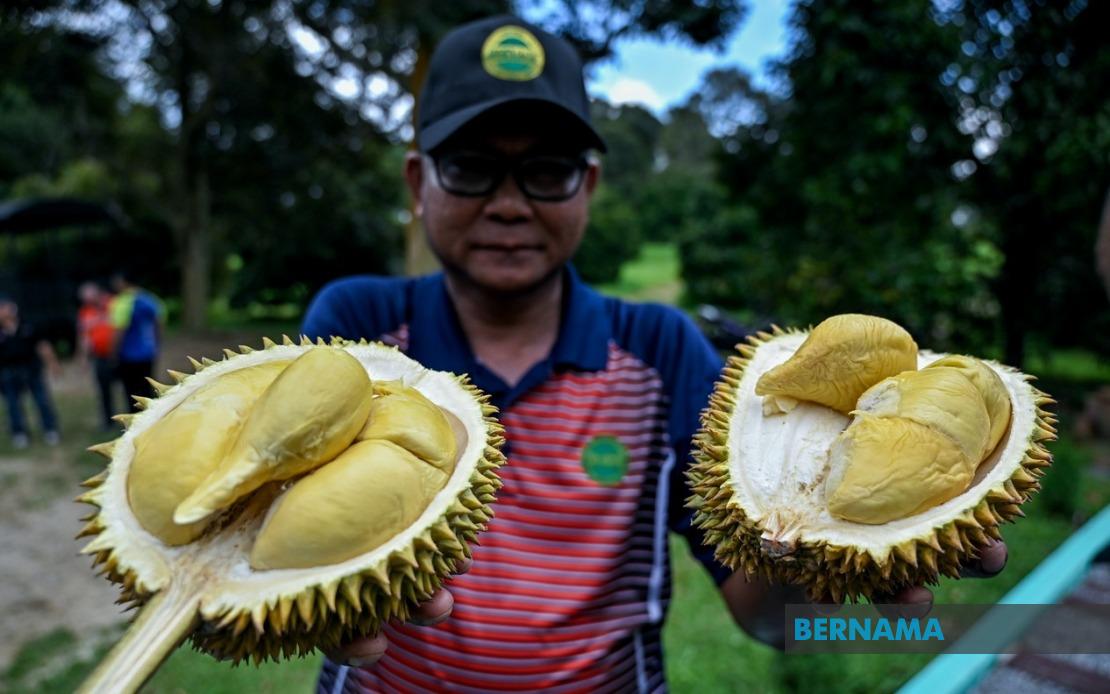
Malaysia's agricultural research sector is making significant strides in premium durian development, with the Malaysian Agricultural Research and Development Institute reporting substantial expansion of its MS88 hybrid durian planting programme. To date, MARDI has established around 25,000 MS88 trees across the nation, occupying approximately 242 hectares of cultivated land. The distribution of these plantings concentrates heavily in Selangor and the peninsular east coast states, reflecting strategic prioritisation of regions with established agricultural infrastructure and favourable climatic conditions for commercial durian cultivation.
Director-General Datuk Dr Mohamad Zabawi Abdul Ghani outlined the institute's achievements during a media engagement at the MARDI Agrotechnology Park in Kuala Kangsar, underscoring the organisation's commitment to advancing the local durian industry through scientific innovation. The MS88 represents one component of MARDI's broader portfolio of proprietary durian genetics, developed systematically since the early 2000s as the institute pursued its mandate to enhance Malaysian agricultural competitiveness. Alongside the MS88, two companion varieties—MDUR78 and MDUR79—continue to maintain strong market recognition among dedicated durian consumers, demonstrating sustained demand for MARDI-developed cultivars within both domestic and regional markets.
The strategic significance of MARDI's durian programme extends beyond simple tree-planting metrics. Durian remains one of Malaysia's most economically valuable and culturally emblematic fruits, commanding premium prices in international markets and serving as a cornerstone of agritourism initiatives, particularly in states like Pahang, Terengganu, and Johor. The expansion of MS88 plantations across 242 hectares represents not merely an agricultural development but a calculated investment in sustaining Malaysia's competitive advantage in the global durian trade, a sector worth hundreds of millions of ringgit annually and increasingly critical to rural household incomes throughout the peninsula.
Beyond current achievements, MARDI has initiated development of three additional hybrid durian varieties intended for introduction as premium offerings to the marketplace. These nascent varieties are currently undergoing rigorous evaluation protocols designed to assess multiple critical parameters. The assessment framework encompasses fruit quality metrics—such as flavour profile, flesh texture, and consistency—alongside consumer acceptance testing through taste panels and market feedback mechanisms. Equally important, the institute is evaluating cultivation suitability, ensuring that prospective new varieties align with the practical constraints and capabilities of Malaysia's farming community, preventing the introduction of commercially non-viable cultivars regardless of their intrinsic quality.
The deliberate confidentiality surrounding these emerging varieties reflects standard agricultural development practice and strategic commercial thinking. MARDI has chosen to withhold nomenclature and specific details pending formal launch during the durian season, a timing strategy designed to maximise consumer exposure and generate market interest through controlled revelation. This approach allows the institute to orchestrate the introduction of new varieties within the context of Malaysia's durian festival season, when consumer enthusiasm reaches its apex and media attention intensifies around innovation in the sector. The public unveiling will provide opportunities for consumers to directly sample the new offerings, facilitating preference assessment and adoption decisions more authentically than through promotional materials alone.
For Malaysia's durian sector, the implications of MARDI's expanded breeding programme carry substantial weight. The domestic durian industry currently faces competitive pressure from regional producers in Thailand, Indonesia, and increasingly from emerging suppliers in other Southeast Asian nations. Developing and establishing distinctive hybrid varieties with superior characteristics provides Malaysian producers with differentiation advantages and justification for premium pricing. The 25,000 MS88 trees already in production will generate commercial harvests over the coming seasons, creating supply pipelines for both fresh fruit markets and processed durian products, supporting downstream industries including durian paste manufacturers, snack producers, and specialty food exporters.
The concentration of MS88 plantings in Selangor and east coast states reflects both geographical suitability and existing agricultural ecosystems. Selangor's proximity to major urban centres including Kuala Lumpur creates logistical advantages for supply chains and consumer access, while east coast states, particularly Pahang and Terengganu, possess established durian cultivation traditions, experienced farming populations, and established market linkages. This geographic distribution strategy optimises the likelihood of successful tree establishment and yields, while capitalising on existing regional expertise and infrastructure investments.
MARDI's durian programme also intersects with broader economic diversification objectives within Malaysia's agricultural sector. As commodity prices for traditional crops like palm oil face volatile market conditions and sustainability pressures, development of premium specialty fruits provides rural communities with alternative revenue streams and higher-value production opportunities. Durian cultivation, particularly of branded premium varieties, offers substantially greater per-hectare returns compared to conventional agricultural commodities, making it economically attractive to both established agribusinesses and smallholder farmers seeking income enhancement.
The evaluation timeline for the three emerging varieties remains unspecified, though their advancement through selection stages suggests potential commercial availability within the coming one to two durian seasons. Consumer acceptance testing represents the most critical evaluation component, as durian markets demonstrate pronounced consumer preference variation across demographic segments, regions, and cultural backgrounds. A variety may possess excellent agronomic characteristics and superior flavour profile but still fail commercially if pricing or flavour characteristics misalign with target market preferences. MARDI's methodical approach to evaluation, whilst extending development timelines, substantially reduces the risk of expensive market failure following introduction.
For Malaysian durian exporters and agribusiness operators, MARDI's expanded portfolio offers opportunities for product diversification and market segmentation. Rather than competing solely on existing variety availability, enterprises can access proprietary genetics aligned with specific market preferences—whether targeting premium segments demanding distinctive flavour characteristics, or pursuing volume markets where consistent, reliable production characteristics prove more valuable. The MS88's already-substantial plantation base approaching 25,000 trees provides commercial-scale supply for testing and market development, while new varieties under evaluation remain positioned for introduction as premium-tier offerings.
The broader context of Malaysia's durian industry growth includes rising consumption from China and other affluent Asian markets, premium pricing for branded or distinctive varieties, and growing integration of durian into gourmet cuisine and specialty food markets globally. MARDI's continued investment in variety development, coupled with systematic commercialisation of successful cultivars, positions the institute as a central actor in Malaysia's durian sector competitiveness. The institute's work extends beyond academic or research significance into the practical realm of agricultural economics, supporting rural incomes, export revenues, and sectoral sustainability across regions economically dependent upon durian cultivation.

