President Ferdinand Marcos Jr has reiterated his confidence in the Armed Forces of the Philippines despite an escalating controversy surrounding allegations of an assassination plot against him. The statement came as the National Bureau of Investigation revealed that several active uniformed personnel have been identified as persons of interest in connection with the alleged conspiracy, marking a significant and troubling development within the country's military establishment.
The disclosure emerged during the contentious impeachment trial of Vice President Sara Duterte on July 22, when NBI Director Melvin Matibag presented his findings to the Senate. Alongside the military personnel identified in the investigation, Matibag also reported that a member of the Vice President's own security detail is among those being scrutinized by authorities. This dual revelation—implicating both military figures and someone within Duterte's protective circle—has intensified concerns about security vulnerabilities at the highest levels of Philippine governance.
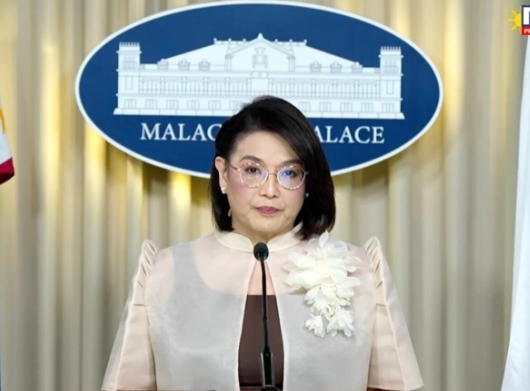
The Palace responded to these alarming disclosures through Press Officer Claire Castro, who sought to reassure the public and international observers that the President's confidence in the armed forces remains unshaken. Castro emphasized that any military personnel who deviate from their constitutional duties and oath of office should be systematically identified and held accountable. She framed the President's position as one of strategic trust combined with a commitment to transparency, suggesting that institutional loyalty need not be compromised by investigating individual misconduct within the ranks.
Castro's statements reflected a delicate balancing act required of the administration. On one hand, the Palace needed to acknowledge the seriousness of the investigation and the apparent breach of trust represented by active military officers being considered suspects. On the other hand, Marcos could not afford to appear to have lost control of the security apparatus or to be making broad accusations against the institution responsible for national defense. The Press Officer's language carefully distinguished between the institution itself and potentially disloyal individuals within it, preserving institutional credibility while signaling that wrongdoers would face consequences.
The broader context involves Vice President Duterte's own dramatic and cryptic statements made during her Senate testimony. Duterte claimed she had previously instructed someone—whose identity she did not explicitly reveal—that if she were killed, the same assailants should target President Marcos, Liza Araneta, and Martin Romualdez. Her statements, made in Filipino and presented as serious rather than rhetorical, added an unexpected and destabilizing dimension to the already tense political environment. Whether intended as a threat, a warning, or simply a provocative expression of her frustration remained ambiguous to observers.
For Malaysian observers and the broader Southeast Asian region, these developments underscore the fragility of institutional trust in Philippine governance and the vulnerability of senior officials to potential security threats. The Philippines has experienced multiple coup attempts and assassination plots throughout its democratic history, and the revelation that current military officers might be involved in such schemes resurrects historical anxieties about civilian control of the armed forces. The situation also reflects the ongoing political polarization that has intensified since Duterte's impeachment proceedings began, with competing power centers within government apparently unable to resolve their differences through normal constitutional channels.
The NBI subsequently issued a subpoena to Vice President Duterte requiring her appearance for further questioning, but she declined to comply, citing the proceedings she was already engaged in. This non-compliance raises questions about the enforceability of investigative authority against high-ranking government officials and whether legal mechanisms exist to compel the Vice President's cooperation. The standoff between the investigative agency and the Vice President demonstrates the precarious position of accountability mechanisms when they confront the nation's highest officeholders.
Castro's assertion that no loyalty checks are currently being conducted represents both reassurance and a potential acknowledgment of limits to what the administration believes it can do without destabilizing the institution further. She indicated that vetting and investigation remain the responsibility of the security sector and the armed forces' own leadership rather than being centralized under presidential authority. This delegation of responsibility could be interpreted as either prudent deference to institutional independence or as an abdication of direct presidential oversight during a security crisis.
The situation reveals deeper questions about military professionalism and institutional culture in the Philippines. If active uniformed personnel are indeed involved in alleged assassination plots, this suggests either a breakdown in internal discipline, the infiltration of dangerous ideologies within the officer corps, or personal grievances that have metastasized into threats against national leadership. The inclusion of a member of the Vice President's security detail among those of interest adds the troubling possibility of security personnel being manipulated or compromised to facilitate harm to other senior officials.
For regional security analysts, these developments carry implications beyond Philippines' borders. The apparent vulnerability of the Philippine government to internal security threats raises questions about the stability of critical alliances and defense arrangements in Southeast Asia. Countries relying on the Philippines as a partner in regional security dialogues and military cooperation must assess whether internal instability might affect Manila's ability to fulfill regional commitments or maintain consistent foreign policy positions.
Moving forward, the resolution of the assassination plot investigation and the outcome of Vice President Duterte's impeachment trial will significantly influence the trajectory of Philippine politics and governance. The President's stated confidence in the armed forces will be tested by whether investigations proceed fairly and transparently, whether those found culpable face appropriate consequences, and whether the military institution can restore public confidence in its loyalty to the constitution rather than to individual political actors. The interplay between maintaining institutional trust and ensuring accountability remains the central challenge facing the administration and the nation.

