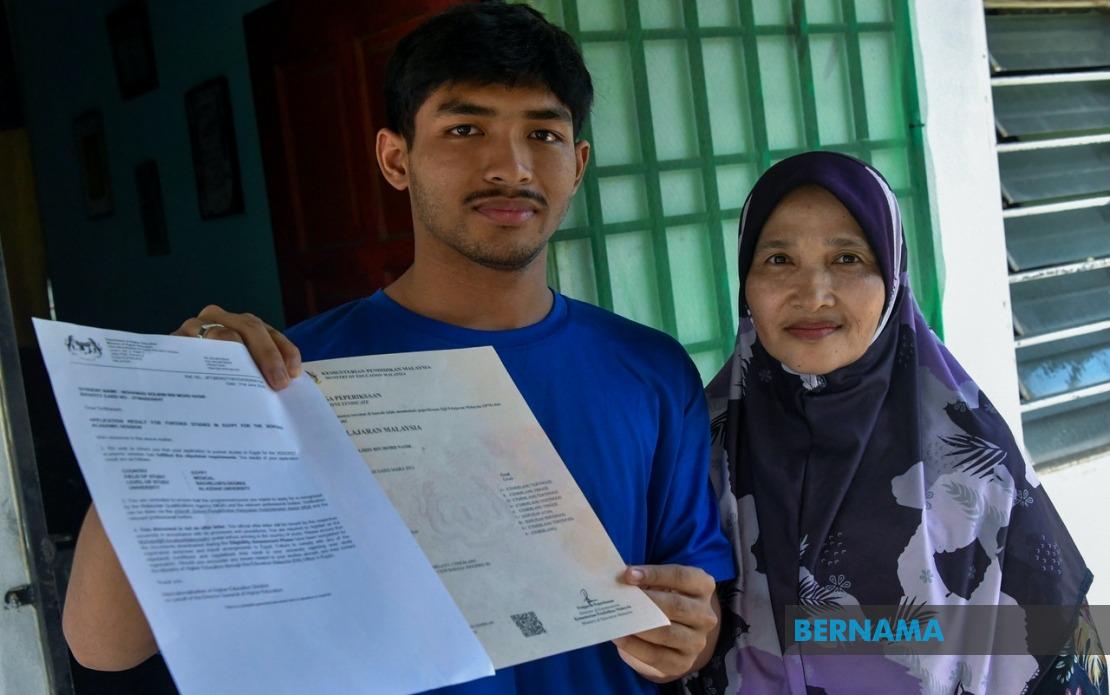
A promising medical student from Kelantan nearly surrendered his place at Egypt's prestigious Al-Azhar University before the Majlis Amanah Rakyat (MARA) stepped in with a rescue package. Mohamad Solihin Mohd Nasir, 19, received his acceptance letter for the five-year medicine programme on June 15 but faced the harsh reality that his family simply could not afford the estimated RM100,000 tuition and living expenses. The intervention has reignited hope for a young man whose childhood was marked by tragedy—his father's death from heart disease when Mohamad Solihin was just seven years old—yet whose academic resilience has remained unshaken.
The financial crisis reveals a persistent challenge within Malaysia's education system: exceptional students from disadvantaged backgrounds often cannot access transformative opportunities simply because their families lack resources. Mohamad Solihin's situation encapsulates this struggle with particular poignancy. His father, Mohd Nasir Abdul Rahman, passed away from a heart attack in 2014 when the boy was in Standard One, leaving his mother Faridah Mohamad, now 60 and suffering from thyroid disease, as sole guardian. The family survives on irregular support from Mohamad Solihin's four older siblings, none of whom could shoulder the enormous burden of overseas medical education. This family structure is not uncommon across Malaysia, especially in less urbanised states like Kelantan, where household incomes remain below the national average and unexpected health crises can devastate finances instantly.
Mohamad Solihin's academic credentials demonstrate that merit alone does not guarantee opportunity. He compiled a respectable cumulative grade point average of 3.96 at Kelantan Matriculation College, strong enough to gain international recognition and an acceptance from one of the Arab world's most respected medical institutions. Yet credentials alone meant nothing when confronted with the brutal mathematics of international education costs. The student's deliberation over whether to accept or decline represents an agonising choice many high-achieving teenagers from low-income families make annually, often in silence, without media attention or intervention. The fact that Mohamad Solihin's dilemma received attention at all—through his former school, MARA Junior Science College Jeli, mounting a fundraising campaign—underscores how much depends on institutional advocacy and personal networking rather than systematic support structures.
Mara chairman Datuk Dr Asyraf Wajdi Dusuki's intervention demonstrates that the agency recognises its mandate extends beyond administrative routine. During a video call to Mohamad Solihin's home in Kampung Kubang Keranji, Asyraf Wajdi presented two pathways forward. The first involves comprehensive support for Al-Azhar enrolment, including sponsorship of an Arabic language preparation course to meet university entry requirements—a practical acknowledgment that Malaysian students, however academically capable, require linguistic scaffolding before entering an Egyptian institution. The second option offers medical studies at Universiti Sains Malaysia Health Campus under MARA sponsorship, keeping the student within Malaysia's higher education ecosystem. This flexibility recognises that international education, while prestigious, carries distinct risks and costs beyond tuition.
The chairman's emphasis on targeting high-achieving students from disadvantaged backgrounds, particularly orphans, suggests MARA understands the compounding disadvantages such young people face. Losing a parent during childhood creates both emotional trauma and material hardship. Mohamad Solihin's mother, now managing a chronic health condition, cannot provide the emotional support structure many teenagers require while navigating higher education. His status as the youngest of five siblings, with older brothers and sisters already managing their own families, means he cannot rely on sibling networks for housing, meals, or emergency funds during his studies. These intangible costs—psychological strain, social isolation, family separation—often matter as much as tuition fees yet remain invisible in financial planning.
Mohamad Solihin's aspiration to become a cardiothoracic surgeon carries particular resonance because it originated from his father's death. Rather than allowing childhood trauma to limit his horizons, he transformed personal tragedy into professional purpose. This psychological resilience suggests he possesses exactly the determination medical education demands. Cardiothoracic surgery represents one of medicine's most challenging specialisations, requiring not merely intelligence but sustained commitment through gruelling years of training. That this commitment crystallised after his father's death from heart disease indicates Mohamad Solihin has already undergone the existential questioning that defines career choice, emerging with purpose rather than accident determining his path.
The broader institutional response to Mohamad Solihin's crisis illustrates how multiple agencies can mobilise around individual cases when publicity generates awareness. Teachers at MARA Junior Science College Jeli initiated fundraising efforts independently, demonstrating institutional loyalty and pastoral responsibility. Simultaneously, Mohamad Solihin's family submitted applications to the Kelantan Islamic Religious and Malay Customs Council, Kelantan Islamic Foundation, and Kelantan Darulnaim Foundation, creating a network of potential supporters. This multi-agency approach works, but it should not be necessary. Ideally, transparent, accessible mechanisms would exist whereby high-achieving students automatically qualified for enhanced support, rather than relying on individual advocacy and media attention.
The departure timeline—scheduled for late August if funding is secured—creates urgency that focuses institutional decision-making. Unlike many policy questions that allow protracted deliberation, Mohamad Solihin's situation demands rapid action. Al-Azhar's academic calendar will not wait for Malaysian bureaucracy to proceed at customary pace. This temporal constraint, while stressful, can paradoxically accelerate beneficial outcomes by preventing indefinite postponement. The specificity of the departure window also enables tracking and accountability; MARA's commitment becomes publicly verifiable through whether Mohamad Solihin actually departs in August.
For Malaysian readers, Mohamad Solihin's narrative highlights the distinction between meritocratic ideals and meritocratic reality. Malaysia's education system champions the principle that talent should transcend socioeconomic background, yet structural barriers—tuition fees, living costs, family obligations—prevent this principle from realising consistently. Across Southeast Asia, talented young people in similar circumstances abandon professional ambitions daily because financial assistance arrives too late or remains inaccessible. Mohamad Solihin's story, because it has a positive trajectory, risks masking how many others lack equivalent advocacy networks or institutional attention.
The Al-Azhar option versus Universiti Sains Malaysia represents a choice between prestige and accessibility. Al-Azhar carries centuries of Islamic intellectual tradition and regional recognition, potentially enhancing Mohamad Solihin's career prospects across the Middle East and North Africa. Conversely, USMKK offers familiar linguistic and cultural terrain, established support networks, and integration within Malaysia's medical profession. The choice between international prestige and domestic security reflects deeper questions about whether Malaysian institutions provide equivalent quality and opportunity. That MARA offered both options without apparent preference suggests recognition that either path could serve Mohamad Solihin well, depending on his priorities and temperament.
Moving forward, Mohamad Solihin's case should catalyse institutional reflection about how many other students share his circumstances without receiving intervention. How many bright teenagers in Kelantan's rural areas have abandoned dreams because no chairman's video call materialised? Formalising support mechanisms for orphaned or semi-orphaned high-achievers from low-income backgrounds could prevent future cases of talent wasted through circumstance rather than incapability. The emotional investment Asyraf Wajdi demonstrated—including spiritual advice to remain steadfast in faith—suggests MARA conceives its mission expansively, encompassing holistic student support rather than mere fund administration. Scaling this personalised approach across Malaysia's high-achieving disadvantaged population would require institutional innovation, but Mohamad Solihin's case demonstrates the extraordinary return on such investment when a young person's potential can finally flourish unobstructed by financial despair.

