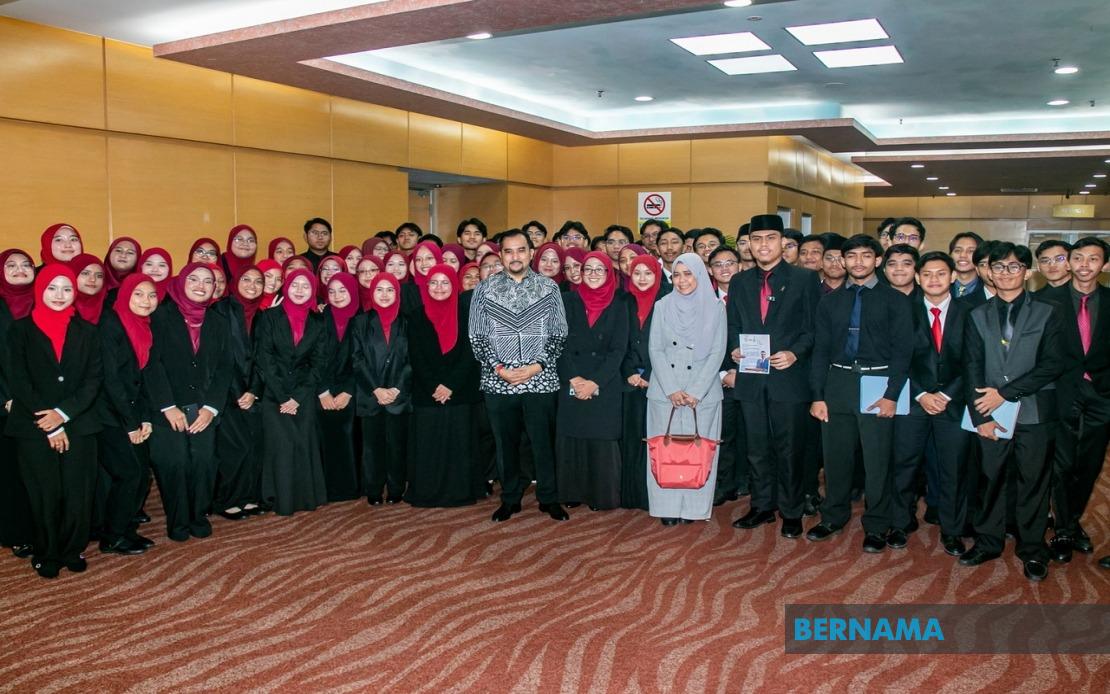
Majlis Amanah Rakyat (MARA) has reinitiated its long-dormant medical training partnership with Al-Azhar University in Cairo, marking a significant return to overseas education strategies after abandoning the scheme in 2019. The agency is dispatching 78 medical students to the Egyptian institution as the inaugural cohort under the revived arrangement, a development that underscores Malaysia's continued reliance on international universities to supplement domestic medical education capacity. The programme resumes with explicit approval from Malaysia's Cabinet, indicating that government leadership has determined the initiative aligns with broader national priorities around workforce development and cost efficiency in professional training.
Datuk Dr Asyraf Wajdi Dusuki, who chairs MARA, disclosed that the financial framework supporting this initiative has been substantially restructured to enhance affordability. Each student pursuing the five-year medical degree will incur a total outlay of RM350,000, encompassing tuition fees and residential expenses throughout their programme duration. This figure represents a considerable reduction from what Malaysian families would typically pay for equivalent local medical education, where costs frequently climb to between RM700,000 and RM800,000 per individual. The improved economics stem partly from Al-Azhar University's decision to extend a 50 per cent discount to MARA-sponsored scholars, a concession that effectively halves the institution's standard fees and demonstrates the university's appetite to strengthen ties with the Malaysian sponsorship body.
The cost advantage of pursuing medicine in Egypt rather than at home carries substantial implications for MARA's target demographic—predominantly middle and lower-middle income families whose children demonstrate academic merit but lack the financial means to access private medical training domestically. By channelling qualified applicants toward Al-Azhar, MARA expands pathways into the medical profession for cohorts who might otherwise face insurmountable barriers. The agency's decision to restart this particular partnership after seven years suggests that evolving circumstances, whether pertaining to curriculum recognition, employment outcomes, or bilateral relations with Egypt, have shifted sufficiently to justify renewed investment in the arrangement. Asyraf Wajdi's acknowledgment of Prime Minister Datuk Seri Anwar Ibrahim's endorsement signals that this initiative carries backing from the highest political levels, positioning it as part of the government's broader human capital investment strategy.
Beyond the Al-Azhar medical intake, MARA is orchestrating a substantially larger international mobility effort that will disperse 600 students across multiple jurisdictions commencing the following week. These scholars emerge from three flagship MARA residential colleges—Kolej MARA Seremban in Negeri Sembilan, Kolej MARA Banting in Selangor, and Kolej MARA Kuala Nerang in Kedah—institutions that function as preparation hubs for overseas tertiary education. The destinations span diverse geographies and education systems: New Zealand, Canada, Australia, South Korea, the United Kingdom, and Egypt. This geographic diversity reflects MARA's philosophy of matching individual student profiles and academic trajectories to institutional environments where they are most likely to flourish, rather than concentrating placements within a single national education system.
The scope of MARA's international positioning extends into elite university circles, a dimension that reflects the agency's commitment to cultivating a cadre of graduates trained at globally competitive institutions. Amongst the current cohort of MARA-sponsored students, forty individuals have gained admission to universities ranked within the world's top ten, a selection that includes the University of Oxford, University of Cambridge, and comparable establishments. An additional 107 students have been accepted into top-twenty ranked institutions. These placements suggest that MARA's selection mechanisms for overseas sponsorship identify candidates whose academic credentials and potential align with elite institutional standards. Notably, eleven students secured positions at Imperial College London specifically for the current academic year, concentrating them within one of Britain's most prestigious science and engineering universities and demonstrating MARA's capacity to place scholars in highly competitive admissions environments.
The reinvigoration of the Al-Azhar medical programme also responds to practical constraints within Malaysia's own medical education ecosystem. Domestic medical schools operate under significant capacity limitations, with annual intake restricted to several hundred places despite consistent demand from thousands of qualified secondary school graduates. While private medical colleges have proliferated in recent decades, their fees render them inaccessible to the populations MARA targets. International partnerships therefore function as a necessary pressure valve, allowing merit-based systems to identify talented future physicians who would otherwise be excluded from professional training due to economic circumstances rather than academic capability. Al-Azhar, as a centuries-old institution with substantial medical faculty and international recognition, provides a credible conduit for this alternative pathway while simultaneously diversifying the geographic origins of Malaysia's future medical workforce.
The strategic reinvestment in Egyptian medical training also carries diplomatic undertones within Malaysia's broader Middle Eastern engagement. Egypt, as the Arab world's most populous nation and a cultural-intellectual centre, occupies considerable symbolic weight in Malaysian Islamic discourse and statecraft. Strengthening educational exchange through initiatives like the MARA-Al-Azhar partnership reinforces bilateral relationships and demonstrates confidence in Egyptian institutions during a period when geopolitical alignments in the Middle East remain fluid. Malaysian graduates of Al-Azhar bring their training experience home as cultural ambassadors, potentially strengthening informal networks between the two nations and contributing to long-term relationship building beyond conventional diplomatic channels.
The phased departure of these 600 additional students commencing the following week represents logistical complexity at scale, requiring coordination across multiple destination countries with varying visa regimes, academic calendars, and pre-arrival requirements. MARA's orchestration of this movement, alongside processing and support for medical students bound for Egypt, demonstrates institutional capacity to manage transnational student flows systematically. The pre-departure programming documented in the announcement suggests that the agency provides not merely funding but structured preparation encompassing cultural orientation, academic expectations calibration, and pastoral support frameworks designed to enhance student success and institutional integration.
Looking forward, MARA's resumption of Al-Azhar placements may influence broader policy conversations about domestic medical education expansion and the appropriate balance between developing local capacity versus leveraging international partnerships. The differential in costs—with overseas training at Al-Azhar representing less than half the price of domestic private medical education—raises questions about whether Malaysia's private medical education sector is sustainably priced or whether it captures economic rents that could be challenged through expanded public provision. MARA's approach suggests that government-sponsored overseas training remains a viable strategy for achieving workforce development objectives while constraining public expenditure, at least in the medium term until domestic capacity constraints are relieved through planned expansion of public medical schools.

