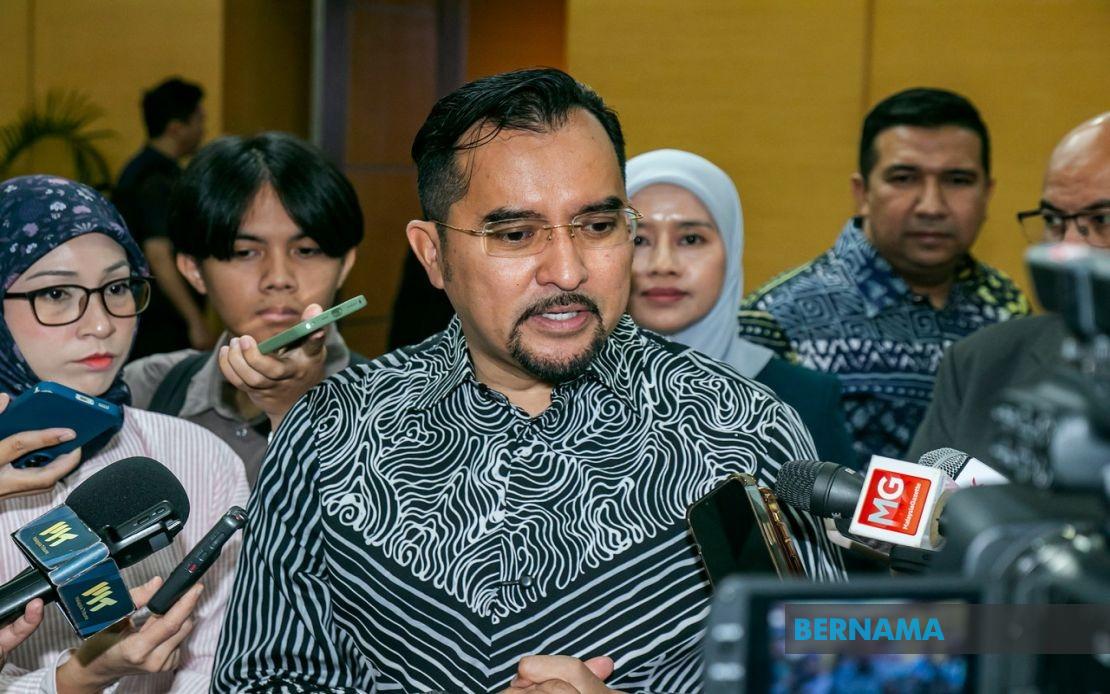
The Majlis Amanah Rakyat (MARA) is preparing to overhaul its legislative framework with the anticipated tabling of the MARA Bill 2026 in Parliament this November, marking a significant institutional shift toward contemporary governance standards. The proposed legislation has entered its final phase following Cabinet policy approval and represents an attempt to address longstanding concerns about accountability within the agency responsible for advancing Bumiputera and Malay interests. MARA chairman Datuk Asyraf Wajdi Dusuki disclosed that approximately 80 per cent of the Bill's provisions concentrate on establishing robust governance practices aligned with international benchmarks and modern corporate standards.
The reform's centrepiece involves a fundamental restructuring of the chairman's role and authority. Under the proposed Bill, the chairman's powers have been substantially curtailed compared to those granted under the MARA Act 1966. Rather than wielding extensive operational control, the chairman's responsibilities will be confined to chairing the Board of Directors, overseeing Council proceedings, and determining strategic policy matters. This deliberate limitation represents a deliberate transition away from the concentrated executive authority historically vested in the position. Asyraf Wajdi emphasised that the recalibration is not personal but institutional, noting that his tenure is temporary whilst the foundational reforms must endure across successive leadership cycles.
The impetus for legislative modernisation stems from recognition that the original 1966 statute has become increasingly misaligned with contemporary organisational realities and regulatory expectations. The decades separating the original Act from the proposed 2026 Bill have witnessed dramatic transformations in corporate accountability requirements, transparency mechanisms, and anti-corruption frameworks globally. Asyraf Wajdi articulated that governance standards appropriate for the 1960s have become inadequate for the 2020s, and that continued evolutionary refinement must remain embedded within institutional DNA. The explicit acknowledgement that current reforms may require updating within another decade demonstrates philosophical commitment to adaptive governance rather than static legal prescriptions.
Corruption prevention and financial safeguarding constitute core motivations behind the legislative initiative. The Bill specifically targets the prevention of abuse of power, governance deficiencies, misappropriation of funds, financial irregularities, resource leakage, and wastage—challenges that have historically plagued government-linked agencies across the Malaysian institutional landscape. By implementing structural checks and balances, the proposed legislation seeks to eliminate procedural vulnerabilities that might facilitate misconduct or institutional deterioration. The concentration on anti-corruption measures reflects broader Malaysian political commitment to institutional integrity following various governance scandals that have eroded public confidence in several statutory bodies.
The proposed framework establishes a governance system predicated on checks and balances rather than concentrated chairmanship authority. This architectural shift ensures that no single executive officer possesses unilateral decision-making power over administrative functions, budgetary allocations, or personnel appointments. The redistribution of authority across the Board and Council structures mirrors governance models increasingly adopted by institutional leaders across Southeast Asia seeking to strengthen legitimacy and operational efficiency simultaneously. For MARA specifically, such recalibration carries particular significance given the agency's custodial role safeguarding Bumiputera community development programmes and resources.
The legislative initiative arrives amid growing regional emphasis on institutional transparency and stakeholder accountability. Across Southeast Asia, development agencies and government-linked organisations have faced mounting pressure to demonstrate measurable outcomes, transparent operations, and effective resource stewardship. Malaysia's proposed MARA Bill 2026 positions the agency within this broader contemporary trend toward evidence-based governance and institutional modernisation. The Cabinet's policy approval signals political consensus regarding the necessity for legislative updating, suggesting broad cross-party recognition that the 1966 Act requires substantive revision.
Implementation of the proposed Bill will necessitate careful transitional management given MARA's expansive portfolio encompassing educational scholarships, vocational training, entrepreneurship support, and asset management across Malaysia. The governance restructuring must ensure operational continuity whilst embedding new accountability mechanisms. Staff reorientation toward revised authority structures and decision-making protocols will require institutional communication and change management initiatives. The November parliamentary tabling will initiate the legislative process, potentially involving amendments, committee review, and stakeholder consultation before enactment.
The reform carries implications extending beyond MARA itself. Success in implementing governance-oriented legislation within a major government-linked agency may establish precedent for similar modernisation initiatives elsewhere within the federal institutional architecture. Malaysian policymakers have signalled commitment to governance enhancement across multiple statutory bodies, and MARA's legislative renovation could catalyse comparable initiatives. Conversely, implementation challenges or unforeseen consequences might temper enthusiasm for similar structural reorganisations elsewhere within the bureaucratic landscape.
Regional observers will likely monitor the Bill's parliamentary progression and subsequent implementation, viewing MARA's experience as a potential governance model. Development agencies across Southeast Asia confront comparable pressures regarding institutional legitimacy, financial stewardship, and alignment with contemporary accountability standards. Malaysian institutional innovations in addressing these challenges through legislative reform may influence policy thinking in neighbouring jurisdictions similarly grappling with modernising legacy statutes. The proposed Bill thus carries significance extending beyond domestic institutional boundaries.
Ashraf Wajdi's emphasis on institutional legacy rather than personal tenure suggests that the governance reform enjoys championing from the organisation's current leadership. This institutional commitment proves essential for successful legislative passage and subsequent implementation. When senior executives actively advocate for measures restricting their own authority, parliamentary support typically strengthens and implementation resistance diminishes. The MARA chairman's positioning as architect rather than opponent of institutional constraints demonstrates the philosophical foundation upon which the Bill rests. This approach contrasts sharply with institutional resistance that sometimes accompanies governance reforms elsewhere.
The November tabling timeline provides a defined implementation horizon for parliamentary consideration. Following introduction, the Bill will proceed through standard legislative stages including preliminary examination, committee review, and floor deliberation. The anticipated passage during the final months of 2026 would enable administrative preparations for transition toward the revised governance framework. Assuming successful parliamentary approval, MARA will face the substantive work of operationalising structural changes, revising internal regulations, and embedding accountability mechanisms throughout organisational processes.
Longer-term success will ultimately depend upon consistent institutional commitment to the governance principles embedded within the legislation. Legislative frameworks establish formal structures and authority distributions, but organisational culture determines whether reforms achieve intended outcomes. MARA's leadership must cultivate institutional commitment to transparency, accountability, and ethical conduct that transcends legislative prescription. The proposed Bill thus represents necessary but insufficient foundation for genuine institutional transformation. Sustained cultural change within MARA will require ongoing commitment from successive leadership cohorts, board members, and staff across all hierarchical levels.

