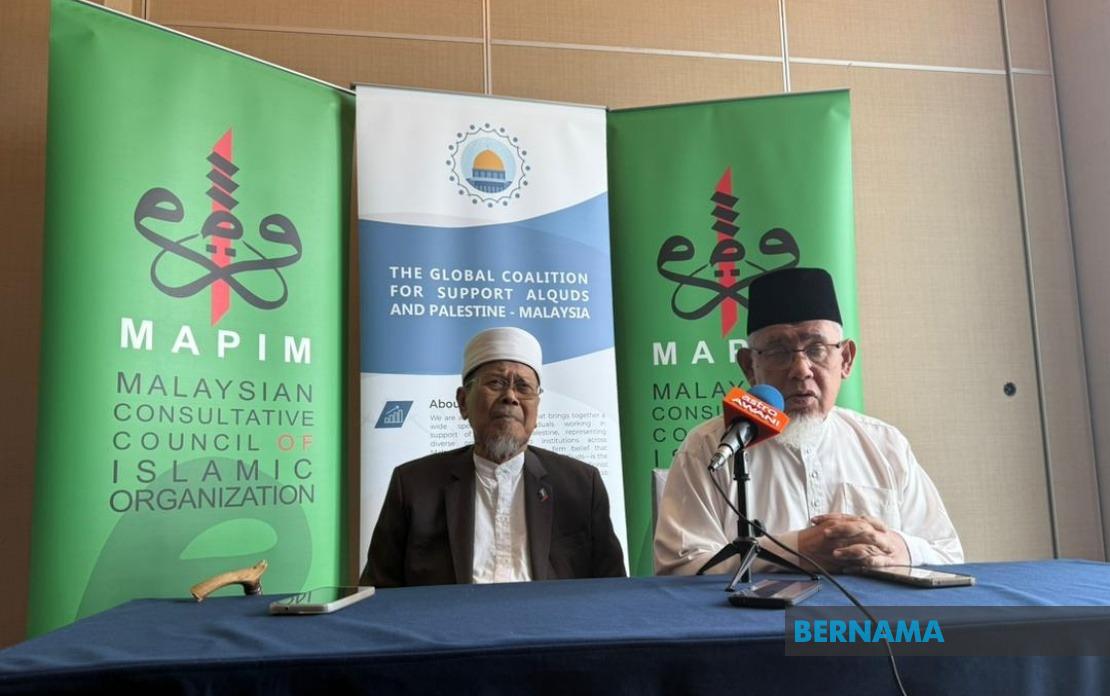
The Malaysian Consultative Council of Islamic Organisations (MAPIM), partnering with the Perak Islamic Religious Department (JAIPk), is preparing to launch a significant two-day Regional Mosque Conference 2026 in Ipoh, commencing tomorrow. The gathering represents an ambitious attempt to foster greater cooperation among Islamic institutions across Southeast Asia and strengthen the role of mosques as community anchors in an increasingly complex geopolitical landscape.
The conference is anticipated to draw approximately 400 mosque representatives spanning Malaysia and eight neighbouring nations — Indonesia, Singapore, Brunei, Timor-Leste, Myanmar, Cambodia, Thailand and Vietnam. The inclusion of delegations from Turkiye, Iran and Pakistan underscores MAPIM's ambition to transcend regional boundaries and establish broader networks of Islamic institutional cooperation. This scale of participation reflects a growing recognition among Muslim-majority nations in the region that coordinated action on shared concerns requires structured platforms for dialogue and strategic planning.
According to MAPIM president Mohd Azmi Abdul Hamid, the conference timing coincides with commemorations of World Mosque Day, which falls on August 21 each year. This date marks the tragic 1969 arson attack on Al-Aqsa Mosque in Jerusalem, an event that remains symbolically significant across the Muslim world. However, Mohd Azmi emphasised that for MAPIM, this observance transcends mere ritual commemoration. Rather, the organisation views the conference as an opportunity to channel collective sentiment into substantive action, using the occasion to reinvigorate mosques as genuine centres of community strength and social resilience.
The conference framework encompasses seven principal objectives designed to create lasting institutional impact. These include establishing formal regional cooperation networks binding mosques together across borders, catalysing meaningful youth engagement within Islamic institutions, and facilitating community economic participation. The conference will also prioritise deepened collaboration between mosques and Islamic non-governmental organisations, recognising that effective community mobilisation requires synergy between formal religious structures and civil society actors. This multi-dimensional approach suggests MAPIM's understanding that contemporary mosque engagement extends well beyond purely religious functions into social welfare, economic development and youth empowerment.
A significant component of the conference involves producing formal outputs that will extend beyond the event itself. Participating mosques and Islamic NGOs are expected to collaboratively develop a declaration articulating shared principles and commitments, alongside a detailed sustainable action plan designed for implementation throughout the region in subsequent years. This emphasis on actionable outcomes rather than rhetorical statements distinguishes this conference from typical diplomatic gatherings, positioning it as a working session intended to generate concrete institutional change.
The substantive programme will combine academic rigour with dialogue-focused engagement. Conference sessions will feature scholarly presentations exploring mosque development and contemporary Islamic institutional challenges, supplemented by international dialogue forums examining regional issues. Special thematic discussions dedicated to Palestine and Al-Aqsa Mosque will occupy prominent space within the schedule, reflecting the centrality of this issue within MAPIM's organisational mission and broader Muslim sentiment across Southeast Asia.
Three major initiatives will be formally unveiled during the conference, each designed to mobilise resources and coordinate action on priority concerns. A regional mosque coalition dedicated specifically to Palestine advocacy will establish institutional mechanisms for sustained engagement with this issue. A comprehensive book documenting the evolving role of mosques in contemporary society will provide intellectual foundation for institutional reflection and reform. Most innovatively, MAPIM will introduce the MAPIM Gold Dinar, a financial mechanism designed to facilitate public contributions towards the Al-Aqsa Mosque Fund. This initiative transforms individual charitable impulses into structured giving, lowering participation barriers while aggregating resources for meaningful impact.
The introduction of the MAPIM Gold Dinar merits particular analytical attention, as it represents a creative approach to fundraising that bridges traditional Islamic financial concepts with contemporary public engagement strategies. By framing contributions in terms of dinar denominations rather than conventional currency, the initiative connects contemporary fundraising with Islamic historical and cultural symbolism, potentially enhancing both participation rates and the symbolic resonance of contributions. For Malaysian Muslims and Southeast Asian donors broadly, this mechanism offers an accessible pathway for supporting a cause of regional religious significance.
From a Southeast Asian perspective, this conference carries implications extending beyond religious institutional cooperation. The gathering reflects broader regional efforts to develop mechanisms for inter-Islamic coordination on shared concerns, particularly regarding international issues affecting Muslim populations. The participation of eight regional nations alongside three external Islamic powers suggests an emerging pattern of Southeast Asian Islamic institutions seeking greater voice in transnational Muslim discourse, rather than remaining passive recipients of positions articulated from the Middle East or South Asia.
Mohd Azmi's emphasis on ensuring the conference generates substantial regional impact and communicates resolute messaging to Muslims throughout Southeast Asia underscores MAPIM's strategic objective: transforming mosque networks from primarily local institutions into vehicles for coordinated regional advocacy on humanitarian and religious concerns. This represents a conscious elevation of mosque institutional capacity and ambition, positioning these communities not merely as spaces for worship and basic social services, but as platforms for mobilising collective Muslim opinion on transnational issues.
For Malaysian policymakers and observers, the conference demonstrates growing institutionalisation of Islamic civil society in Southeast Asia. MAPIM's ability to convene representatives from multiple nations, secure partnerships with state religious departments, and develop structured outputs indicates maturing organisational capacity within regional Islamic networks. This development carries implications for how Muslim communities organise themselves around shared concerns and how Islamic institutions position themselves within broader regional architecture.

