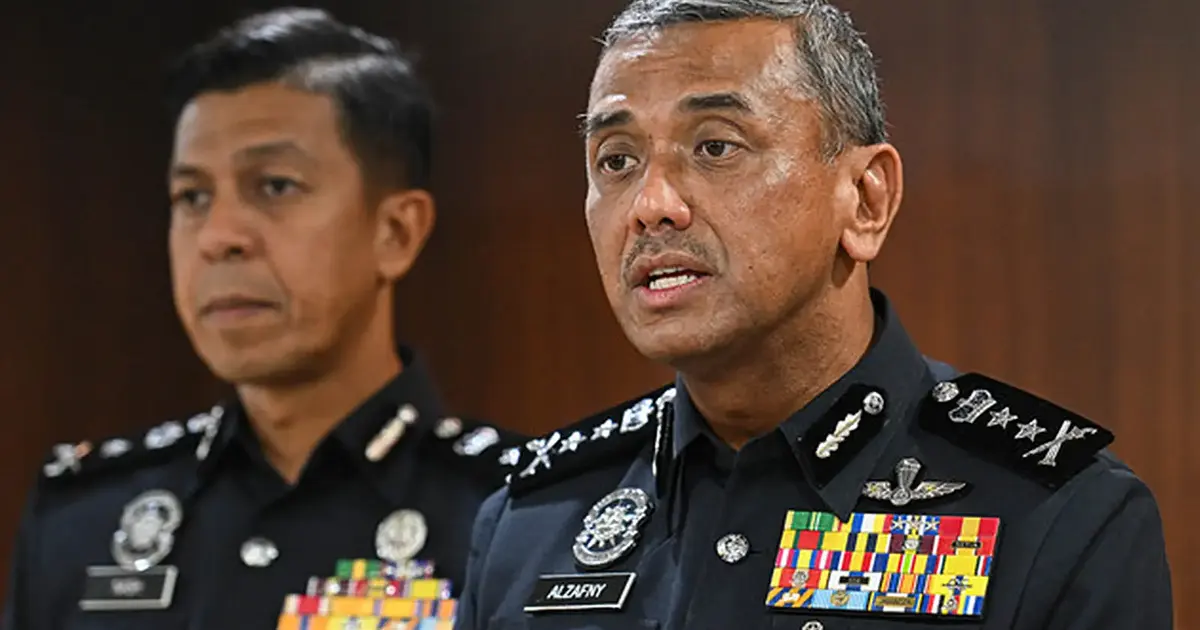
Police in Negeri Sembilan have arrested a man suspected of uploading a social media post containing material allegedly insulting to the state's royal institution. Negeri Sembilan police chief Alzafny Ahmad confirmed the arrest and disclosed that investigators have also impounded the suspect's mobile phone as part of their ongoing inquiry into the matter.
The arrest underscores the sensitivity surrounding the institution of royalty across Malaysia, where laws protecting the dignity of the monarchy remain strictly enforced at both federal and state levels. Negeri Sembilan, one of Malaysia's smaller states by population, has a unique constitutional arrangement whereby the ruler is elected from among the royal families of its nine districts, making the state's royal institution particularly significant to local governance and cultural identity.
The nature of online speech targeting royal figures has become an increasingly common flashpoint in Malaysian law enforcement. As social media platforms have expanded their reach among Malaysian users, posts and comments that authorities deem disrespectful toward the monarchy have led to numerous investigations and prosecutions. The police response in this instance reflects a broader pattern of scrutiny directed at digital content that potentially violates Section 233 of the Communications and Multimedia Act, which criminalizes offensive communications.
The seizure of the suspect's mobile phone represents a standard investigative procedure designed to establish a digital trail connecting the individual to the alleged post. Forensic examination of the device will likely aim to recover metadata, communication records, and other evidence that could substantiate the charges or provide context for the posting. Such technical analysis has become routine in cases involving online offences, though questions about data privacy and the scope of police seizure powers continue to generate debate among civil society organisations and legal experts in Malaysia.
This development occurs within a broader Malaysian context where the institution of royalty enjoys constitutional protection and considerable social reverence. Unlike many democratic nations where direct criticism of public figures, including heads of state, is largely protected speech, Malaysia's legal framework treats insulting the monarchy as a serious transgression. The Federal Constitution provides explicit safeguards for the institution, and state-level protections apply to individual rulers and their families.
For residents of Negeri Sembilan specifically, the royal family holds particular administrative importance beyond ceremonial roles. The Duli Yang Maha Mulia Tuanku, the reigning Sultan, serves as both symbolic head of state and an active participant in state governance decisions. This intertwining of traditional authority with modern constitutional roles means that perceived slights against the ruler carry implications for both institutional dignity and practical governance matters.
The digital age has complicated traditional notions of what constitutes publicly acceptable speech regarding royalty. Comment sections on news articles, personal social media profiles, and group chat platforms have created unprecedented opportunities for rapid dissemination of critical or offensive remarks. What might once have circulated only among close acquaintances can now reach thousands within hours. Law enforcement agencies across Malaysia have adapted their strategies accordingly, establishing dedicated units to monitor online content and respond to complaints lodged by members of the public.
Civil liberties advocates have periodically raised concerns about the application of these laws, arguing that ambiguously worded provisions create a chilling effect on legitimate political discourse and public commentary. They contend that the distinction between protected criticism of governance policies and unprotected insults to the person or institution of the monarchy remains insufficiently clear, potentially leading to over-enforcement and suppression of valid public debate.
The investigation will likely proceed through standard police procedures, including questioning the suspect regarding his intentions, the context of the post, and whether he possessed knowledge that the content could be perceived as insulting. Prosecutorial decisions will ultimately determine whether charges are filed and which specific legal provisions are invoked. Depending on the severity of the alleged offence and the evidence gathered, outcomes could range from counselling and warnings to formal court prosecution with potential penalties including fines and imprisonment.
This case also reflects the broader challenge facing Malaysian authorities in balancing multiple competing interests: protection of institutional dignity and social harmony on one hand, and principles of free expression and individual liberty on the other. As Malaysia continues to grapple with the governance implications of widespread internet access and social media adoption, how such cases are investigated, prosecuted, and adjudicated will likely continue shaping public understanding of where legal boundaries lie in discussing sensitive national institutions online.

