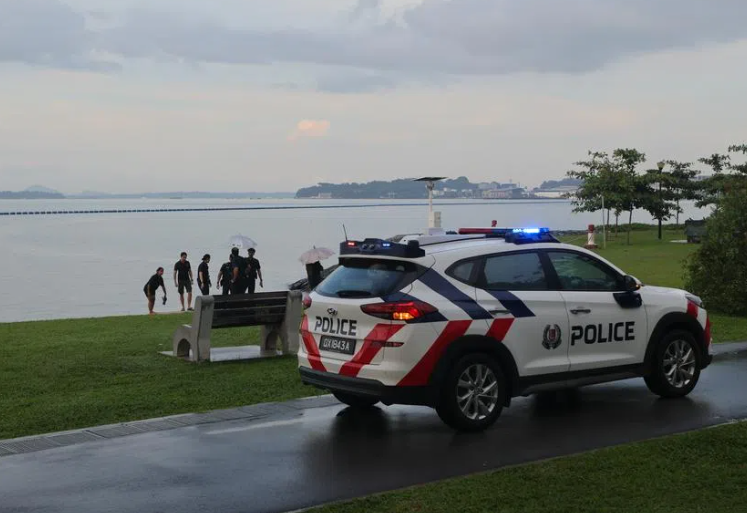
A 24-year-old man has died following a lightning strike incident that claimed his life while he was paddleboarding in shallow waters near Pasir Ris Beach on Sunday, July 5. The incident, which unfolded in mid-afternoon conditions that witnesses described as surprisingly clear, highlights the unpredictable and lethal nature of lightning strikes in tropical regions. Singapore police confirmed the fatality on July 6 and said they do not suspect criminal involvement, though investigations remain ongoing to establish the exact sequence of events that led to the tragedy.
The lightning strike affected a group of seven water sports enthusiasts who were engaged in kayaking and paddleboarding activities approximately 100 metres from the shoreline. Six survivors, ranging in age from teenagers to a 54-year-old adult, were rescued and transported to medical facilities with varying degrees of injury. Five of the group, including one unconscious individual, were conveyed to Sengkang General Hospital by the Singapore Civil Defence Force, while two younger casualties were taken to KK Women's and Children's Hospital for specialised paediatric care. All six survivors remained conscious when emergency responders transported them, suggesting their injuries, while serious, did not prove immediately fatal.
The emergency response unfolded rapidly after police received alerts at approximately 4.50pm on July 5 regarding the incident at 131 Pasir Ris Road. Civil Defence Force personnel arrived at the scene with full emergency equipment, including a Light Fire Attack Vehicle and ambulance. Bystander accounts and video footage filmed around 5.10pm revealed SCDF officers performing chest compression resuscitation efforts on the stricken paddleboarder in a grassy area adjacent to the beach. The 24-year-old man was transported unconscious to hospital, where medical staff were unable to revive him despite immediate intervention.
Muhammad Fairuz, a 40-year-old delivery worker who was fishing at Pasir Ris Beach when the incident occurred, provided crucial eyewitness testimony that illuminates the sudden and devastating nature of the strike. Fairuz observed the paddleboarding group positioned roughly 100 metres offshore shortly after 4pm and noted that atmospheric conditions appeared deceptively calm with clear skies overhead. The lightning strike came without obvious warning, and Fairuz experienced the electrical current's effects even through his fishing rod, vividly demonstrating the power and reach of the electrical discharge through water. After hearing the group's distressed shouts and spotting the unconscious paddleboarder drifting on his board, Fairuz and another bystander immediately paddled out in their kayaks to mount a rescue operation, successfully bringing the victim back to shore before emergency services arrived.
The incident places Singapore's lightning hazard profile into perspective. The Meteorological Service Singapore documents that the island nation experiences an average of 176 lightning days annually, with a lightning day defined as any 24-hour period during which at least one lightning occurrence is detected at the Changi climate station. This frequency of electrical storm activity reflects Singapore's equatorial location and the region's tropical climate patterns, which generate the atmospheric conditions conducive to thunderstorm development throughout the year. The consistent threat of lightning means that water-based recreational activities, while generally safe, carry inherent meteorological risks that residents and visitors must appreciate.
This tragedy is not an isolated occurrence in Singapore's recent history. In May of this year, a worker employed at a fish farm succumbed to injuries sustained from a lightning strike while engaged in occupation-related duties. Additionally, in December 2023, three workers required hospitalisation after lightning struck in close proximity to their worksite on December 28. These incidents underscore a recurring pattern of lightning-related injuries and fatalities across various settings in Singapore, from recreational water activities to industrial and agricultural work environments. The consistency of such incidents suggests the need for heightened public awareness regarding lightning safety protocols and storm preparedness measures.
For Malaysia and the broader Southeast Asian region, the Pasir Ris incident carries relevant implications. Like Singapore, Malaysia experiences tropical weather patterns with frequent thunderstorm activity, particularly during monsoon periods. Coastal areas and recreational water zones throughout peninsular Malaysia, Sabah, and Sarawak face comparable lightning hazards. The incident underscores the importance of monitoring weather forecasts before engaging in water sports, understanding that clear skies do not guarantee safety from lightning, and recognising that water conducts electrical current with lethal efficiency. Swimmers, paddleboarders, and water sports enthusiasts across the region should familiarise themselves with lightning safety protocols and understand when conditions warrant postponing outdoor water activities.
The emergency response demonstrated by Singapore's Civil Defence Force and rescue personnel, including the rapid deployment of medical personnel and the spontaneous assistance rendered by bystanders like Muhammad Fairuz, illustrates the importance of immediate intervention in lightning strike cases. Basic life support measures, including chest compressions and rescue breathing, can prove crucial in the window following a lightning strike. The presence of trained responders and public access to automated external defibrillators in popular recreational areas may influence survival outcomes in future incidents. For recreation areas and beaches throughout Southeast Asia, this incident suggests value in reviewing emergency response infrastructure and ensuring that staff receive training in lightning strike treatment protocols.
The police conclusion that no foul play factors into this incident reflects the straightforward nature of an accidental tragedy involving natural hazards. Nevertheless, the investigation's continuation indicates authorities will examine whether any safety lapses, environmental warnings, or procedural shortcomings contributed to the circumstances. Questions regarding whether the group received adequate warning of approaching electrical storm activity, whether lifeguard services were present at Pasir Ris Beach during the incident, and whether any public safety signage addressed lightning hazards remain relevant to understanding how such incidents might be prevented in future.
The death of the 24-year-old paddleboarder serves as a sobering reminder that recreational activities in tropical regions, while generally enjoyable and beneficial, require respect for meteorological hazards. Lightning strikes, though statistically uncommon, prove invariably dangerous and frequently fatal. The incident's occurrence during apparently clear weather conditions underscores the difficulty in predicting exactly when and where lightning will strike, reinforcing the wisdom of seeking shelter when thunderstorms approach and exercising caution during seasons of heightened electrical storm activity. For both Singapore and the wider Southeast Asian community, the tragedy emphasises the importance of public education campaigns regarding lightning safety, the value of rapid emergency response capabilities, and the critical role that informed personal decision-making plays in minimising exposure to natural hazards.

