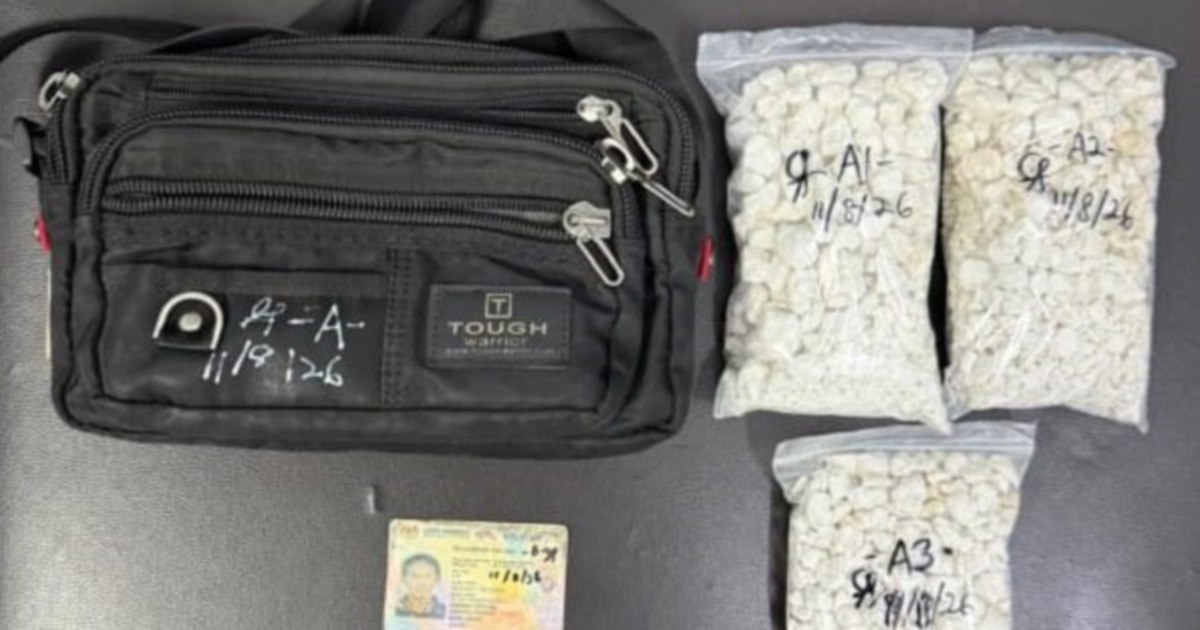
A significant drug enforcement operation in the Kluang district has resulted in the arrest of a 42-year-old man and the confiscation of a substantial quantity of heroin. The raid, conducted during the early hours of the morning in Simpang Renggam, uncovered narcotics with an estimated street value of RM10,128, marking another success for local law enforcement in their ongoing battle against drug trafficking in the region.
The seized substances, totalling 1.055 kilograms, represent a meaningful quantity of controlled drugs that would have otherwise potentially circulated within local communities. The street valuation placed on the heroin indicates the significant commercial nature of the operation, suggesting the suspect may have been involved in small-scale distribution rather than mere possession for personal consumption. This distinction carries important implications for potential charges and sentencing considerations under Malaysia's Dangerous Drugs Act.
Johor, particularly areas around Kluang and Simpang Renggam, has long grappled with drug-related challenges owing to its geographic location and proximity to major transportation routes. The region's position along key trafficking corridors makes it a focal point for police anti-narcotics operations. Recent enforcement actions across the state underscore the Royal Malaysian Police's commitment to disrupting drug supply chains and apprehending those involved in the illicit trade at various levels of operation.
The timing of the raid during early morning hours reflects a deliberate police strategy commonly employed in anti-drug operations. Such timing increases the likelihood of catching suspects at their residences or in circumstances where they are less prepared to dispose of evidence or resist arrest. Early morning raids have proven effective across Malaysia in securing narcotics before they can be distributed or concealed, contributing to higher success rates in seizure operations.
The age of the arrested individual, 42, suggests this may represent a case involving mid-level participation in the drug trade rather than a low-level street distributor. Suspects in this age bracket often occupy intermediate positions within narcotics networks, procuring drugs from larger suppliers and distributing them through various retail channels. Understanding the typical demographic patterns of those arrested helps authorities map broader trafficking networks and identify higher-level targets for investigation.
Malaysia's enforcement approach to narcotics crimes, particularly involving heroin, remains among the strictest globally. Possession of 1.055kg places this quantity well beyond personal use thresholds established in the Dangerous Drugs Act, automatically triggering presumptions of trafficking and carrying mandatory enhanced penalties. The distinction between personal consumption and trafficking carries life-or-death consequences in Malaysia's legal framework, making the precise quantity seized highly significant from a legal perspective.
The valuation methodology applied to seized drugs typically reflects prevailing street prices in specific regions, accounting for local market conditions and purity variations. The RM10,128 figure for 1.055kg suggests a unit price of approximately RM9,600 per kilogram, a reasonable estimate for retail heroin in Malaysian markets. Such pricing information, while appearing purely commercial, provides intelligence agencies with valuable insights into trafficking patterns and market dynamics that inform broader anti-narcotics strategy.
Police narcotics divisions across Malaysia have intensified operations throughout 2024, responding to perceived increases in drug trafficking activity. Simpang Renggam, despite being a relatively smaller urban centre compared to Johor Bahru, remains an important operational focus due to its strategic location. The success of operations in such secondary urban areas demonstrates that drug enforcement efforts extend beyond major metropolitan concentrations, acknowledging that trafficking networks penetrate even smaller population centres.
The apprehension contributes to broader police statistics on narcotics enforcement, feeding into national drug seizure reports and arrest data. These metrics, while sometimes subject to interpretation debates, ostensibly reflect the scale of enforcement activity and perceived drug prevalence in specific jurisdictions. For Johor specifically, seizures and arrests in Kluang district add to the statistical picture of narcotics enforcement effectiveness within the state.
Following arrest, the suspect faces a lengthy investigative process that will determine whether charges proceed on trafficking or possession-with-intent-to-distribute grounds. Investigation typically examines banking records, communication devices, witness statements, and laboratory analysis of the seized substances to establish the broader context of the suspect's involvement. Such investigations frequently reveal connections to larger trafficking operations or organised crime syndicates, potentially opening pathways for police to target higher-ranking operatives in drug distribution networks.
The successful operation reflects the continuous efforts by Malaysian authorities to address drug supply issues at the enforcement level while broader preventive initiatives address demand reduction through rehabilitation and public health approaches. The balance between enforcement and treatment-oriented responses remains an ongoing policy consideration across Malaysia's anti-narcotics framework. Each successful seizure and arrest, while representing important tactical victories, constitutes merely one element of comprehensive drug control strategies required to meaningfully reduce trafficking and consumption across the nation.

