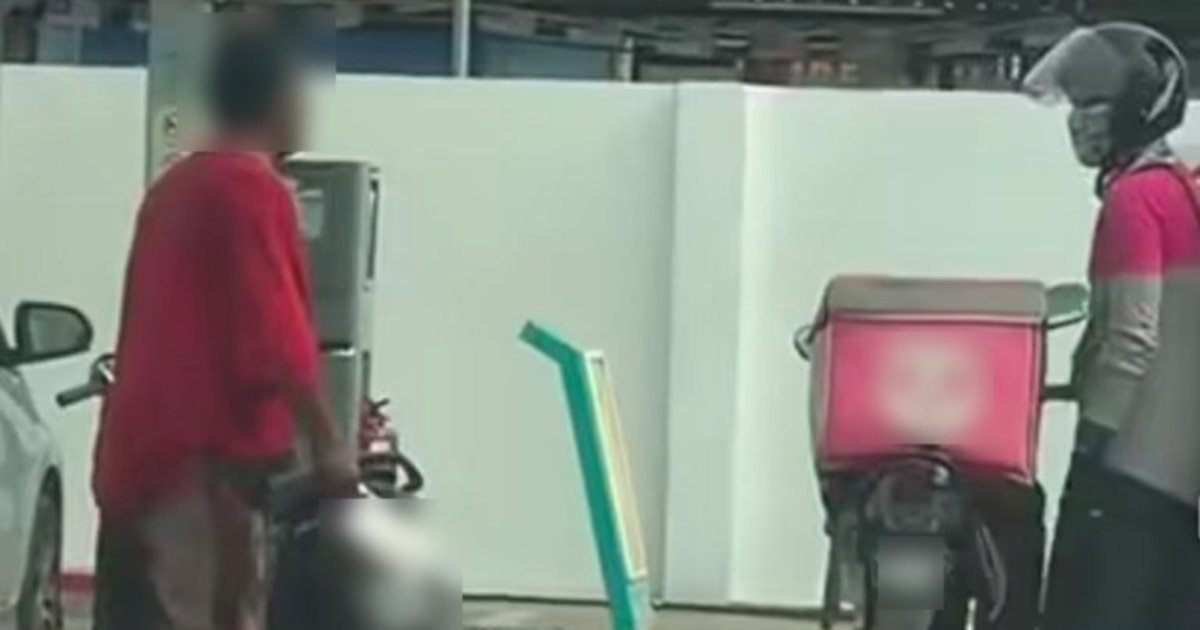
Police in Kuala Terengganu apprehended a suspect following an aggressive confrontation at a petrol station on Jalan Pasir Panjang, where the man allegedly produced a meat cleaver during an encounter with a ride-hailing worker. The arrest came after officers responded to reports of the threatening behaviour in the late afternoon, swiftly containing the situation and taking the individual into custody for further investigation.
The incident underscores an unsettling trend of violence erupting in everyday commercial spaces across Malaysia, from convenience stores to fuel stations where countless Malaysians visit daily. Such disturbances put vulnerable frontline workers—particularly those in the gig economy—at considerable personal risk, forcing them to navigate unpredictable encounters as part of their ordinary work routine. Ride-hailing drivers especially operate in conditions of heightened exposure, often working irregular hours and interacting with strangers in isolated locations with limited immediate assistance.
Petrol stations serve as crucial transit hubs where transactions occur rapidly and security measures vary considerably. The venue's semi-public nature, combined with its round-the-clock operations, creates environments where confrontations can escalate unexpectedly if not managed carefully. Property owners and operators have increasingly turned to enhanced surveillance systems and improved lighting to deter potential offenders, yet these measures alone prove insufficient when individuals arrive with weapons or intent to harm.
The choice of a meat cleaver as the weapon in this case suggests a weapon of opportunity or premeditation, depending on the underlying circumstances. Authorities will need to establish whether the suspect acted on impulse during a dispute or came prepared to the location. Understanding the motivation remains critical for investigators determining appropriate charges and assessing whether additional public safety concerns exist within the community.
The Terengganu Police contingent's rapid response prevented the situation from potentially escalating further, demonstrating the value of efficient emergency protocols. However, such incidents repeatedly demonstrate that reactive policing alone cannot fully protect service workers who face cumulative risk throughout their employment. Ride-hailing companies have introduced various safety features including panic buttons and real-time location sharing, yet implementation and worker awareness of these tools remain inconsistent across the industry.
For gig economy workers throughout Malaysia and Southeast Asia, safety concerns have become integral to employment discussions. Many drivers have begun screening passengers more carefully, refusing certain requests, or working exclusively during daylight hours to reduce their vulnerability. This voluntary restriction of working hours and income opportunities represents an invisible cost of inadequate workplace protections in the gig economy, where traditional labour regulations often fail to extend comprehensive safeguarding.
The incident at Jalan Pasir Panjang reflects broader patterns observed in major Malaysian cities where disputes involving transportation workers, commercial staff, and customers have turned violent with troubling regularity. Social media documentation of such incidents has raised public awareness but simultaneously amplified anxiety among workers and regular consumers who frequent these locations. Building community confidence requires both swift police responses—as demonstrated here—and sustained prevention initiatives.
Investigators will examine surveillance footage from the petrol station, interview witnesses including the affected ride-hailing driver, and establish the sequence of events leading to the weapon's display. These details will determine whether additional charges such as criminal intimidation, reckless endangerment, or unlawful possession of weapons apply beyond the initial arrest. The suspect's background, prior contact with law enforcement, and any mental health considerations will also inform the investigation's trajectory.
Beyond this individual case, the confrontation highlights systemic vulnerabilities in how Malaysia protects service workers operating within informal or unregulated sectors. While formal employment offers workplace safety committees and established grievance procedures, gig economy workers typically lack these institutional protections. Policy discussions at both state and federal levels have begun addressing these gaps, but legislative action has progressed slowly relative to the rapid growth of ride-hailing platforms across Malaysia.
The broader Malaysian community benefits from understanding that such incidents—while concerning—remain statistically uncommon relative to the millions of daily interactions occurring across petrol stations, ride-hailing services, and commercial spaces nationwide. Nevertheless, even isolated incidents justify increased vigilance, improved training for staff in de-escalation techniques, and sustained investment in security infrastructure. Kuala Terengganu's police force now faces the responsibility of concluding their investigation while simultaneously reassuring residents and workers that public safety remains a management priority.

