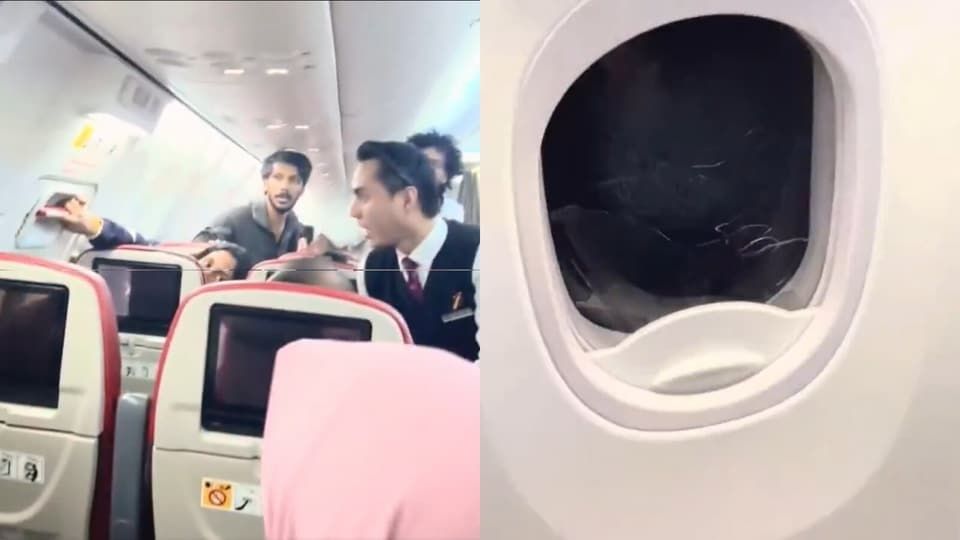
A disruptive passenger was taken into custody by Kerala Police following a terrifying incident aboard a Batik Air flight that could have ended in tragedy had it not been for the swift intervention of crew and fellow travellers. The man, identified as Jamsheer Athanikkal, 36, allegedly attempted to breach the emergency exit of flight OD231, a Boeing 737 operating between Kuala Lumpur and Kochi, while the aircraft was cruising at altitude on Wednesday evening.
The incident unfolded between 9.30pm and 11.05pm local time as the flight carried passengers over the Indian subcontinent. According to the first information report filed by Batik Air's security personnel at Kochi airport, Jamsheer, a resident of Sreemoolanagaram originally from Palakkad in Kerala, used his foot to damage the inner window panel of the emergency exit before attempting to force the door open. His aggressive behaviour extended to threatening passengers and crew members, amplifying the sense of danger aboard the aircraft.
The threat was substantially mitigated by the aircraft's engineering design and the physical laws of aviation. The cabin's pressurised environment created a pressure differential that prevented the door from being opened, even as the window panel suffered damage. This fundamental safety feature of modern commercial aircraft likely prevented a catastrophic event. Nevertheless, the psychological impact on those aboard was considerable, with many passengers awakened abruptly by the sound of rushing air that accompanied the breach attempt.
Eyewitness accounts from fellow passengers provide a vivid picture of the chaos that briefly gripped the cabin. Matty Mathew, one of the travellers present, documented the incident through social media and video recordings, describing how most passengers had been asleep during the midnight service when the disturbance occurred. According to Mathew's account, the sudden noise and commotion alerted alert crew members and nearby passengers to the danger unfolding in the emergency exit row. The rapid response from Batik Air staff and concerned travellers proved instrumental in restraining Jamsheer and preventing the situation from deteriorating further.
In his social media post, Mathew expressed both the terror of the moment and gratitude for the outcome, writing that it had been an extremely frightening experience but emphasising that all passengers emerged unharmed. His documentation of events served to validate the seriousness of what had transpired and corroborated the official accounts provided by airline authorities. The incident highlights the importance of passenger vigilance and the willingness of ordinary travellers to intervene in safety emergencies.
Jamsheer was arrested upon the aircraft's arrival in Kochi early Thursday morning. Investigators have charged him under multiple provisions of Indian law, reflecting the severity of his conduct. He faces accusations under Section 351(3) of the Bharatiya Nyaya Sanhita for criminal intimidation, Section 11A of the Aircraft Act for violating safety and security protocols, and Section 118(e) of the Kerala Police Act for acts endangering public safety. These charges collectively underscore the criminal nature of his actions and the legal framework designed to protect aviation safety.
The incident represents a significant security concern for airlines operating in the region and has broader implications for passenger safety protocols. While emergency exits remain accessible to passengers for legitimate evacuation purposes, any attempt to compromise these systems mid-flight constitutes a direct threat to everyone aboard. The incident demonstrates the need for continued vigilance among cabin crew in identifying potentially unstable passengers and the importance of seating policies that position travellers requiring monitoring away from critical safety equipment.
This episode arrives amid heightened concerns about aviation safety in the region following another alarming incident just two days earlier. On Tuesday, Air India flight AI2379 travelling from Phuket, Thailand, to Delhi experienced an unexpected and sudden loss of altitude during its cruise phase, sending shockwaves through the aviation industry and triggering immediate investigations. The aircraft, carrying 137 passengers and eight crew members, managed to land safely in the Indian capital despite the frightening occurrence.
The Air India incident resulted in medical consequences for multiple people aboard. Following landing, 13 passengers and four crew members required hospital admission and treatment for injuries or medical conditions aggravated by the sudden altitude loss. The airline mobilised support teams at hospitals and maintained close contact with affected individuals and their families throughout the treatment process. Air India subsequently notified all relevant aviation regulators of the occurrence and initiated full cooperation with investigative authorities while also alerting the aircraft manufacturer to enable comprehensive technical analysis.
According to flight-tracking data from Flightradar24, the Air India aircraft involved was a seven-year-old Airbus, suggesting a relatively modern aircraft that should theoretically operate within design parameters. The airline issued statements reaffirming that passenger and crew safety constituted its foremost priority and committed to ongoing support for those impacted by the incident as investigations proceeded. These consecutive incidents within a 48-hour window have raised questions about whether structural or systemic issues require urgent attention across the aviation sector operating in South and Southeast Asia.
The two incidents, while distinct in nature, collectively undermine passenger confidence in regional aviation during a period when air travel demand is recovering post-pandemic. The Batik Air incident, while ultimately contained through human intervention and aircraft design, demonstrates vulnerability to wilful interference with safety systems. The Air India event, by contrast, suggests potential technical or operational concerns that remain unexplained. Together, they necessitate renewed focus on pre-flight safety briefings, passenger screening protocols, and aircraft maintenance standards across carriers serving the Malaysia-India corridor and broader regional routes.

