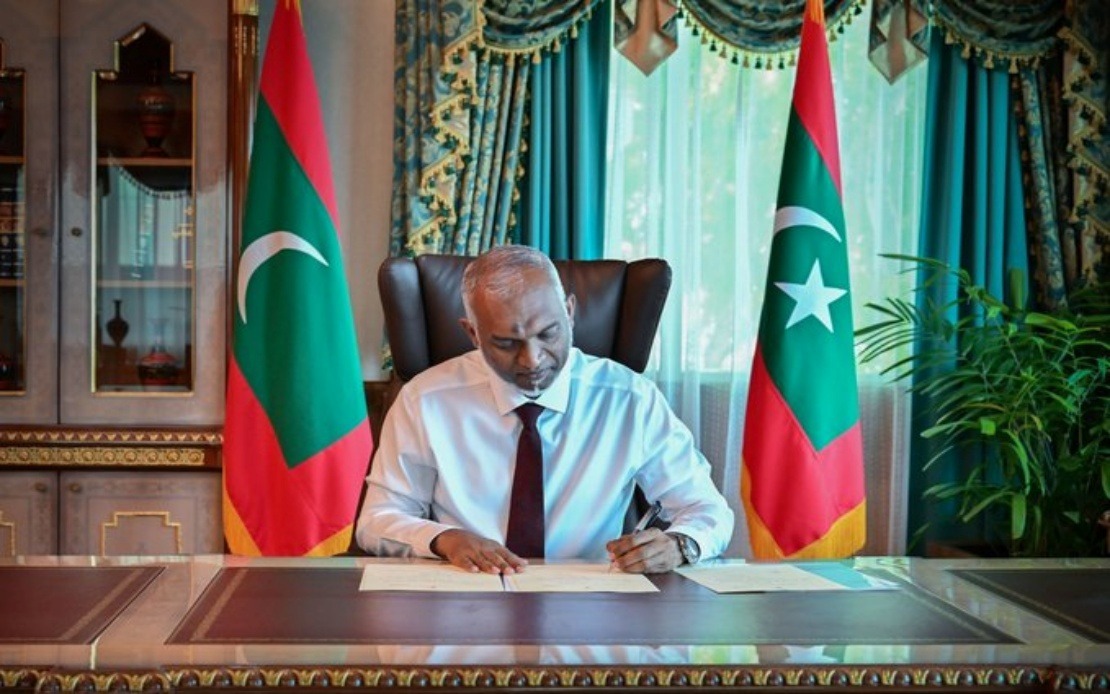
Maldives President Mohamed Muizzu has extended heartfelt National Day greetings to Malaysia, using the occasion to reaffirm the deep bonds connecting the two island nations across the Indian Ocean. In separate messages addressed to His Majesty Sultan Ibrahim, King of Malaysia, and Prime Minister Datuk Seri Anwar Ibrahim, Muizzu underscored the significance of their enduring partnership and expressed determination to strengthen cooperation in the years ahead.
The presidential correspondence highlighted the trajectory of bilateral relations over the past five decades, characterizing them as built upon foundations of mutual respect, genuine friendship, and collaborative spirit. This framing reflects the broader geopolitical positioning of both countries as maritime democracies within the Indo-Pacific region, where stable state-to-state relations carry particular weight in maintaining regional equilibrium.
In his message to the Prime Minister, Muizzu acknowledged how regular high-level engagement between government officials and robust people-to-people connections have solidified the partnership. These interpersonal and institutional channels serve as critical infrastructure for sustained diplomatic cooperation, allowing both nations to navigate shared challenges ranging from maritime security to trade facilitation.
The Maldivian leader expressed confidence that the friendship would continue flourishing, creating pathways for expanded economic partnership and generating mutual benefits for citizens of both countries. This emphasis on economic dimensions reflects contemporary reality: while historical and cultural ties remain important, modern bilateral relationships increasingly depend on tangible commercial advantages and investment opportunities.
Malaysia's significance to the Maldives extends beyond ceremonial diplomacy. As a major Muslim-majority nation with considerable regional influence and economic capacity, Malaysia represents a natural partner for the island republic, particularly in maritime affairs, tourism collaboration, and development initiatives. The Maldives, meanwhile, holds strategic importance for Malaysia as a gateway to broader South Asian diplomatic networks.
Beyond the Maldives, Malaysia received National Day congratulations from other major regional and global powers. Pakistan's Ministry of Foreign Affairs conveyed its heartiest congratulations through social media, extending wishes for sustained peace and continued prosperity. Such messages, though formulaic in nature, serve important functions in maintaining official goodwill and demonstrating engagement with Malaysia's role as a significant player in regional affairs.
India's response came through its Minister of External Affairs Subrahmanyam Jaishankar, who directed greetings toward both Foreign Minister Datuk Seri Mohamad Hasan and the broader Malaysian government and citizenry. Notably, Jaishankar emphasized India's commitment to advancing the Comprehensive Strategic Partnership with Malaysia, signalling that New Delhi views the bilateral relationship as extending beyond routine diplomatic pleasantries into substantive strategic collaboration.
The range of international responses to Malaysia's National Day underscores the country's centrality in regional geopolitics. As a key member of ASEAN, a major trading nation, and a bridge between East and West, Malaysia consistently receives recognition from powers seeking to maintain stable relations and advance their interests in Southeast Asia. These birthday greetings represent both protocol and genuine strategic interest.
For Malaysian policymakers and observers, such messages carry interpretive weight. They indicate how other nations assess Malaysia's current trajectory and their own intentions toward bilateral engagement. The emphasis on economic partnership from the Maldives, the focus on strategic advancement from India, and Pakistan's stress on enduring stability collectively suggest that Malaysia's partners view the country as a reliable, developing power worthy of sustained engagement.
The timing and content of these greetings also reflect broader regional dynamics in the Indo-Pacific. With increasing geopolitical competition and strategic realignment, countries routinely use National Day messages and similar occasions to reinforce commitments and signal alignment. Malaysia's ability to receive positive gestures from multiple quarters—South Asia, the Indian Ocean region, and beyond—indicates its success in maintaining non-aligned positioning while building pragmatic partnerships across different geopolitical camps.
Looking ahead, the pledges of strengthened cooperation articulated by the Maldives and other nations will require follow-through in concrete initiatives. Trade agreements, cultural exchanges, security cooperation frameworks, and development partnerships must translate diplomatic sentiment into tangible outcomes. Malaysia's ongoing engagement with these partners will shape not only bilateral relationships but also its influence and prosperity within the broader regional ecosystem.

