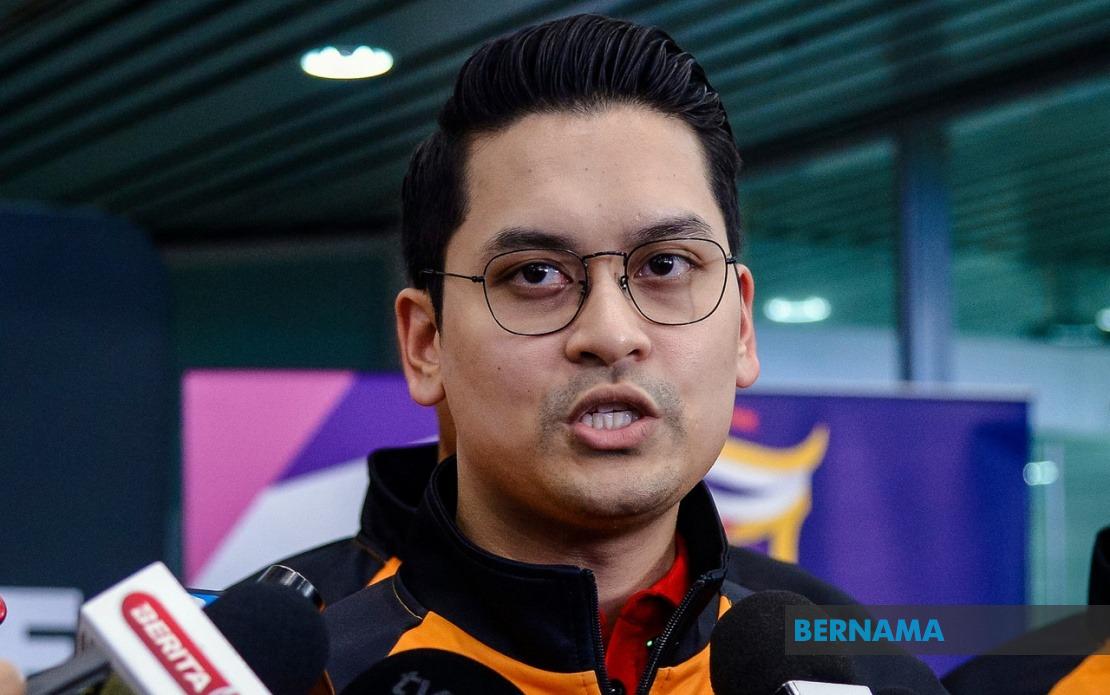
The Youth and Sports Ministry has signalled its strategic commitment to weightlifting by allocating RM4.1 million for development initiatives in 2026, while simultaneously remaining receptive to the Malaysia Weightlifting Federation's appeal for additional annual funding of RM1 million. Minister Dr Mohammed Taufiq Johari made the announcement at Kuala Lumpur International Airport following the return of Malaysia's Commonwealth Games contingent, underscoring the government's determination to channel resources into a sport increasingly viewed as a pathway to Malaysia's maiden Olympic gold medal.
The 2026 allocation encompasses a comprehensive framework designed to nurture talent across multiple developmental stages. Beyond direct athlete investment, the funding supports coaching infrastructure and several structured progression programmes, including the flagship Road to Gold initiative, the Podium programme for medal-ready competitors, and the Pelapis scheme targeting emerging prospects. The ministry's approach reflects a recognition that sustained success in international weightlifting requires systemic investment rather than episodic support, addressing everything from elite athlete preparation to grassroots identification and development.
Dr Taufiq indicated that discussions regarding the federation's additional funding request remain ongoing, with particular attention being paid to the cost implications identified by weightlifting stakeholders. He acknowledged that a significant portion of the RM1 million supplementary request addresses coaching remuneration and associated personnel expenses, suggesting that the federation has raised legitimate concerns about the adequacy of current compensation structures. The minister's willingness to engage in substantive dialogue rather than dismissing the request outright signals ministerial openness to evidence-based budget adjustments within the sports sector.
Conversations with Malaysia Weightlifting Federation president Datuk Ayub Rahmat and representatives from various state weightlifting associations have already commenced, creating a foundation for more detailed negotiations. This consultative approach, while potentially lengthening the decision-making timeline, reflects a commitment to ensuring that additional funding—should it be approved—addresses genuine operational requirements rather than becoming a blank cheque or politically expedient allocation. The ministry's stated intention to conduct comprehensive deliberations before committing to expanded financial commitments suggests a measured fiscal approach balanced against competitive ambitions.
Weightlifting's emergence as a standout performer at the recent Commonwealth Games has substantially elevated the sport's profile within Malaysia's athletic ecosystem. The contingent claimed five gold medals, one silver, and one bronze, a haul that significantly exceeded initial targets and demonstrated the sport's capacity to generate medal-winning performances at major competitions. This success provides concrete evidence supporting arguments for increased investment and validates the strategic focus the ministry has already placed on weightlifting as a priority development area.
Currently, the Malaysian weightlifting programme encompasses twelve athletes distributed across three developmental tiers. Two competitors are enrolled in the Road to Gold programme, positioned as long-term Olympic prospects requiring intensive preparation and competition experience. Eight athletes participate in the Podium programme, representing competitors with demonstrated ability to podium at senior international competitions, while two additional athletes are tracked through the Pelapis developmental stream. This tiered structure allows the federation to allocate resources efficiently while maintaining a pipeline of talent advancement.
Beyond budgetary considerations, Dr Taufiq pledged ministerial attention to the welfare conditions of coaches operating at state level under National Sports Council supervision. He characterized coach welfare as an immediate priority requiring resolution, recognizing that coaching quality and retention directly influence athlete development outcomes and performance trajectory. This commitment extends the ministry's developmental vision beyond athlete-centred investment to encompass the broader institutional ecosystem that produces competitive success, acknowledging that coach burnout and inadequate compensation can undermine even well-funded athlete programmes.
The emphasis on coach welfare reform carries particular significance for Malaysian sports development more broadly. Regional sporting nations increasingly recognize that sustainable competitive advantage depends upon retaining experienced coaching talent and attracting qualified professionals into the coaching profession. State-level coaches, who frequently work at considerable distance from capital-based elite programmes and national federations, often experience compensation and support disparities relative to their national counterparts. Addressing these inequities requires both political will and structural reform within the ministry's oversight apparatus.
Weightlifting's positioning as a sport with genuine potential to deliver Malaysia's first Olympic gold medal represents a significant strategic bet by the ministry. Unlike sports with longer-established developmental pathways and deeper athlete pools, weightlifting offers a more concentrated focus for investment, potentially generating outsized returns relative to expenditure. The sport's technical specificity and limited athlete numbers mean that excellence can emerge from relatively focused resource allocation, contrasting with broader-based sports requiring investments across multiple discipline areas and developmental levels.
The ministry's receptiveness to the federation's additional funding request, contingent upon detailed discussion, suggests that budget expansion is not a foregone conclusion but rather a possibility to be evaluated against competing ministerial priorities and demonstrated necessity. This conditional openness allows the federation opportunity to present detailed evidence supporting the RM1 million request while preserving ministerial discretion to decline or modify proposals that fail to meet evidential thresholds. Such an approach, while potentially frustrating to stakeholders seeking immediate funding confirmation, creates incentives for rigorous programme justification.
For Malaysian weightlifters and their federation, the coming months represent a critical window for securing enhanced financial support. The sport's Commonwealth Games success provides leverage within budget discussions, while the minister's stated commitment to prioritizing weightlifting creates favourable political conditions for negotiation. However, converting ministerial goodwill into confirmed additional funding requires the federation to mount a persuasive case documenting specific expenditure requirements and demonstrating how supplementary investment translates into enhanced competitive outcomes.
The broader context of Malaysia's sports investment strategy reveals a nation attempting to maximize limited sporting resources through targeted concentration on disciplines and athletes displaying genuine competitive promise. Weightlifting's selection as a priority reflects both the sport's demonstrated success potential and the ministry's pragmatic assessment that narrowly focused investments in high-potential sports generate better medal-to-rupiah returns than diffuse spending across numerous underfunded programmes. As the ministry undertakes detailed discussions with the weightlifting federation, these conversations will likely establish precedents influencing how other Malaysian sports argue for expanded government support.

