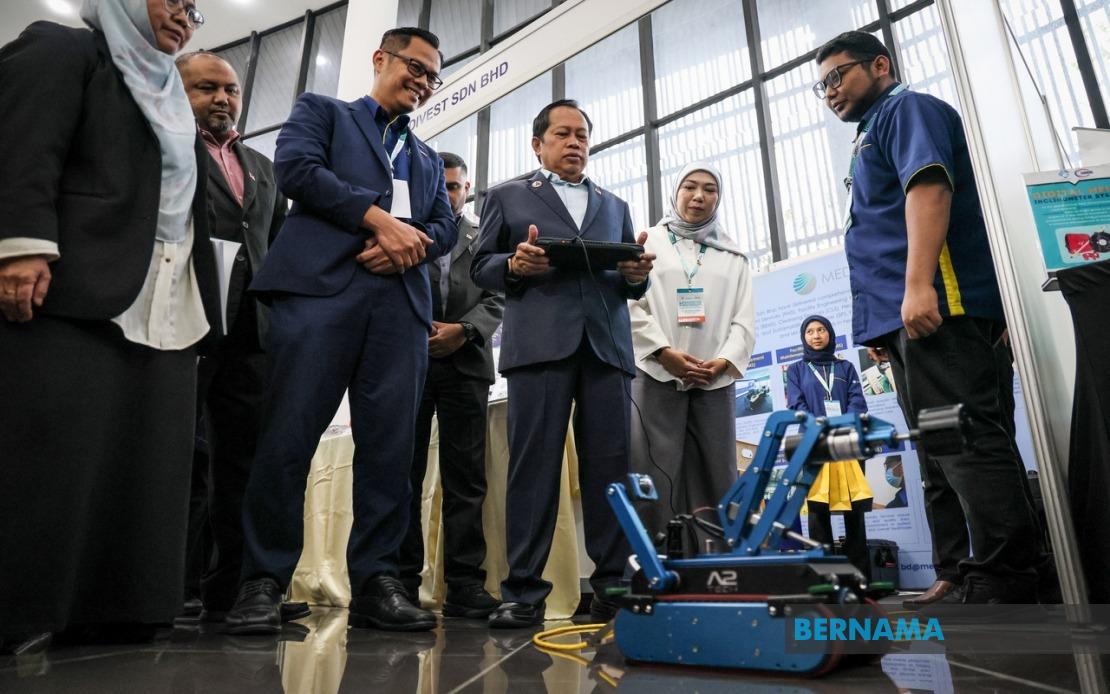
Malaysia's construction industry stands at an inflection point where asset maintenance and ongoing facility management represent an underexploited goldmine, according to officials who are now actively recruiting contractors into a sector historically overshadowed by new-build projects. Deputy Works Minister Datuk Seri Dr Ahmad Maslan used the Contractors Convention 2026: NexGen Builders event in Butterworth to spotlight the disconnect between the scale of available work and the limited contractor capacity currently serving the facility management and maintenance subsector.
Data compiled by the Construction Industry Development Board reveals the extent of this opportunity gap. Between 2023 and 2025, the FM and maintenance sector accumulated RM39.59 billion in declared projects involving 1,541 separate assignments across Malaysia's built environment. Yet the contractor base remains remarkably thin, with only 468 companies registered under the F01 and F02 specialisations that denote FM expertise. This disparity suggests either existing contractors are commanding outsized market shares or—more likely—significant portions of available work remain unfulfilled or distributed among unregistered operators working in legal grey areas.
The Works Ministry's pivot toward emphasizing facility management signals a fundamental rethinking of how Malaysia approaches its public and private infrastructure portfolio. Historically, construction sectors everywhere have celebrated completion ceremonies and ribbon-cutting events, treating handover as the end of their responsibility. Ahmad Maslan's comments reflect frustration with this model, noting that buildings, roads, bridges and other assets require consistent, professional upkeep to preserve their functionality and extend their operational lives. This perspective aligns with international best practices, where lifecycle cost management has become standard in developed economies, yet remains nascent across much of Southeast Asia.
The financial implications extend beyond the contractors themselves. When facilities deteriorate through neglect or ad-hoc maintenance, replacement becomes necessary at exponentially higher cost. A road maintained annually requires far less investment than one abandoned for ten years then reconstructed. Similarly, building systems managed proactively consume fewer resources than emergency interventions. For Malaysian ratepayers and taxpayers, a mature FM contractor ecosystem should theoretically reduce the overall public expenditure required to maintain government assets and critical infrastructure over decades.
The introduction of CIS 33:2026—the new Facility Management Good Practice Guide developed by CIDB—provides the regulatory scaffolding necessary to professionalize the sector and raise entry barriers that protect legitimate operators. This standardised framework establishes common reference points for asset owners, facilities managers, contractors and industry participants. By codifying best practices and creating measurable standards, the guide encourages quality improvement and makes it harder for unscrupulous operators to undercut legitimate competitors through corner-cutting. For contractors considering entry into FM, the guide offers a roadmap that reduces entrepreneurial uncertainty.
The recruitment messaging from Ahmad Maslan reframes facility management as something far grander than janitorial services or routine repair work. Rather, he positioned FM as a legitimate business diversification avenue for established contractors seeking new revenue streams without necessarily abandoning their core construction competencies. A contractor with experience managing large projects, coordinating subcontractors and maintaining safety standards already possesses foundational skills applicable to FM contracts. The barrier to entry becomes less about reinventing oneself and more about obtaining specific FM certifications and understanding different contractual relationships with long-term asset owners rather than one-off project clients.
For Malaysian contractors, the timing of this initiative may prove fortuitous. Regional economies across Southeast Asia are simultaneously grappling with aging infrastructure portfolios built during earlier development phases. Thailand, Indonesia, the Philippines and Vietnam all face similar challenges where installed assets now require sustained investment in upkeep. Contractors who establish FM credentials and expertise in Malaysia could position themselves for regional expansion, offering services across the bloc as other governments similarly recognise the maintenance deficit. The RM39.59 billion figure, while substantial, likely represents only Malaysia's market—suggesting far larger opportunities exist regionally.
The strategic implications also touch on employment and skills development. FM operations require different workforce profiles than construction projects. While construction demands temporary labourers and project-based teams, FM requires permanent technical staff, preventive maintenance specialists, and building systems technicians. Contractors transitioning into FM would need to develop training programmes, establish permanent operations bases and cultivate employee retention strategies—all of which create more stable employment than project-based construction cycles offer. This aligns with broader Malaysian policy objectives around human capital development and career pathway creation.
However, the registration gap raises questions about enforcement and market integrity. With 1,541 projects declared but only 468 contractors registered, significant portions of FM work either concentrate among registered firms or disperse among unregistered operators. The Works Ministry's emphasis on registration suggests ambitions to bring underground or informal operators into the regulatory system. This would improve tax compliance, safety standards and quality control—yet potentially faces resistance from contractors accustomed to operating outside formal structures.
The transition from construction-centric to lifecycle-oriented infrastructure thinking reflects maturation in how Malaysia manages public assets. Developed economies treat FM as essential infrastructure management, while developing nations often overlook it until failures force expensive emergency replacements. Ahmad Maslan's public advocacy for FM contractor registration suggests the Works Ministry recognises Malaysia has reached a point where this strategic shift becomes economically rational. With 468 registered contractors serving a RM39.59 billion market over three years, growth potential remains substantial for contractors willing to retool their business models and embrace the different operational demands of long-term asset stewardship.

