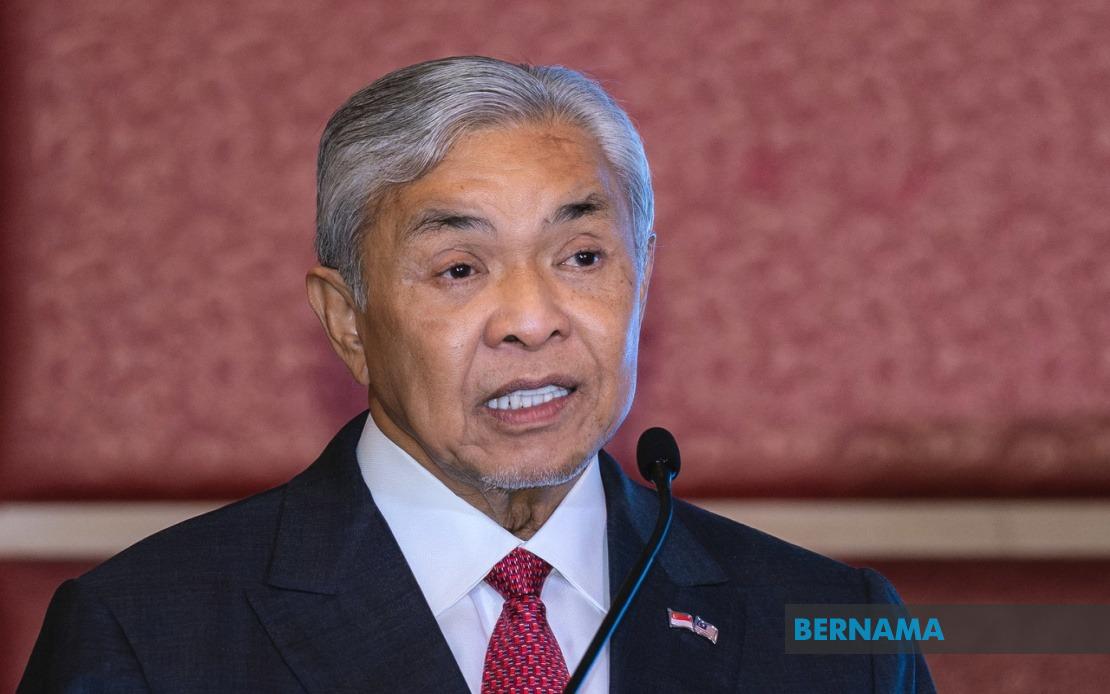
Deputy Prime Minister Datuk Seri Dr Ahmad Zahid Hamidi has moved to reassure stakeholders that Malaysia's Technical and Vocational Education and Training sector is delivering exceptional employment outcomes by embedding industry participation into educational planning from inception. Speaking after addressing the TVET@KKDW contingent preparing for the WorldSkills Shanghai 2026 competition, Ahmad Zahid, who chairs the National TVET Council, underscored how strategic partnerships between training providers and employers are fundamentally reshaping graduate prospects in the country.
The government's strategy hinges on a deceptively simple but powerful principle: involving companies and industry stakeholders in course design before students enrol. Rather than TVET institutions developing curricula in isolation and hoping employers will value the outputs, the approach reverses this sequence. By consulting with industry players about their talent needs and competency requirements upfront, training programmes can be constructed to produce graduates whose skills directly match workplace demands. This alignment removes fundamental friction points that have historically plagued vocational education globally, where graduates emerge with credentials that employers do not value or that address redundant skill sets.
Ahmad Zahid claimed this collaborative methodology has delivered a 100 per cent employability rate among TVET graduates, a striking assertion that reflects the confidence of government leadership in the sector's transformation. More remarkably, he stressed that many graduates receive firm job offers before they finish their final examinations, effectively eliminating the uncertain job-search period that typically follows graduation. This pre-graduation recruitment arrangement benefits both students, who gain employment security and reduced transition anxiety, and employers, who can shape final training modules around their specific operational needs and integrate promising workers into their pipelines earlier.
The elimination of course-curriculum mismatch addresses one of the most persistent criticisms levelled at vocational training systems. When graduates discover that their qualifications do not align with employer expectations or that labour markets have shifted during their studies, both individual and national productivity suffer. By maintaining continuous dialogue between training institutions and industry, Malaysia's TVET framework aims to ensure that such misalignments become exceptional rather than routine occurrences. Additionally, this approach helps address wage-related anxieties; when employers participate in curriculum development, they can vouch for the market value of credentials, providing graduates with greater confidence about earning potential.
The government is pursuing an additional layer of enhancement through the implementation of High TVET courses, advanced-level programmes designed to cultivate skills that extend beyond conventional vocational competencies. These higher-tier offerings aim to produce graduates capable of addressing complex industrial challenges, managing teams, and adapting to rapidly evolving technological environments. By stratifying TVET offerings across multiple levels, Malaysia is attempting to broaden the sector's appeal beyond traditional manufacturing and trades, potentially attracting students who might otherwise pursue conventional academic pathways.
The WorldSkills Shanghai 2026 competition serves as both a proving ground for Malaysia's TVET quality and a confidence-building exercise for the sector. Ahmad Zahid explicitly positioned the competition as an opportunity for Malaysian competitors to demonstrate excellence on the international stage, emphasising that the contingent comprising nine participants from MARA TVET, Universiti Kuala Lumpur, and GIATMARA should approach preparation with mental resilience and emotional discipline. The nine skill categories in which Malaysia will compete—encompassing Fashion Technology, Cyber Security, and Electronics—span traditional and emerging sectors, reflecting the breadth of the government's vocational ambitions.
The two-month preparation window before the September competition in Shanghai carries significant weight. Ahmad Zahid's address to participants stressed the importance of sustained skill enhancement, disciplined practice routines, and unwavering focus during this critical phase. Success at WorldSkills would provide powerful validation for Malaysia's TVET model both domestically and regionally, demonstrating that collaborative industry-education partnerships can produce world-class technical talent.
From a regional perspective, Malaysia's TVET approach offers a template that other Southeast Asian economies struggling with youth unemployment and skills mismatches might examine. Many developing nations in the region grapple with gaps between graduate competencies and employer needs, partly because vocational training operates in isolation from labour market requirements. Malaysia's systematic integration of industry voices into curriculum planning represents a potentially replicable model, though implementation requires sustained political commitment and institutional coordination across multiple stakeholders.
The emphasis on avoiding wage-related concerns also addresses broader developmental challenges. When TVET graduates secure employment at competitive wages—facilitated by employers' participation in training design—the pathway becomes more attractive to lower-income families and disadvantaged communities. This democratisation of skilled-employment access can contribute to social mobility and more equitable distribution of economic opportunities across Malaysia's diverse population.
However, the claim of 100 per cent employability warrants scrutiny. While the pre-graduation recruitment model is genuinely innovative, such figures likely reflect specific metrics and definitions; some graduates may accept positions that underutilise their training, and employment duration or quality might vary. Nevertheless, the trajectory of outcomes appears substantially improved compared to conventional vocational systems where unemployment among recent graduates remains problematic.
Looking forward, the sustainability of Malaysia's TVET model depends on maintaining strong institutional relationships between training providers and employers amid economic fluctuations. When labour markets contract, companies may reduce recruitment commitments. Equally, rapid technological change could render curricula obsolete despite careful initial design. Continuous monitoring, adaptive mechanisms, and financial support for programme updates will remain essential.
The government's investment in TVET, framed through statements like Ahmad Zahid's address, reflects recognition that not all students benefit from academic pathways and that skilled trades remain economically vital. By positioning TVET as a respectable, employment-assured alternative to conventional education and backing this with industry partnerships, Malaysia is attempting to shift cultural perceptions of vocational training—historically viewed in some communities as a second-tier option. If successful, this rebranding could unlock considerable human potential and contribute meaningfully to the nation's economic competitiveness and social inclusivity.

