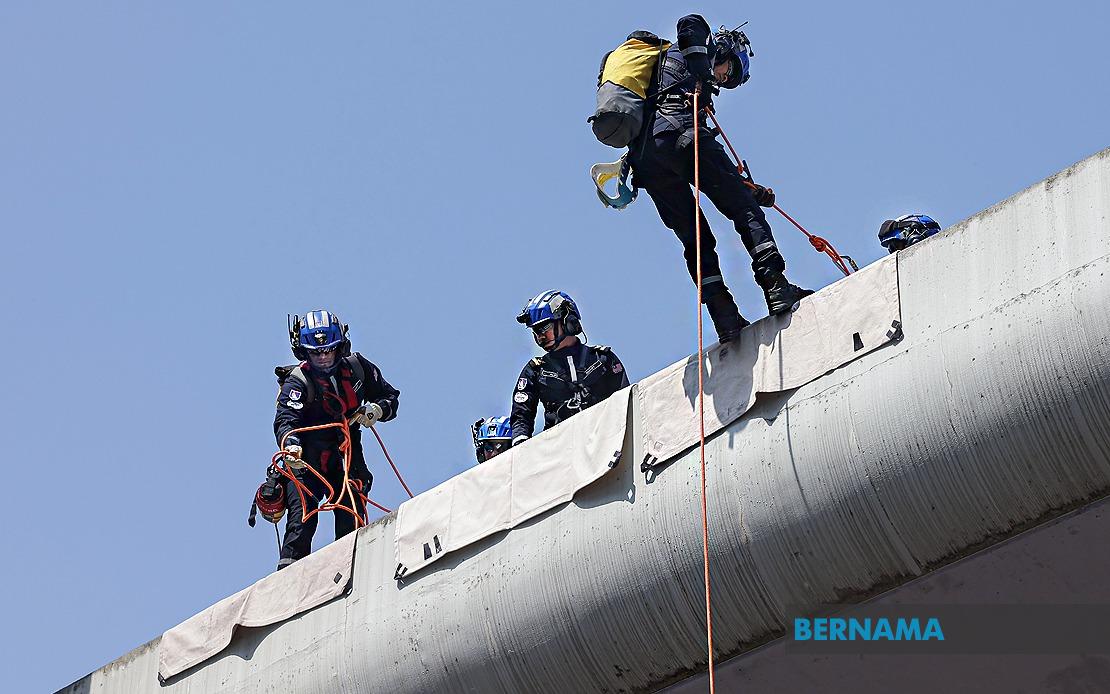
Malaysia has positioned its premier search and rescue capability on high alert for potential deployment to earthquake-battered Nepal, marking the country's readiness to respond to one of South Asia's most significant humanitarian crises in recent months. The National Disaster Management Agency confirmed that the Malaysian Special Search and Rescue Team, known as SMART, remains primed to mobilise at short notice, though the operation hinges entirely on Nepal's official invitation and acceptance of Malaysian assistance.
The standby posture reflects established protocol governing international disaster response, whereby receiving nations must formally request and coordinate with foreign governments before allowing external teams to operate on their soil. NADMA's statement underscores this diplomatic prerequisite, noting that while SMART operates in constant readiness, the actual deployment cannot proceed without Nepal's explicit approval. The agency has emphasised that the Foreign Ministry remains engaged in all coordination channels with Kathmandu to facilitate smooth passage should Nepal formally request Malaysia's help.
SMART, comprising highly trained specialists in urban search and rescue operations, represents Malaysia's flagship contribution to regional disaster management architecture. The team's commander, Senior Fire Superintendent I Abdul Manaf Che Isa, conveyed the unit's unwavering commitment despite competing national commitments, noting that members would simultaneously participate in Malaysia's 69th National Day parade while maintaining operational readiness for deployment. This dual-track approach demonstrates the professional calibre and dedication of personnel who can transition from ceremonial duties to emergency response operations within minimal timeframes.
Prime Minister Anwar Ibrahim formalised Malaysia's humanitarian response strategy, announcing that SMART would pursue multiple objectives once operational in Nepal. Beyond standard search and rescue functions, the team carries a mandate to locate Malaysian nationals affected by the disaster and facilitate their return home. Additionally, SMART will coordinate with the Malaysian Embassy in Kathmandu to strengthen on-ground assistance delivery and monitor the welfare and safety of Malaysian citizens remaining in Nepal. This comprehensive approach reflects Malaysia's understanding that effective disaster response extends beyond immediate rescue operations to encompass citizen protection and embassy support.
Financial support accompanies the deployment preparation, with Malaysia committing US$1 million toward Nepal's disaster relief and recovery initiatives. At current exchange rates approximating RM4.03 per US dollar, this translates to roughly RM4 million in direct monetary assistance. The contribution acknowledges the scale of Nepal's recovery challenge and positions Malaysia as a substantive partner in Nepal's post-disaster reconstruction, complementing the expertise provided by SMART personnel. This dual approach—combining technical rescue capacity with financial resources—demonstrates a sophisticated understanding of comprehensive disaster response.
For Malaysian readers, this readiness highlights the nation's evolving role within Asian humanitarian architecture. Malaysia's capacity to maintain elite rescue teams at operational readiness positions it alongside regional powers capable of rapid international response. The willingness to deploy these resources across borders reinforces Malaysia's commitment to regional stability and reflects mutual aid principles increasingly central to Southeast Asian cooperation frameworks. Moreover, the operation exemplifies how Malaysia balances domestic priorities, such as National Day celebrations, with international humanitarian obligations.
The Nepal situation carries particular significance given the country's geographical vulnerability and limited indigenous disaster response infrastructure. Mountainous terrain, limited transportation networks, and historical patterns of infrastructure damage make international assistance critical during major disasters. Malaysian expertise in operating within challenging geographic and logistical conditions, honed through domestic experience managing tropical monsoons and flooding, provides valuable technical knowledge applicable to Nepal's mountainous environment. SMART's potential contribution thus transcends symbolic gesture, offering concrete operational capacity.
From a diplomatic perspective, Malaysia's proactive positioning strengthens bilateral relations with Nepal while reinforcing Malaysia's standing within broader Asian disaster response networks. The willingness to mobilise resources on short notice, without awaiting formal requests, signals reliability and demonstrates Malaysia's integration into informal mutual aid systems that characterise Southeast Asian and Asian regionalism more broadly. Such gestures accumulate diplomatic capital, enhancing Malaysia's voice in international forums and strengthening bilateral ties.
The operational readiness of SMART also underscores Malaysia's investment in domestic disaster management capacity with international applications. Teams trained and equipped for Malaysian conditions—tropical disasters, urban environments, earthquake scenarios—translate effectively to other Asian contexts. This investment yields benefits extending beyond Malaysia's borders, positioning the nation as a responsible regional actor capable of contributing meaningfully to community safety across Asia. The decision to maintain such capabilities reflects long-term strategic thinking about Malaysia's regional responsibilities and security interests.
Coordination through the Foreign Ministry adds diplomatic sophistication to what might otherwise appear a purely technical rescue operation. Embedding SMART deployment within foreign policy frameworks ensures that rescue operations align with broader bilateral relationships and international protocols. This approach minimises friction, facilitates host-government cooperation, and demonstrates Malaysia's commitment to respecting sovereignty while providing assistance. Such coordination mechanisms increasingly characterise successful international disaster response, differentiating professional operations from uncoordinated external interventions that sometimes complicate rather than assist relief efforts.
Looking ahead, Nepal's formal decision regarding Malaysian assistance remains pending. Should authorities approve SMART deployment, the team's activities will likely be closely observed by other Asian nations assessing Malaysia's operational capabilities and reliability. Successful operations would reinforce Malaysia's positioning within regional security and humanitarian architectures. Conversely, even if deployment does not materialise, Malaysia's demonstrated readiness and the financial commitment already pledged signal serious commitment to Nepal's welfare. The standby posture, while less dramatic than active deployment, nevertheless represents substantive Malaysian engagement with one of Asia's most vulnerable populations facing acute humanitarian need.

