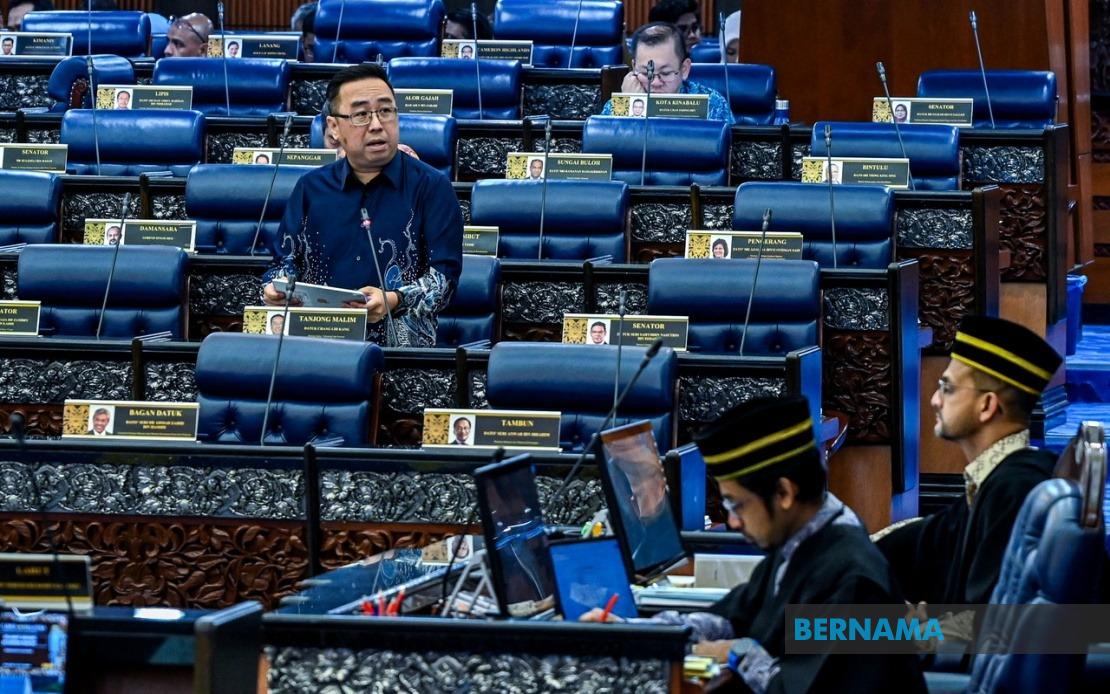
The Malaysian government has set an ambitious timeline to bring homegrown advanced semiconductor packaging technology to market within two years, marking a significant milestone in the country's efforts to develop high-value capabilities in the semiconductor sector. Science, Technology and Innovation Minister Datuk Chang Lih Kang announced in Parliament that a RM185 million pilot initiative coordinated by the Malaysia Science Endowment (MSE) would serve as the catalyst for this transition, with a consortium of five local companies and government research institutions joining forces to build the technology from laboratory stage to commercial readiness.
The funding structure operates as targeted grants specifically designed to elevate the project's Technology Readiness Level—a standardised framework measuring how mature a technology has become. Currently positioned at TRL 5, which indicates the technology has moved beyond basic research into laboratory-scale demonstration, the initiative aims to reach TRL 9 within the two-year window. This final maturity level signals that the technology has been proven in operational environments and is ready for actual market deployment without requiring further fundamental refinement.
Understanding this progression reveals the strategic nature of the government's approach. Rather than attempting to jump directly from research to mass production—a costly and risky proposition—the capacity-building programme concentrates on bridging the critical gap where promising innovations often falter. This intermediate phase focuses on training domestic companies in the practical aspects of advanced packaging operations, including manufacturing processes, quality control standards, and supply chain integration. By investing during this transitional period, the government addresses a persistent weakness in Malaysia's technology ecosystem: the difficulty of translating research breakthroughs into viable commercial enterprises.
The consortium model reflects contemporary best practices in technology development across Southeast Asia and globally. Rather than channelling funds to a single entity, spreading responsibility among multiple local companies creates competitive pressure while fostering knowledge-sharing and redundancy. This distributed approach reduces the risk that the programme's success becomes dependent on any single organisation's performance or market viability. Each consortium member brings different capabilities—whether in manufacturing, materials science, process engineering, or systems integration—creating a more comprehensive ecosystem than any single firm could establish independently.
The semiconductor packaging sector holds particular significance for Malaysia's industrial future. Packaging refers to the process of integrating individual semiconductor chips with interconnects and protective materials to create functional components ready for assembly into larger devices. This segment of the semiconductor value chain commands premium pricing and generates substantial employment for skilled workers. More importantly for Malaysia's strategic positioning, it represents a gateway into advanced manufacturing that doesn't require the same level of expensive fabrication infrastructure as chip-making itself. By establishing indigenous packaging capabilities, Malaysia can capture higher-margin activities while complementing its existing role in the global semiconductor ecosystem.
Minister Chang's emphasis on limiting government involvement beyond the two-year capacity-building phase carries important implications for the programme's long-term sustainability. Once the technology achieves TRL 9 status, responsibility transfers entirely to industry participants, who must then secure their own commercial customers and arrange independent financing from venture capital, corporate investors, or banking institutions. This deliberate withdrawal of state support aims to prevent what economists term "moral hazard"—where companies become complacent or inefficient because government funding guarantees their survival regardless of market performance. By establishing a clear sunset clause for subsidies, the government signals that companies must achieve genuine commercial viability or exit the venture.
The initiative explicitly targets next-generation applications driving global semiconductor demand, particularly artificial intelligence infrastructure, data centre hardware, high-performance computing systems, automotive electronics, fifth-generation telecommunications networks, and emerging quantum computing platforms. These sectors are expected to generate enormous growth over the next decade, yet they all require advanced packaging solutions that can handle extreme performance demands, thermal challenges, and miniaturisation requirements. By positioning Malaysia's technology development around these specific applications, the programme aligns domestic capabilities with verified future market opportunities rather than betting on speculative or declining segments.
For Malaysia's broader semiconductor ambitions, this programme serves multiple strategic purposes simultaneously. It generates intellectual property—technological innovations and processes that the country can own and control—rather than simply absorbing and reproducing foreign technologies under licence. It builds engineering and manufacturing expertise among domestic workers and companies, creating human capital that strengthens the nation's competitive advantages. It also diversifies Malaysia's semiconductor sector beyond assembly and testing operations, which currently dominate the local industry. While assembly and testing remain profitable, they occupy lower-value positions in the global semiconductor value chain. Advanced packaging, particularly for cutting-edge applications, commands dramatically higher margins and greater technological prestige.
The MSE's role in accelerating the transition from research to commercialisation addresses a recognised weakness in innovation systems throughout Southeast Asia. Many developing and middle-income economies struggle with the "valley of death"—the critical stage between successful research demonstrations and market-ready products where innovation projects commonly falter despite technical promise. Government funding during this interval, when private investors remain uncertain and risks still appear excessive, can be the decisive factor determining whether innovations reach market. By explicitly designing the RM185 million programme to bridge this valley, MSE attempts to overcome a systematic barrier that has prevented other promising Malaysian technologies from achieving commercial impact.
The parallel objectives of building local technological autonomy while preparing companies for independent commercial operation reflect sophisticated policy thinking. Rather than perpetuating dependency relationships that some critics associate with traditional industrial policy, this approach treats government funding as temporary scaffolding supporting a transition to self-sufficiency. Companies that cannot operate profitably without continued state subsidies ultimately fail this test and exit the sector. Only those capable of competing on genuine commercial merits advance beyond the capacity-building phase. This market-discipline mechanism, while harsh, ensures that limited government resources concentrate on initiatives with realistic prospects for sustainable commercial success.
For regional observers and potential international partners, the programme signals Malaysia's determination to climb the semiconductor value chain and capture increasing shares of high-margin activities. Countries throughout Asia—from Taiwan and South Korea to Vietnam and Thailand—compete intensely for semiconductor manufacturing investment. Malaysia's historical strength in assembly and testing faces intensifying competition from lower-cost jurisdictions. By developing advanced packaging capabilities rooted in indigenous technology, Malaysia can offer something competitors cannot: local ownership of proprietary processes and genuine technological differentiation. This positioning becomes increasingly valuable as multinational semiconductor companies seek to diversify supply chains and reduce concentration risks following recent global disruptions.

