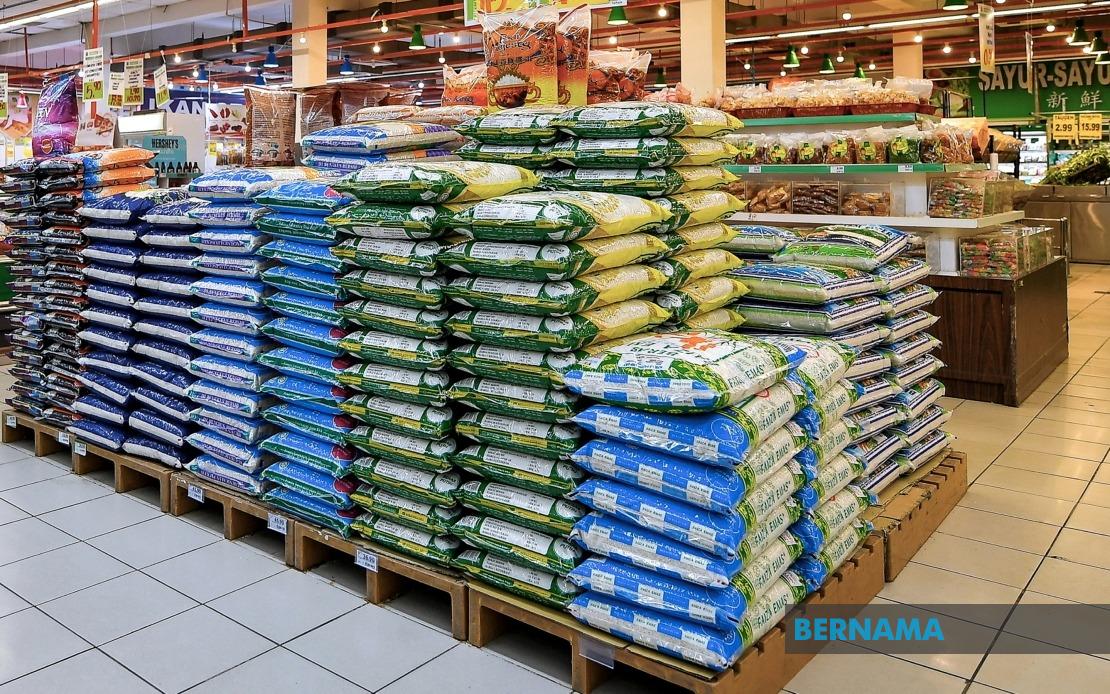
Malaysia's fundamental food security position remains robust, with sufficient rice reserves to sustain the country through at least the next half-year, according to Economy Minister Akmal Nasrullah Mohd Nasir. The assurance addresses widespread concerns about potential supply disruptions and inflationary pressures affecting staple foods across the region. The government's confidence in its rice buffer stocks underscores careful planning that has insulated Malaysian consumers from the acute food security challenges affecting other parts of the world.
During a parliamentary briefing on July 13, Akmal Nasrullah emphasised that maintaining price stability for Local White Rice (BPT) remains a cornerstone of the government's commitment to protecting household purchasing power. By freezing domestic rice prices despite volatile global commodity markets, the administration aims to shield ordinary Malaysians from the economic shocks that have created affordability crises in neighbouring countries. This pricing strategy reflects recognition that food security extends beyond mere supply availability to encompass genuine accessibility for all income groups.
The minister articulated a broader policy framework centred on shielding citizens from international economic turbulence. He stated that amid the complex global uncertainties now affecting supply chains and commodity prices worldwide, the government's primary obligation is preventing disruptions to essential supplies while simultaneously preventing exploitative price increases that would squeeze household budgets. This dual commitment acknowledges that food security cannot be reduced to technical supply metrics alone but must account for the real-world purchasing capacity of ordinary families.
These reassurances emerged from deliberations during a National Economic Action Council (MTEN) meeting chaired by Prime Minister Datuk Seri Anwar Ibrahim at Parliament. The high-level engagement signals that food security occupies a prominent position within Malaysia's broader economic management strategy. That the nation's most senior political leadership directly engages with rice supply questions reflects the sector's symbolic importance in Malaysian society and the government's determination to demonstrate competent stewardship of critical resources.
Beyond supply guarantees, the government has simultaneously moved to support the agricultural sector through direct financial assistance to paddy farmers. The distribution of RM45.98 million to 118,908 rice farmers across Peninsular Malaysia through the Paddy Farmers Plowing Incentive demonstrates proactive intervention to sustain domestic production. This financial support acknowledges the genuine economic pressures confronting farming communities, particularly the combined impact of climate volatility and escalating operational costs that have eroded farm viability across much of Southeast Asia.
The farmer assistance programme reveals sophisticated policymaking that recognises the interconnection between producer welfare and long-term supply security. By directly supporting farmers navigating climate uncertainty and cost inflation, the government invests in agricultural resilience. Farmers who receive production incentives are positioned to maintain output levels and continue investing in their operations, creating sustainable domestic supply chains less vulnerable to international market shocks or supply interruptions affecting imported food products.
For Malaysian consumers, these developments carry immediate implications for household budgeting and economic predictability. In an era of regional food price volatility, the government's dual commitment to maintaining rice supplies and freezing retail prices provides economic anchoring for family finances. Knowing that a fundamental dietary staple will remain available and affordable allows households to plan spending with greater confidence, particularly among lower-income families whose proportional food expenditure is highest.
The timing of these announcements reflects heightened attention to global economic risks. International commodity markets have experienced persistent instability, and various countries have confronted supply chain disruptions affecting food availability and pricing. Malaysia's position as a net food importer makes such international volatility particularly consequential. The government's explicit statement about rice buffer adequacy and price stability represents proactive communication designed to prevent consumer panic and speculation that could undermine market function.
Regionally, Malaysia's management of rice supply and pricing offers a instructive contrast to countries grappling with more acute food security crises. The combination of strategic reserves, domestic production support, and price stabilisation represents comprehensive approach to ensuring ordinary citizens retain access to fundamental nutrition. As climate change and geopolitical tensions increasingly complicate food production and international trade, demonstrating reliable domestic supply and pricing mechanisms provides both practical security and psychological reassurance about governmental competence.
The commitment to maintaining current price levels for Local White Rice will require careful monitoring as international markets remain volatile. Should global rice prices continue escalating, absorbing those cost pressures without passing them to consumers will demand either sustained government subsidy, strategic release of buffer stocks, or both. The government's willingness to make such commitments demonstrates confidence in its fiscal capacity to absorb these potential costs while prioritising social stability and household welfare protection.

