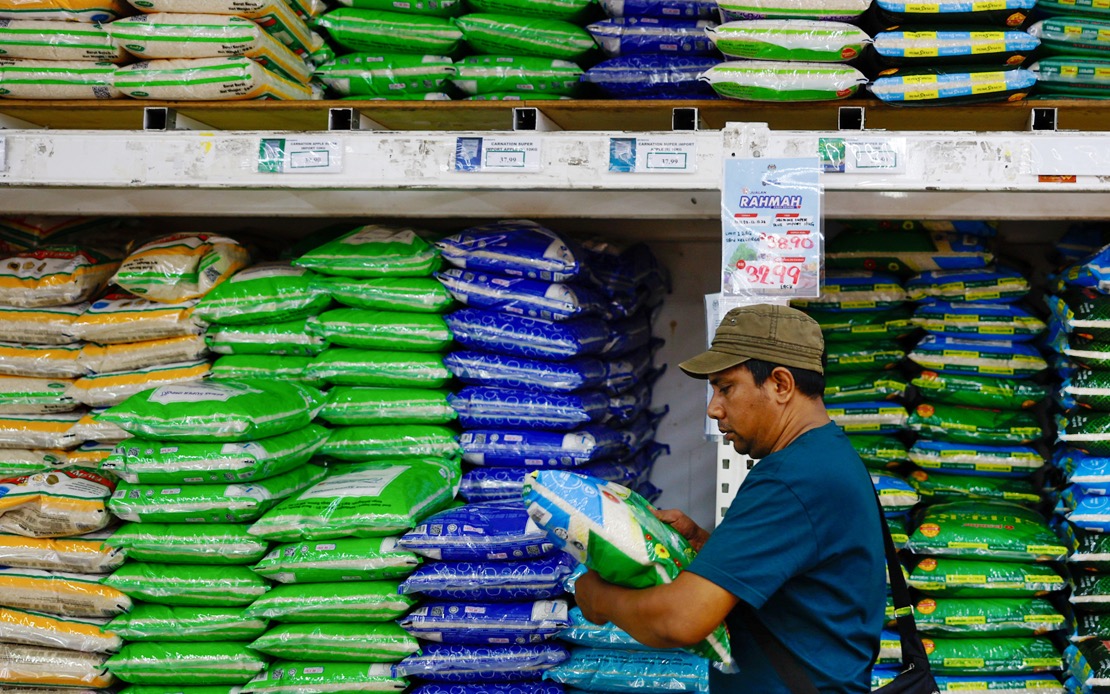
Malaysia's food security apparatus faces a critical test as geopolitical tensions in West Asia create uncertainty across global commodity markets. In response to growing concerns, the Deputy Agriculture and Food Security Minister Datuk Chan Foong Hin assured parliament that the nation's physical rice stockpile remains robust and sufficient to insulate consumers from potential supply shocks. The assurance carries particular weight given the country's reliance on imports to meet domestic rice demand, making strategic reserves essential to maintaining social and economic stability.
The government currently holds 1.237 million tonnes of rice in combined storage, comprising two distinct layers of protection. A dedicated national buffer stock of 200,000 tonnes is managed by Padiberas Nasional Berhad (BERNAS), the state-owned rice agency, while commercial stocks account for the remaining 1.037 million tonnes. Together, these reserves represent at least six months of uninterrupted supply for Malaysia's population, providing a temporal cushion that allows policymakers time to respond to unforeseen disruptions without triggering panic buying or price volatility in local markets.
Beyond the physical stockpile itself, government intervention through price control mechanisms creates an additional stabilizing layer. Subsidies on locally produced white rice have effectively decoupled domestic pricing from international commodity fluctuations, a strategic advantage that becomes more valuable during periods of global market turbulence. Unlike other essential commodities that experience sharp price spikes when world prices surge, Malaysian consumers benefit from administratively controlled pricing that shields them from immediate cost shocks. This approach reflects lessons learned from previous commodity crises and represents a deliberate policy choice to prioritize consumer welfare over free-market mechanisms.
However, Malaysia's long-term food security architecture extends well beyond managing existing reserves. The nation has established an ambitious target of achieving 80 percent self-sufficiency in rice production by 2030, a goal that requires fundamental improvements in domestic agricultural output. Current production trends have been declining, creating a structural gap that stockpiles alone cannot address indefinitely. The El Niño phenomenon, which brings drought conditions unfavorable to rice cultivation, compounds these challenges by introducing climatic unpredictability into production planning.
To bridge this self-sufficiency gap, the agriculture ministry is pursuing a multi-pronged strategy centered on technological advancement and resource optimization. The adoption of drought-resistant padi varieties, particularly the MR 380, MR 381, and MR 382 strains, represents a direct response to climate-related production risks. These genetically improved varieties maintain acceptable yield levels even under water stress conditions, making them particularly valuable in an era of increasing climatic volatility. Complementing varietal improvements are water management innovations such as Alternate Wetting and Drying (AWD) and System of Rice Intensification (SRI), both of which reduce water consumption while maintaining or improving productivity.
The Muda Agricultural Development Authority (MADA) region has been designated as a testing ground for intensive interventions designed to demonstrate scalable improvements in rice productivity. A five-season cultivation project spanning two years will serve as both a pilot program and a proof-of-concept for agricultural modernization. Additionally, targeted investment in upgrading irrigation infrastructure across the country addresses fundamental constraints that have limited farmer productivity for decades. These irrigation improvements directly enable the implementation of water-efficient cultivation techniques and expand the geographical areas suitable for rice production during dry seasons.
Recognizing that structural transformation in agriculture requires immediate relief for farming communities, the government has implemented several short-term cost reduction measures. A temporary exemption from the Sales and Service Tax on critical agricultural inputs such as rock phosphate and magnesium sulphate will remain in effect from January 1, 2026, through December 31, 2027. This two-year window provides relief during a critical investment period when farmers might otherwise defer essential nutrient applications due to cost pressures.
Ploughing incentives for the 2026 planting season have been substantially increased from RM160 to RM300 per hectare, representing an 87.5 percent raise in government support. This enhancement is expected to directly benefit approximately 200,000 padi farmers and involves an additional budgetary allocation of around RM40 million. The incentive increase serves multiple objectives: it encourages farmers to continue cultivating rice despite economic pressures, maintains employment in rural agricultural communities, and signals government commitment to sustaining domestic production capacity.
For Malaysian consumers and policymakers alike, the implications of current food security arrangements deserve careful consideration. While the six-month reserve capacity provides meaningful protection against short-term disruptions, the underlying trajectory of declining domestic production creates longer-term vulnerabilities. Geopolitical tensions in West Asia demonstrate that global supply chains can be disrupted with minimal warning, a reality that underscores the strategic value of reducing import dependency. The current stockpile represents necessary insurance, but insurance alone cannot substitute for productive capacity.
The path toward the 80 percent self-sufficiency target requires sustained investment, technological adoption, and farmer engagement across the next several years. Success will depend on whether productivity improvements can be implemented at scale and whether farmers receive adequate returns to justify continued participation in rice cultivation. The government's combination of price subsidies, input cost relief, and capital investment in infrastructure suggests recognition that market forces alone will not generate desired production increases.
Moreover, Malaysia's experience demonstrates how strategic food reserves, price controls, and production incentives can work together as complementary rather than competing policy tools. The current stockpile buys time for structural improvements to take root, while subsidies protect consumers from shocks and incentive programs encourage producers to invest in long-term improvements. However, this multi-layered approach requires consistent funding and political will to maintain, particularly as fiscal pressures mount and competing demands for government resources intensify.
For the broader Southeast Asian region, Malaysia's approach to food security offers instructive lessons in how developing economies can balance immediate consumer needs with long-term productive capacity building. The region faces similar challenges regarding import dependency, climatic variability, and the need to feed growing populations. As geopolitical risks continue to reshape global food systems, countries that have invested in both strategic reserves and productive capacity improvements will prove better positioned to maintain stability and protect their citizens from external shocks.

