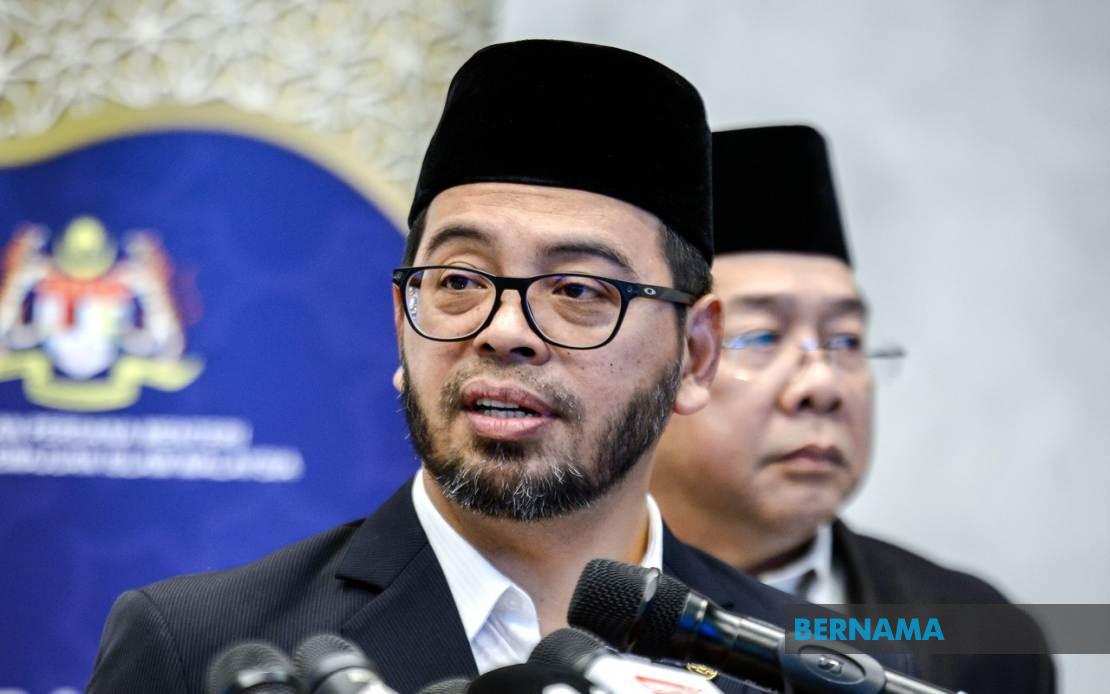
Malaysia's Religious Affairs Ministry has issued a forceful rebuke following the brief detention of Sheikh Muhammad Hussein, the Grand Mufti of Jerusalem and custodian of Al-Aqsa Mosque, during last Friday prayers. Senator Dr Zulkifli Hasan, who oversees religious affairs in the Prime Minister's Department, framed the incident as a troubling breach of fundamental freedoms and an affront to one of Islam's most sacred locations. Though the religious leader was released relatively quickly, the ministry's strong response underscores Malaysia's commitment to championing religious liberty and protecting Islamic heritage sites from what it characterizes as systematic interference.
The detention itself, though brief, represents the kind of incident that carries outsized symbolic weight across the Muslim world. For Malaysian observers and policymakers, the apprehension of a senior Islamic religious figure while performing his spiritual responsibilities exemplifies what the ministry views as the erosion of worship rights and the compromised safety of those who lead prayers at the Al-Aqsa Mosque complex. This is not merely a matter of individual liberty but, in the ministry's framing, an attack on the sanctity of a site revered by nearly two billion Muslims globally. The incident resonates particularly strongly in Malaysia, where concerns about the political status of Jerusalem and Palestinian autonomy have long featured prominently in domestic political discourse and foreign policy positioning.
In response, Zulkifli has explicitly called upon international bodies—particularly the United Nations and the Organisation of Islamic Cooperation—to take decisive measures. Malaysia's appeal reflects a broader frustration among Muslim-majority nations that international legal frameworks and multilateral institutions have proven insufficient in protecting Palestinian interests and safeguarding the religious character of disputed territories. By invoking these organizations, Malaysia signals its expectation that the global community should enforce existing international law regarding worship rights, the protection of religious leaders, and the preservation of sacred sites' integrity. This appeal also serves a domestic political function, demonstrating to Malaysian voters that their government actively pursues justice through established international channels rather than unilateral or confrontational means.
The ministry's statement reaffirmed Malaysia's unwavering solidarity with the Palestinian people and pledged continued Malaysian support for initiatives aimed at achieving equitable peace, defending Palestinian sovereignty, and eliminating oppression. Such language reflects the consistent positioning of successive Malaysian governments on the Israeli-Palestinian conflict. Malaysia maintains among the most supportive stances toward Palestinian causes within Southeast Asia, a posture rooted in both Islamic solidarity and postcolonial principles regarding national self-determination. The religious affairs ministry's intervention adds moral and spiritual authority to what is fundamentally a political stance, emphasizing that Malaysian support extends beyond diplomatic protocol to encompass religious and humanitarian concerns.
Dr Zulkifli used the occasion to simultaneously highlight another significant historical trauma affecting Muslim communities: the 31st anniversary of the Srebrenica massacre in Bosnia and Herzegovina. In July 1995, following the fall of Srebrenica despite its UN designation as a protected safe area, Bosnian Serb forces systematically executed more than 8,000 Bosniak Muslim men and boys over the course of several days. The passage of three decades has not resolved the humanitarian aftermath—more than 1,000 victims remain unidentified, with ongoing efforts to recover, identify, and properly bury remains continuing into the present. By bringing Srebrenica into the conversation alongside the Al-Aqsa incident, the minister drew a parallel between contemporary threats to Muslim communities and historical atrocities, suggesting that vigilance and international engagement remain perpetually necessary.
Malaysia's historical role in responding to the Bosnian Muslim crisis carries significant symbolic weight in this context. Under the leadership of former Prime Minister Tun Dr Mahathir Mohamad and continued through current Prime Minister Datuk Seri Anwar Ibrahim's tenure, Malaysia positioned itself as an advocate for Bosnian Muslims facing existential threats. The Muslim Youth Movement of Malaysia (ABIM) mounted early humanitarian initiatives, while Malaysia subsequently welcomed Bosnian refugees seeking asylum and safety. Through the International Islamic University Malaysia (IIUM), Malaysia provided educational pathways for Bosnian students, fostering long-term relationships and knowledge transfer. These actions represented Malaysia's interpretation of Islamic solidarity as requiring concrete, sustained commitment rather than mere rhetorical support.
Malaysia's military contribution to Bosnia stands as perhaps the most tangible manifestation of this commitment. Between 1993 and 1998, the Malaysian Armed Forces deployed 10,514 officers and personnel to serve under UN peacekeeping operations in Bosnia and Herzegovina, participating in both the Malaysian Battalion (MALBAT) and the Implementation Force (IFOR). This deployment represented a significant commitment of military resources to a distant conflict, undertaken partly from religious solidarity but also from a conviction that Malaysia possessed both the capability and the obligation to contribute to international peace efforts. For Malaysian readers, this history provides crucial context: the nation's government has previously translated concern for Muslim communities facing violence into concrete military and humanitarian action, lending credibility to current ministerial statements regarding Al-Aqsa and Palestinian rights.
Dr Zulkifli's invocation of Srebrenica served an additional pedagogical purpose, particularly directed at Malaysia's youth. He framed the tragedy not as a moment for sectarian grievance but rather as a cautionary lesson against hatred, division, and all forms of systematic oppression. This framing reflects an attempt to transform historical trauma into moral instruction, encouraging younger Malaysians to develop principled opposition to violence regardless of perpetrators or victims' religious identity. The minister's appeal suggests that Islamic solidarity need not entail zero-sum thinking or hatred of others, but rather a commitment to universal human dignity and opposition to atrocities regardless of their religious or ethnic dimensions.
The religious language employed throughout the minister's remarks underscores the spiritual dimensions of Malaysia's foreign policy engagement with Muslim-majority regions and communities. Calls for divine blessing upon victims and their families, references to Islamic theological concepts, and invocations of spiritual fortitude characterize how Malaysian religious affairs officials articulate national positions on international matters. This approach reflects Malaysia's self-understanding as an Islamic nation with specific responsibilities toward Muslim communities globally, not merely as a secular state pursuing narrow national interests. Such rhetoric, while sometimes dismissed by secular observers as purely symbolic, carries significant weight within Malaysia's domestic political culture and resonates with constituents who view Malaysia's Islam as integral to its national identity and foreign policy orientation.

