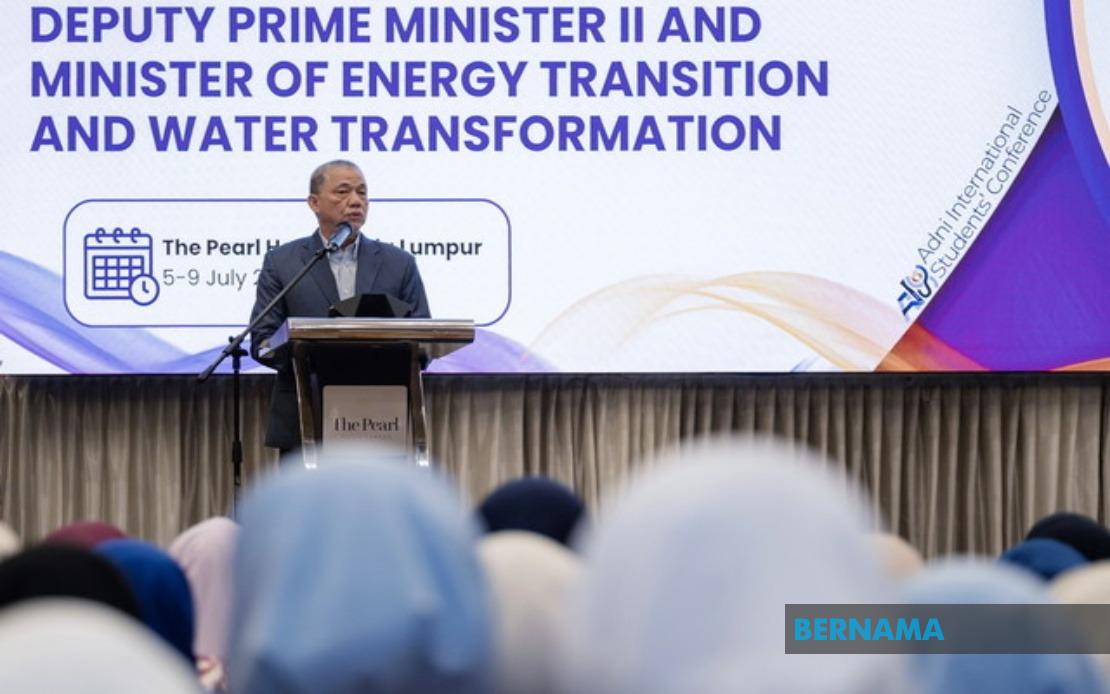
Malaysia's pathway to sustained prosperity rests fundamentally on nurturing high-quality human capital rather than relying solely on economic metrics or technological prowess, Deputy Prime Minister Datuk Seri Fadillah Yusof emphasized at an international student conference in Kuala Lumpur on July 6. Speaking at the opening of the ADNI International Students' Conference (AISC) 2026, Fadillah articulated a vision of national development that places people at the centre, recognizing that the calibre of Malaysia's workforce and citizenry will ultimately determine the nation's competitive edge in an increasingly complex global environment.
The Deputy Prime Minister outlined the specific competencies that Malaysian society must cultivate to remain relevant in the coming decades. Beyond technical expertise, he emphasized the urgent need for individuals capable of engaging in rigorous analytical thinking, communicating across cultural and linguistic boundaries, and pivoting swiftly as technological and social landscapes transform. This multifaceted skill set reflects recognition that Malaysia faces a labour market where adaptability may prove as valuable as formal qualifications, and where the ability to learn continuously will separate thriving professionals from those left behind by disruption.
Fadillah positioned human capital development as inseparable from addressing the interconnected challenges confronting the region and the world. Climate change, pandemic preparedness, the digital revolution, and persistent social disparities cannot be tackled through siloed efforts by governments alone. Instead, he argued, these problems demand sustained collaboration spanning government institutions, universities, businesses, community organizations, and young people themselves. This framing acknowledges that Malaysia, as a middle-income nation aspiring to higher development status, cannot afford to waste talent or leave segments of the population behind if it hopes to compete globally.
The Deputy Prime Minister explicitly linked his remarks to the MADANI Government's policy priorities, framing human capital investment as a cornerstone of national development strategy. He drew a philosophical parallel to principles championed by Malaysia's third Prime Minister Tun Hussein Onn, asserting that a nation's true strength derives not from GDP figures or infrastructure projects alone, but from the unity, character, and moral fibre of its people. This positioning taps into a distinctly Malaysian political tradition that emphasizes social cohesion alongside economic growth, suggesting that the government views human development as integral to maintaining stability and harmony in a diverse society.
In remarks that resonate with contemporary anxieties about technological disruption, Fadillah stressed that while technology might link devices and digital platforms, only shared values, mutual respect, and interpersonal trust can forge genuine societal connections. His comment touches on a growing concern across Southeast Asia that rapid digitalization may erode social bonds if not managed thoughtfully. The Deputy Prime Minister's emphasis on these intangible qualities suggests an understanding that Malaysia's multicultural fabric and social stability depend on deliberate cultivation of common purpose and understanding, not merely on infrastructure investment.
Fadillah articulated an expansive conception of development that transcends conventional economic indicators. True progress, in his formulation, must encompass educational excellence, physical and mental wellbeing, ethical grounding, creative capacity, environmental sustainability, and social cohesion. This holistic framework echoes global discourse on sustainable development while acknowledging distinctly Malaysian concerns about balancing modernization with cultural preservation and social harmony. The emphasis on ethics and values suggests awareness that Malaysia's multicultural composition requires explicit attention to building a shared moral foundation.
Connecting the AISC 2026 to the United Nations Sustainable Development Goals, Fadillah positioned the conference as a microcosm of the kind of collaborative, forward-thinking engagement Malaysia should cultivate. The event embodies SDG commitments to quality education, inclusive development, institutional strength, and strategic partnerships. By hosting such gatherings, Malaysia signals its commitment to these global objectives while creating spaces where young people from diverse backgrounds can build networks and understanding that transcend national boundaries.
The Deputy Prime Minister emphasized that opportunities for intellectual debate and cross-cultural exchange remain vital mechanisms for developing globally aware individuals who maintain strong ethical grounding and cultural identity. For Malaysia, this point carries particular significance given the nation's aspirations to be a regional hub for education and knowledge exchange. Creating such spaces allows Malaysia to position itself as an intellectual leader in Southeast Asia while simultaneously equipping its own youth with international perspectives.
In a pointed observation about the limits of artificial intelligence, Fadillah noted that while machines may surpass human intelligence in narrow domains, they cannot replicate wisdom. Similarly, he stressed that technological systems, no matter how sophisticated, cannot substitute for human compassion and empathy. These remarks address underlying anxieties across Malaysia about whether rapid automation might hollow out the value of human labour and connection. By elevating wisdom and compassion as irreducibly human qualities, Fadillah suggests that Malaysia's competitive advantage lies not in racing against machines but in leveraging distinctly human capacities that machines cannot replicate.
The AISC 2026 itself reflected the conference's stated theme of 'Thriving Together: Diversity, Education and Wellness in a Digital World', convening approximately 150 student participants from Malaysia and neighbouring countries including Thailand, the Philippines, and Indonesia. This regional composition underscores that human capital development is not solely a Malaysian concern but a shared imperative across Southeast Asia. The presence of international delegates suggests that Malaysia views itself as a host for regional intellectual collaboration and friendship-building, positioning the nation as an anchor for educational leadership in its neighbourhood.
Fadillah's remarks must be understood within the broader context of Malaysia's development ambitions and regional positioning. As the nation seeks to transition from an upper-middle income to high-income status, policymakers recognize that manufacturing and natural resources alone cannot sustain prosperity indefinitely. Investment in human capital—through education, healthcare, research infrastructure, and opportunities for talent development—becomes essential. The Deputy Prime Minister's emphasis on quality human capital signals that the MADANI Government intends to prioritize these investments and to frame them not as ancillary to economic policy but as fundamental to national identity and success.

