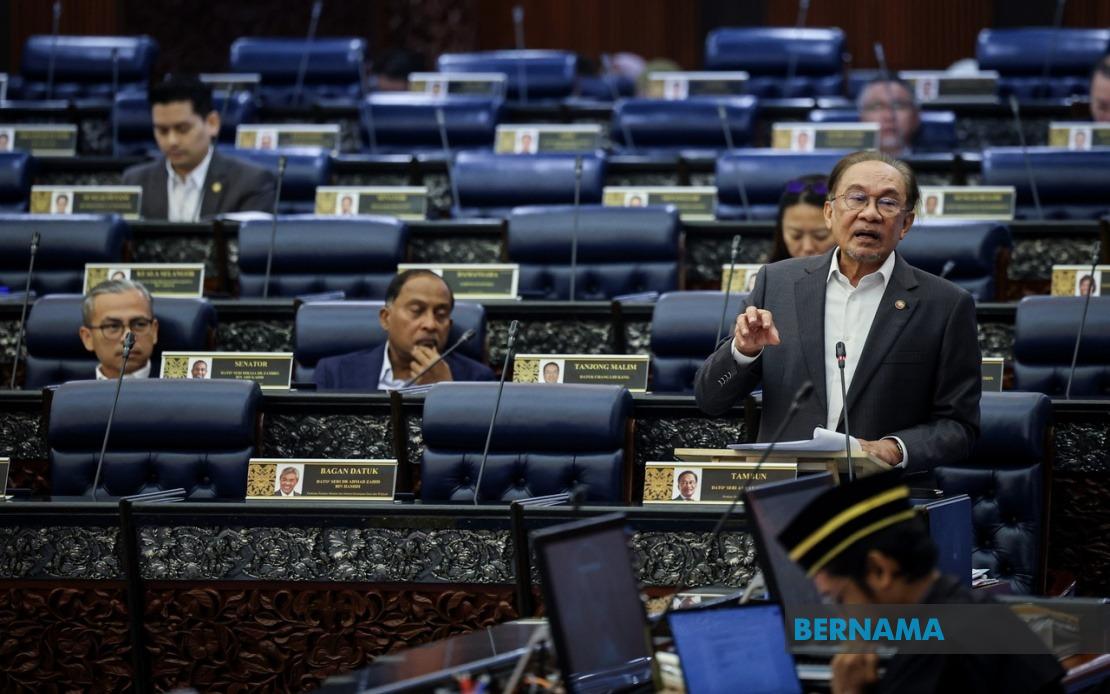
Malaysia's slippage in the World Press Freedom Index this year reflects the government's enforcement of rules around sensitive national symbols and institutions rather than an attempt to stifle legitimate journalism or political debate, Prime Minister Datuk Seri Anwar Ibrahim told Parliament on July 7. The country fell to 95th place in the 2026 index from 88th position the previous year, a shift that has drawn international scrutiny. Anwar's clarification addresses growing concerns about media independence in the region, particularly as other Southeast Asian nations face similar pressure from international press watchdogs.
The Prime Minister identified two specific cases that international observers believe contributed to the decline. Sin Chew Daily faced enforcement action for publishing an inaccurate illustration of the Jalur Gemilang, while Sinar Harian drew attention for its coverage of the Inspector-General of Police's biography. These interventions, though rooted in what the government considers protection of national symbols and institutional integrity, were interpreted by the international media community as restrictions on editorial freedom. Anwar acknowledged this perception gap, noting that what Malaysia considers a serious breach—misrepresentation of the national flag—may not carry the same weight in other jurisdictions, yet the consequences for the country's global standing remain substantial.
The enforcement actions against established media organisations carry particular weight in how international assessments calibrate press freedom scores. When authorities take action against major news outlets, even if the justification centres on specific content categories rather than political opposition, the visibility amplifies concerns abroad. This dynamic creates a tension between maintaining domestic norms and satisfying international evaluation criteria. The Prime Minister's explanation effectively concedes that the enforcement strategy, however justified domestically, produces collateral damage to Malaysia's international reputation in a measure many governments now view as consequential for national standing and investor confidence.
Anwar drew a critical distinction between enforcement actions and broader censorship. The government, he stated, does not prosecute or penalise content merely because it contains factual errors or criticism of political leaders. Instead, when inaccuracies emerge, the administration prefers public clarification, including parliamentary explanations, over punitive measures. This stated preference represents an important policy orientation, suggesting that the government recognises the difference between protecting specific institutional domains and suppressing general political discourse. However, the practical application of this principle remains contested, particularly when determining where legitimate criticism ends and unacceptable content begins.
The three categories of sensitive content—religion, race, and royal institutions—operate within Malaysia's constitutional framework and have been reinforced through agreement by the Conference of Rulers. These boundaries reflect longstanding social compacts designed to maintain communal harmony in a diverse society. Anwar emphasised that the government remains bound by these positions, indicating that enforcement in these areas will continue regardless of international press freedom rankings. This underscores a fundamental policy choice: Malaysia has determined that certain national interests take precedence over international perceptions of media freedom, a calculus shared by many nations but increasingly questioned by global monitoring organisations.
Recent amendments to Section 233 of the Communications and Multimedia Act 1998 demonstrate the government's effort to recalibrate enforcement frameworks. The changes specifically exempted satirical remarks directed at the Prime Minister or other leaders from criminal prosecution, a move intended to demonstrate commitment to protecting political commentary. These legislative adjustments suggest recognition that Malaysia's approach needed refinement to distinguish between protecting institutions and suppressing legitimate political expression. The amendment offers a concrete example of how the government seeks to balance competing concerns, though whether such measures sufficiently address international concerns remains debatable.
Reporters Without Borders, the organisation behind the World Press Freedom Index, evaluates nations across multiple dimensions beyond direct government censorship. The assessment incorporates political environment, legal framework, economic conditions, socio-cultural context, and security considerations. Malaysia's ranking reflects not only enforcement actions but also the broader ecosystem within which media operates. This multifactorial approach means that even without additional government interventions, other variables—such as economic pressures on news organisations or security incidents—can affect the index. Anwar's reference to these multiple assessment criteria reveals an understanding that Malaysia's ranking is influenced by forces beyond direct government control.
A particularly notable point in Anwar's explanation concerns content removal by social media platforms. The Prime Minister observed that major platforms occasionally remove content based on user complaints or their own policies, independent of government requests. He cited his own posts about Hamas as an example, removed by social media companies despite the Malaysian government's disagreement with the decision. This dynamic highlights how press freedom in the digital age involves multiple gatekeepers beyond traditional state actors. The Malaysian Communications and Multimedia Commission makes requests to platforms, but final decisions rest with international corporations operating under their own community standards, creating a complex environment where accountability remains diffuse.
For Malaysia's regional standing and international relationships, the press freedom ranking carries implications beyond symbolic concern. Governments increasingly face questions from international bodies, trading partners, and civil society organisations about media independence. A declining ranking can affect Malaysia's participation in certain international forums and may influence how investors and global media companies perceive the operating environment. Anwar's detailed parliamentary response suggests an administration aware of these stakes and attempting to explain rather than dismiss international assessments, a posture that differs from some neighbouring nations' responses to foreign criticism.
The tension between protecting national sensitivities and meeting international standards for press freedom reflects a broader challenge facing many nations, particularly in Asia where diverse societies manage competing concerns about social cohesion and democratic values. Malaysia's approach emphasises that enforcement against protected categories does not constitute press suppression broadly conceived. Yet the international assessment community measures press freedom partly through the existence of such enforcement itself, creating a definitional gap that may prove difficult to bridge. How Malaysia navigates this contradiction in coming years will influence both its international standing and the substantive question of whether the country's media environment provides sufficient freedom for democratic accountability.

