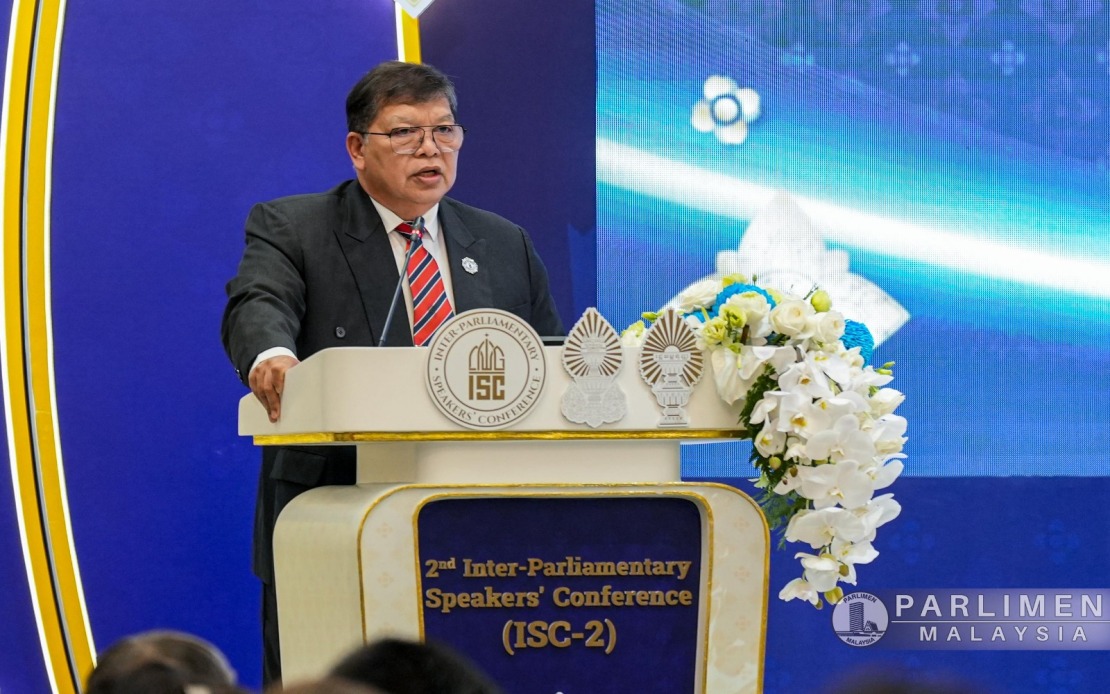
Dewan Rakyat Speaker Tan Sri Dr Johari Abdul has sounded an alarm about the accelerating climate crisis, warning that inaction is inflicting severe hardship on vulnerable populations and degrading the planet's environmental systems. Speaking at the Second Inter-Parliamentary Speakers' Conference in Phnom Penh, Johari reframed climate change as far more than an environmental concern, emphasising that its tentacles now reach into economic stability, public health infrastructure, and the security of food and energy supplies that nations depend upon.
Johari's intervention came at a moment of heightened urgency across the Asian region. Days before the parliamentary gathering in Cambodia, devastating floods in Nepal had claimed at least 469 lives, with 2,381 people still missing, including 644 foreign nationals. Preliminary investigations attributed the catastrophe to a glacial collapse in the Himalayas that overwhelmed river systems along the Nepal-China border. The tragedy exposed how climate-related disasters are no longer distant threats but immediate realities reshaping the lives of millions. Several Malaysians remain unaccounted for in the disaster, bringing the crisis closer to home for readers in the country.
The Nepal flooding exemplifies a broader pattern of climate vulnerability gripping South and Southeast Asia. From landlocked Laos to the Philippines, which endures approximately 20 typhoons annually, communities face recurring threats from flash floods, landslides, and tropical storms that obliterate agricultural land and critical infrastructure with little warning. Rural populations, who lack resources to rebuild and adapt, bear the heaviest burden of these mounting environmental shocks. Johari's intervention thus addresses not abstract environmental science but the tangible suffering of people across the region who face destruction of livelihoods and homes.
Central to Johari's message was frustration at the gap between rhetoric and action among global and national leadership. He lamented that even among elected representatives, climate literacy remains disturbingly low, with many policymakers failing to engage seriously with the issue or understand its drivers. His critique extends to energy policy, where nations continue to rely on carbon-intensive fuel sources such as coal to meet rising power demands, despite abundant renewable alternatives. The Speaker questioned why governments neglect abundant clean energy resources—solar power, wind generation, and ocean wave energy—when the technology and capacity to harness them already exist. This observation carries particular weight in Southeast Asia, where countries possess exceptional solar and wind resources that remain underdeveloped.
The pathway forward, according to Johari, requires systemic investment in three interconnected areas: early education, research and development, and technology deployment. Education forms the foundation, he argued, as schools must integrate climate science and sustainability into curricula so that younger generations understand the crisis and develop solutions. Without this foundational knowledge among citizens and lawmakers alike, political will to enact meaningful policy remains elusive. Simultaneously, governments must fund R&D initiatives that develop and improve clean technologies, from renewable energy systems to sustainable agriculture and water management. Such investment cannot remain concentrated in wealthy nations but must support innovation ecosystems across developing countries in Asia and the Global South.
Johari's remarks also highlighted a troubling dimension of climate vulnerability: the widening inequality between wealthy and disadvantaged nations in their capacity to adapt. He noted that wealthy countries possess resources and technological capability to shield themselves from climate impacts, while poorer regions absorb disproportionate suffering despite contributing least to the problem. This injustice undermines international cooperation, as developing nations justifiably question why they should sacrifice economic growth to address a crisis driven primarily by industrialised consumption patterns. Malaysia, as a middle-income country navigating these tensions, occupies a pivotal position in this debate, balancing development aspirations with environmental responsibility.
The Speaker drew attention to China's long-term strategy in green technology as a potential model, noting that the country has pursued sustained investment in eco-friendly industrial processes, electric vehicle manufacturing, and expansion of green urban spaces. This approach treats climate action not as a constraint on economic dynamism but as a generator of technological advantage and new industries. Such a reframing could influence how Southeast Asian governments approach climate policy, shifting from viewing environmental protection as economically damaging to recognising it as a source of competitive advantage and job creation in emerging sectors.
Cambodia's Prime Minister Hun Manet had echoed these concerns days before the parliamentary conference, warning of rising water levels in the Mekong River and urging downstream communities to prepare for increasing inundation risks. Hun Manet acknowledged that governments cannot entirely prevent natural disasters but emphasised the necessity of building resilience through functional early-warning systems and coordinated disaster response mechanisms. This perspective acknowledges the limits of what policy can achieve while avoiding defeatism, stressing instead the importance of preparation and adaptation for communities in the path of climate hazards.
For Malaysian policymakers and readers, Johari's intervention carries several implications. First, it signals that Malaysia's legislative leadership recognises climate change as a priority deserving urgent action rather than gradual, incremental policy adjustments. Second, it suggests that parliamentary leadership views education and technology investment as the primary levers for addressing the crisis, rather than merely regulatory approaches. Third, it implicitly advocates for greater regional cooperation on climate science and clean technology development, positioning Southeast Asia as a collective actor rather than isolated nations competing separately. Malaysia's geographic position—facing rising sea levels while possessing substantial renewable energy resources—makes this message particularly resonant domestically.
The broader context reveals that climate action has become inseparable from questions of governance, equity, and regional stability. As extreme weather events intensify across Asia, nations must not only respond to immediate crises but fundamentally restructure energy systems, education frameworks, and technology landscapes. Johari's call for political will and leadership acknowledges that the obstacles to action are not primarily technical but political—rooted in competing interests, short-term thinking, and unequal distribution of resources and responsibility. Whether his warning translates into concrete policy shifts across the region remains an open question, but his intervention reflects a growing recognition among parliamentary leaders that climate inaction poses an existential threat to their societies and peoples.

