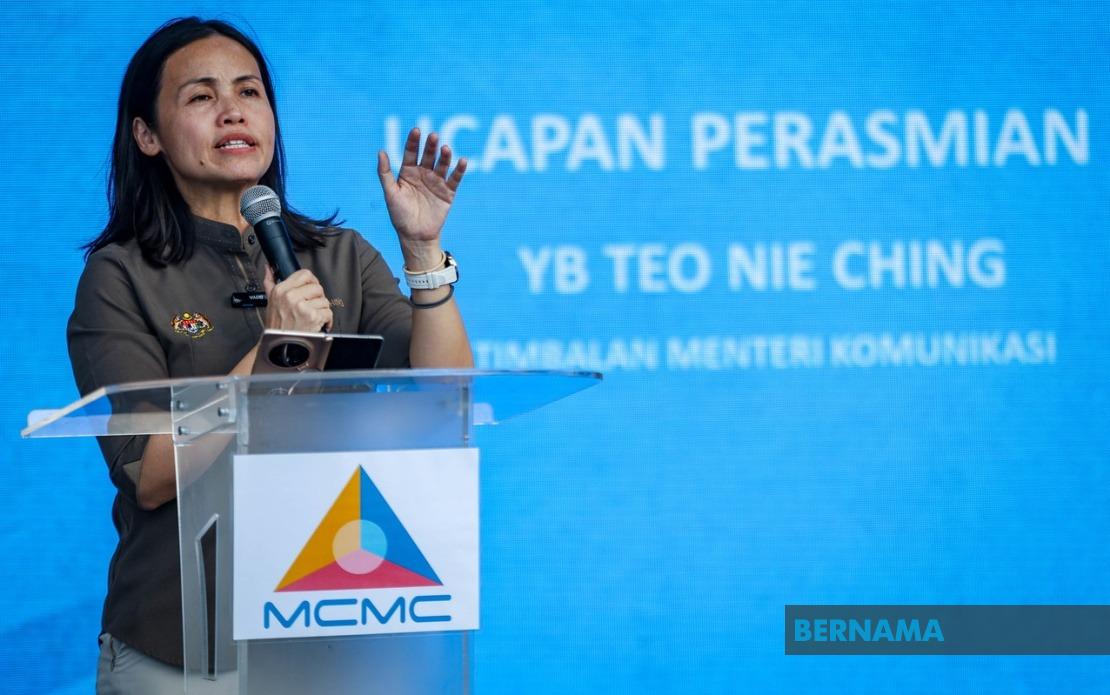
Malaysia's fight against online fraud is revealing the scale of the problem, with the National Scam Response Centre receiving 5,944 reports through its dedicated 997 hotline during the first four months of 2025. Deputy Communications Minister Teo Nie Ching disclosed the figures at the Safe Internet Campaign Community Carnival in Kulai, underscoring both the growing public awareness of reporting mechanisms and the persistent threat posed by digital criminals across the nation.
The breakdown of reported scams exposes the diversity of fraudulent schemes victimising Malaysians. E-commerce fraud emerged as the leading category, accounting for 2,566 cases—roughly 43 percent of all reports. Telecommunications scams formed the second major category with 1,369 incidents, representing nearly 23 percent of the total. The remainder encompassed schemes involving non-existent loans and fabricated investment opportunities, reflecting the evolving tactics of criminal networks adapting to consumer behaviours and technological platforms.
While the 997 hotline's elevated report volume suggests Malaysians increasingly recognise channels for seeking assistance, Deputy Minister Teo cautioned that this statistic carries a sobering implication. The sheer number of scam victims reporting their experiences indicates that fraudulent activities remain widespread despite previous awareness campaigns. This paradox—where increased reporting reflects both greater consciousness and continued victimisation—underscores the urgency of comprehensive digital literacy initiatives reaching beyond traditional education channels.
Recognising this challenge, the government has pivoted its approach to digital safety education. The Safe Internet Campaign, originally launched in 2025, initially concentrated on schools and educational institutions including primary and secondary establishments, tertiary providers, and the Malaysian Institute of Teacher Education. However, officials recognised that confining the message to younger populations neglected significant demographic groups vulnerable to online deception—particularly parents, senior citizens, and working-age adults whose financial resources and life savings frequently become targets for sophisticated fraud rings.
Johor state has become the testing ground for this expanded community-focused strategy. Kulai, represented by Deputy Minister Teo in Parliament, hosted the inaugural Safe Internet Campaign Community Carnival, marking the first district in Johor to participate in the revamped initiative. The event demonstrated the government's commitment to bringing digital safety messaging directly to residential communities rather than relying solely on institutional frameworks.
The expansion roadmap is ambitious and comprehensive. Following Kulai's successful launch, the campaign will systematically roll out across nine additional Johor districts spanning diverse geographic and demographic characteristics. Kluang, Muar, Kota Tinggi, Pontian, Segamat, Batu Pahat, Mersing, Tangkak, and Johor Bahru will each host community carnivals, with the culminating event scheduled for December 19. This sequential rollout across the state allows for iterative refinement of messaging and engagement strategies based on feedback from earlier sessions.
The selection of multiple district locations reflects understanding that scam vulnerabilities vary across communities. Urban centres like Johor Bahru face different fraud typologies compared to smaller towns, while senior populations in semi-rural districts such as Tangkak and Mersing may require tailored approaches emphasising phone and investment scams. By conducting targeted campaigns across diverse settings, authorities aim to address localised threat patterns while building a statewide network of digitally-informed residents.
Deputy Minister Teo's emphasis on community involvement signals a strategic shift in how Malaysia conceptualises cybersecurity and fraud prevention. Rather than positioning digital safety as primarily a law enforcement concern or individual responsibility, the government is framing it as a collective challenge requiring community mobilisation. Parents equipped with knowledge about online threats become protective filters for children. Senior citizens understanding common scam narratives become resistant to manipulation. Economically active adults recognising fraudulent loan schemes protect their families' financial stability.
The statistics emerging from the 997 hotline also highlight the concentration of fraud within specific sectors. E-commerce's dominance reflects Malaysia's booming online shopping ecosystem and the trust consumers must place in digital payment systems. Telecommunications fraud's prevalence indicates that criminals have successfully exploited the accessibility and relative anonymity of phone-based contact. Investment and loan scams prey on aspirational Malaysians seeking financial improvement, often targeting individuals facing genuine economic pressures.
Southeast Asian context amplifies these concerns. Neighbouring countries grapple with similar fraud patterns, often involving cross-border criminal networks exploiting regulatory gaps and jurisdictional complexities. Malaysian citizens increasingly conduct international transactions, and scammers increasingly operate from multiple countries simultaneously. The regional dimension suggests that effective fraud prevention requires not merely domestic awareness but potentially coordinated approaches with ASEAN partners and international law enforcement bodies.
The Safe Internet Campaign's expansion represents recognition that technological advancement continuously outpaces public understanding. Artificial intelligence, deepfakes, sophisticated phishing, and evolving social engineering tactics require sustained educational efforts rather than one-time interventions. By embedding digital literacy into community engagement activities rather than relegating it to school curricula, Malaysia positions itself to address fraud threats dynamically across an entire population.
Moving forward, the campaign's success will depend on translating carnival events into sustained behavioural change. Information delivered at community events must translate into modified online practices, increased scepticism toward unsolicited offers, and improved financial decision-making. Equally important will be ensuring that vulnerable populations—those most likely to fall victim to fraud—receive messaging in accessible formats reflecting their preferred information channels and communication styles.

