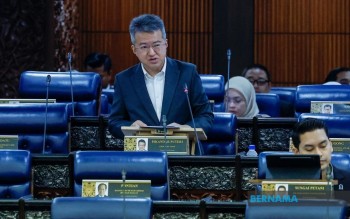
Parliament passed the National Trust Fund (KWAN) Bill 2026 on July 16, marking a significant legislative milestone in Malaysia's efforts to place the country's long-term savings on a more stable and transparent footing. The bill, which received majority support after being debated by 15 Members of Parliament, represents a fundamental shift in how the nation manages its intergenerational wealth, moving away from a voluntary contribution model toward a more structured and binding framework.
Deputy Finance Minister Liew Chin Tong, who tabled the legislation, framed the reform as essential to addressing weaknesses that had accumulated over the fund's 36-year history. The KWAN group's assets stood at RM22.43 billion at the end of 2024, yet the fund's governance structure had remained largely unchanged since its establishment in 1988. This legislative overhaul introduces three critical pillars: statutory contribution mechanisms, disciplined withdrawal procedures, and modernised governance standards designed to withstand pressure during shifting political cycles and fiscal pressures.
The backdrop to this legislation lies partly in the controversial RM5 billion withdrawal in 2021, which generated substantial public debate about the fund's accountability and purpose. That episode exposed the legal vacuum surrounding the fund's operations—the absence of withdrawal limits meant any government could access the reserves with minimal parliamentary scrutiny. Under the existing framework, contributions from private entities such as Petronas were entirely voluntary, making the fund heavily dependent on the goodwill of major corporations. Petronas has contributed RM13.5 billion since KWAN's inception, accounting for approximately 60 per cent of total assets, a concentration risk that underscored the urgency for reform.
The new legislation establishes a mandatory contribution rate of 0.1 per cent, which Liew described as a floor rather than a ceiling. This minimum threshold, while modest, carries profound institutional significance. By embedding the contribution obligation in statutory law rather than administrative discretion, the government has effectively insulated the fund from the pressures that often accompany budget constraints or changes in administration. The rate can be modified only through parliamentary amendment, a procedural safeguard that forces any government seeking to reduce contributions to justify its position in the Dewan Rakyat and face public scrutiny.
This approach reflects a deliberate strategy to protect intergenerational equity. Malaysia, like many middle-income nations, faces mounting demographic pressures and fiscal challenges. The sovereign wealth fund serves as a mechanism to smooth government finances across economic cycles and to preserve resources for future generations. By locking in a minimum contribution requirement through legislation, the current government has demonstrated recognition that long-term national savings cannot depend on the commitment of individual administrations or the cyclical health of the public budget.
The philosophical underpinning of the reforms addresses a recurring tension in emerging-market democracies: the tendency of elected officials to prioritise short-term spending over long-term asset accumulation. The KWAN reforms tacitly acknowledge this political reality by removing discretion from the equation. Future ministers of finance, regardless of political affiliation, will face the same legal obligation to contribute to the fund. This statutory binding mechanism is particularly valuable in Malaysia's federal system, where coalitional shifts and ministerial changes have historically disrupted policy continuity.
The new withdrawal discipline framework represents an equally significant departure from past practice. Under the old regime, the fund operated with vague objectives and no principled limits on drawdowns. The lack of clarity about the fund's purpose created ambiguity about when withdrawals were appropriate. The reformed framework introduces explicit governance standards that specify when and under what conditions funds may be accessed, effectively closing the legal and administrative loopholes that enabled the 2021 withdrawal to proceed without sustained parliamentary debate.
For Malaysian investors and policymakers, this legislation signals a maturing approach to sovereign wealth management. Neighbouring countries such as Singapore have long demonstrated the value of maintaining large, professionally managed reserve funds insulated from short-term political pressures. Malaysia's KWAN reform, while more modest in scope than the Government of Singapore Investment Corporation or Temasek Holdings, reflects an emerging consensus within the Kuala Lumpur establishment that fiscal sustainability requires constraining executive discretion over national savings.
The modernisation of governance structures addresses operational deficiencies that had accumulated over decades. The bill introduces contemporary standards for transparency, reporting, and oversight, bringing KWAN's administrative framework into alignment with international best practices for sovereign wealth funds. This is particularly relevant as Malaysia seeks to attract foreign investment and maintain credibility with international bond markets, where evidence of sound fiscal management directly influences borrowing costs and credit ratings.
Regional observers will note that the KWAN reforms occur amid broader scrutiny of government spending and fiscal discipline across Southeast Asia. With several nations in the region grappling with rising debt levels and demographic challenges, Malaysia's statutory protection of its sovereign wealth fund may serve as a model for policy innovation. The requirement that contribution rates be altered only through parliamentary amendment creates a high bar for raiding the fund, while simultaneously making it politically costly for any government to reduce its commitment to intergenerational savings.
The passage of this bill also reflects confidence in Malaysia's institutional architecture. The Dewan Rakyat's approval, following substantive debate, demonstrates that parliament can function as a meaningful check on executive power regarding fiscal matters. The explicit requirement that future amendments must return to parliament for approval further entrench the fund's protected status within the constitutional framework.
Looking forward, the RM22.43 billion in accumulated assets provides a substantial foundation for the reformed framework to operate from. As the fund grows under the new statutory contribution regime, Malaysia will accumulate greater fiscal flexibility during economic downturns and demographic transitions. The bill's passage represents more than technical legislative revision; it reflects a calculated decision to bind future administrations to principles of fiscal prudence and intergenerational stewardship, principles increasingly vital to long-term economic stability in the region.

