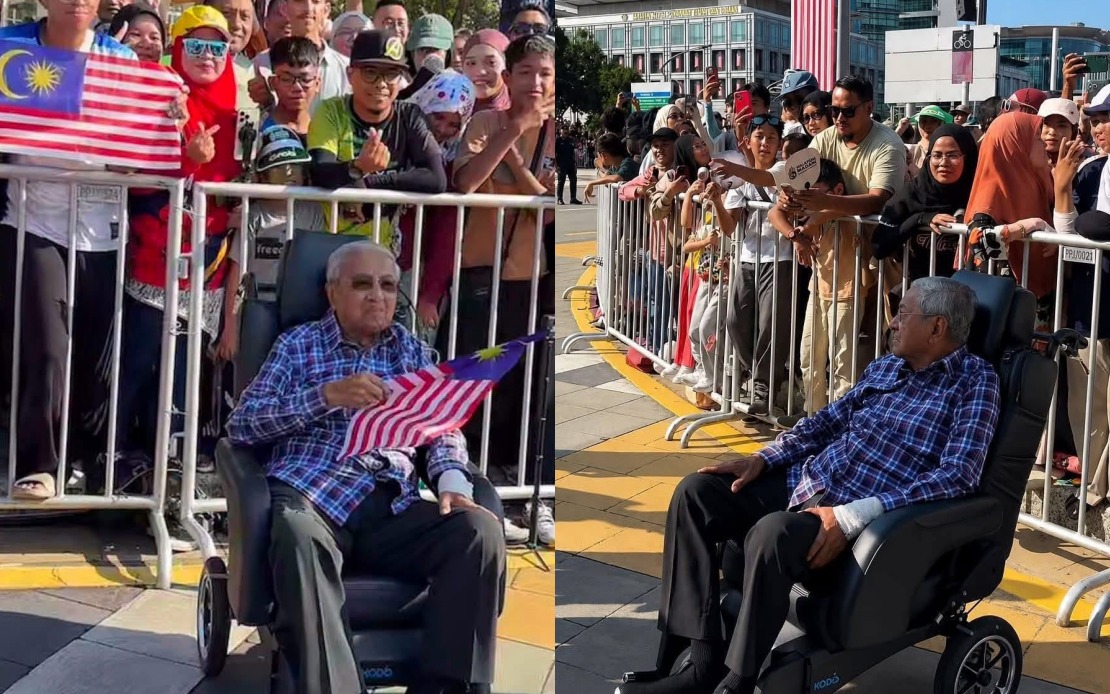
The Malaysian government has moved to clarify its approach to inviting former prime ministers to major national celebrations, establishing that such invitations follow a discretionary process rather than an entitlement. The National Day Celebration 2026 Secretariat issued the statement following public questions regarding the attendance of Tun Dr Mahathir Mohamad at this year's festivities held at Dataran Putrajaya, bringing into focus the procedures governing protocol for distinguished former leaders at official functions.
Datak Abdul Halim Hamzah, who chairs the 2026 National Day and Malaysia Day Celebration Working Committee and serves as secretary-general of the Communications Ministry, explained that the shift toward discretionary invitations represents a departure from earlier conventions. The clarification underscores a formal separation between a former prime minister's status and their automatic right to participate in state occasions, a distinction that has shaped government policy for nearly a decade. Responsibility for managing these matters resides with the Prime Minister's Department's Protocol and International Conference Secretariat Division, commonly referred to by its Malay acronym BIUPA, which handles invitations to all significant federal government events.
Under the practice that took hold in 2018, the government no longer extends blanket invitations to all living former prime ministers to attend National Day commemorations. This represents a substantive change in how Malaysia recognises its departed political leaders during moments of national significance. Rather than a one-time automatic pass, each former prime minister who wishes to participate must submit a formal application that is then evaluated and processed according to established protocols. The shift reflects broader questions about how nations balance the honouring of former leadership with contemporary governance priorities and resource management at major events.
However, the government has been careful to note that the new discretionary system does not prevent former leaders from attending such occasions altogether. The application-based mechanism remains an open pathway for those who wish to participate, provided they follow proper administrative channels and meet relevant criteria. This nuanced position attempts to preserve a role for former prime ministers while asserting clearer procedural boundaries around their participation in state functions. The approach distinguishes between preventing attendance and requiring formal process, a meaningful legal and administrative distinction.
In the specific case of Tun Dr Mahathir Mohamad's attendance at the 2026 celebration, the government revealed additional details about the circumstances surrounding his presence. His office had filed an application requesting approval for the Overseas Rest Facility, which is a designated entitlement available to former prime ministers under existing legislation. The application indicated that he was scheduled to remain abroad from August 28 to 31, 2026, during the period encompassing National Day festivities. Prime Minister Datuk Seri Anwar Ibrahim subsequently approved this application, acting within his authority under the provisions governing remuneration and benefits for former prime ministers as established in the Members of Parliament (Remuneration) Act 1980.
The regulatory framework underpinning these arrangements extends beyond mere ceremonial considerations. The Overseas Rest Facility, like other benefits for former prime ministers, is embedded within a formal statutory structure that dates back several decades. The Members of Parliament (Remuneration) Act 1980 provides the legislative foundation for various entitlements that continue after a prime minister leaves office, reflecting long-standing parliamentary tradition regarding respect and provision for former heads of government. These benefits are administered systematically rather than on an ad hoc basis, ensuring consistency and transparency in how the government treats its predecessors.
The distinction between the Overseas Rest Facility and National Day invitation procedures illustrates the complexity of contemporary governance around former leaders. One operates as an earned entitlement tied to length and nature of service, while the other functions as a discretionary decision tied to specific events and occasions. The layering of these different frameworks suggests that Malaysia has constructed a deliberate architecture for managing the status and participation of former prime ministers, moving away from informal or purely honorific approaches toward documented procedures.
From a regional perspective, Malaysia's shift toward formalised protocols for former leaders' participation reflects broader trends across Southeast Asia. As nations modernise their governance structures and seek greater clarity around institutional roles and responsibilities, many have reconsidered the automatic privileges extended to predecessors. The Malaysian approach represents an effort to balance tradition with contemporary administrative practice, acknowledging the importance of former leaders while establishing clear boundaries and procedures. This middle path avoids both the wholesale exclusion of former premiers and the presumption of unlimited access to state occasions.
The clarification also carries implications for future National Day celebrations and other major state functions. By publicly articulating the application-based procedure, the government has set expectations for how former prime ministers and their offices should approach requests for attendance at official events. The transparency of this policy, communicated through formal government channels, reduces ambiguity and potential for misunderstanding. It also establishes a precedent for consistent application across different administrations, though interpretations may shift depending on who occupies the Prime Minister's Office.
For Malaysian citizens and observers of governance, the statement reflects broader questions about institutional memory, the treatment of former officials, and the boundaries of state ceremonial practice. As Malaysia continues to navigate complex political transitions and evolving understandings of democratic institutions, how it treats and involves former prime ministers carries symbolic weight beyond the practical logistics of inviting guests to events. The formalised approach suggests a government intent on establishing clearly defined procedures for all matters touching on state occasions and official recognition.
The procedures outlined by the National Day Celebration Secretariat also demonstrate the intricate coordination required for major national events in contemporary Malaysia. Beyond the ceremonial aspects that citizens observe, substantial administrative work coordinates protocol, security, logistics, and programme management. The involvement of multiple government departments—from the Prime Minister's Office to the Communications Ministry and BIUPA—underscores how state occasions engage significant institutional resources and require careful governance to ensure they proceed smoothly and appropriately.

