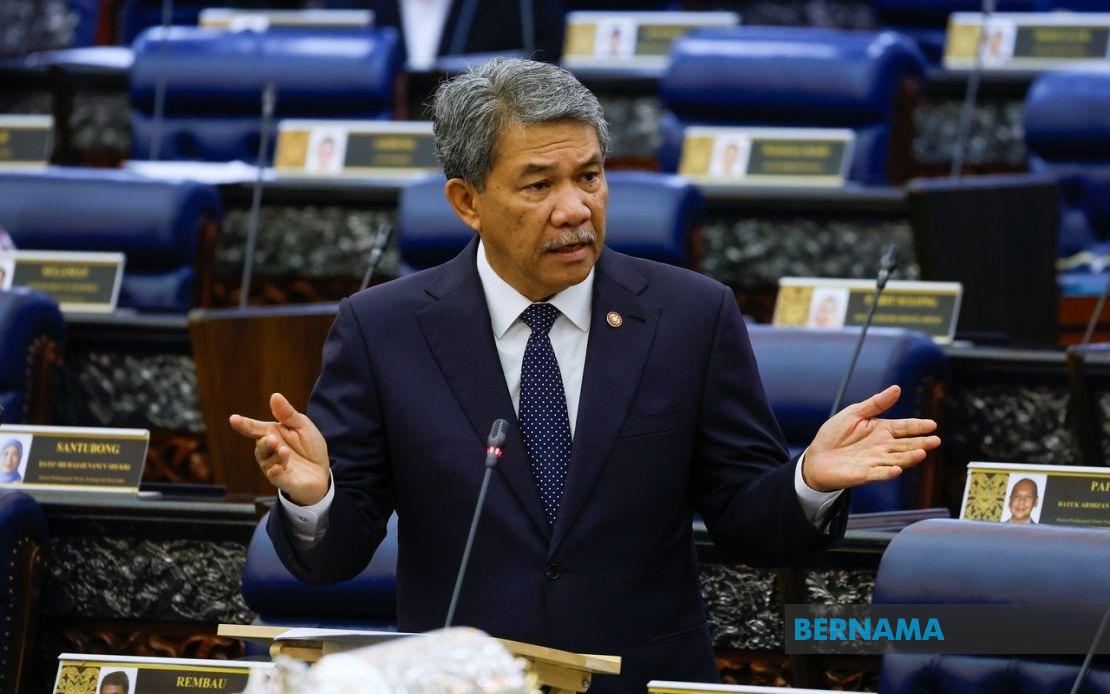
Foreign Minister Datuk Seri Mohamad Hasan has moved to dispel suggestions that Malaysia's diplomatic engagement with Myanmar signals tacit acceptance of the country's military administration, stressing instead that the May visit represents a calculated effort to preserve communication lines within ASEAN's broader crisis-management framework. Speaking in Parliament on June 25, Mohamad sought to differentiate between maintaining dialogue and conferring legitimacy, a crucial distinction for Malaysia as it navigates the sensitive political terrain surrounding its neighbour's governance transition.
The clarification comes amid regional and international scrutiny of ASEAN's approach to Myanmar, where a military coup in February 2021 has created a protracted humanitarian and political crisis. Malaysia's position reflects a broader ASEAN dilemma: how to engage a member state in crisis without appearing to endorse actions that contradict the organisation's founding principles of non-interference and democratic governance. Mohamad's comments underscore Malaysia's commitment to what he describes as a principled middle path, rejecting the junta while refusing outright isolation.
The Foreign Minister explained that the delegation's meeting with Myanmar Foreign Minister Tin Maung Swe was deliberately conducted at a hotel rather than the Foreign Ministry, a symbolic choice intended to signal that the interaction remained informal and exploratory rather than a formal state-to-state recognition. This attention to protocol reflects how ASEAN members must carefully calibrate their engagement to avoid domestic political backlash while maintaining the collective framework that underpins regional stability. The venue selection itself carries diplomatic weight in a region where such details are scrutinised closely.
During the encounter, Mohamad conveyed Malaysia and ASEAN's expectations for Myanmar's trajectory, focusing on the implementation of the Five-Point Consensus adopted in April 2021. This framework, which calls for an immediate end to violence, dialogue among all stakeholders, humanitarian assistance, and a regional fact-finding mission, has become the touchstone for ASEAN's Myanmar strategy. Malaysia's reiteration of these principles during the meeting reinforced that engagement does not entail abandonment of ASEAN's stated objectives for resolving the crisis.
A significant dimension of Mohamad's message centred on Myanmar's dual status within the regional organisation. As an ASEAN member, Myanmar enjoys rights that the organisation is bound to respect, yet these prerogatives come inseparably linked with obligations to uphold ASEAN's collective standards and norms. Mohamad's emphasis on this reciprocity suggests that Malaysia is attempting to frame the engagement not as capitulation but as a conditional dialogue dependent on Myanmar's acknowledgment of its responsibilities to the bloc. This formulation allows Malaysia to maintain principled opposition while keeping diplomatic channels operational.
The rationale for sustained engagement reflects ASEAN's concern that excessive isolation of Myanmar could create a geopolitical vacuum with unpredictable consequences for regional security. Malaysia's argument that isolation risks driving Myanmar into the sphere of external powers with competing agendas resonates with broader Southeast Asian anxieties about great power competition in the region. The spectre of external parties exploiting Myanmar's estrangement from ASEAN to extend their influence underscores why even critical members like Malaysia consider sustained dialogue preferable to severance. This strategic calculation balances moral clarity with pragmatic regional interests.
Mohamad indicated that Malaysia intends to convene additional stakeholder meetings with Myanmar representatives, potentially scheduled for early to mid-July, demonstrating a commitment to ongoing diplomatic effort beyond the initial May contact. These subsequent engagements suggest Malaysia views the crisis as requiring sustained multilateral attention rather than episodic intervention. The timing and frequency of these meetings signal to Myanmar's leadership that ASEAN's interest in resolution is serious and persistent, even as the organisation withholds formal recognition.
The Malaysian position carries particular significance for Southeast Asia's broader approach to Myanmar. As a regional organisation often accused of ineffectiveness in addressing member states' internal crises, ASEAN's handling of Myanmar will substantially influence its credibility and cohesion. Malaysia's articulate defence of engagement as distinct from recognition helps establish an intellectual framework that other member states can adopt, enabling ASEAN to pursue dialogue without appearing morally compromised. This diplomatic clarification, therefore, extends beyond bilateral Malaysia-Myanmar relations to shape how the entire region manages one of its most pressing contemporary challenges.
Moving forward, Malaysia's commitment to urging all Myanmar parties to cease violence, implement ceasefire arrangements, and enable inclusive political dialogue reflects an ambitious agenda constrained by limited enforcement mechanisms. The emphasis on humanitarian assistance aligns with the Five-Point Consensus while addressing the immediate suffering of Myanmar's civilian population. This multifaceted approach acknowledges that sustainable resolution requires simultaneous progress on security, political, and humanitarian fronts, a complexity that justifies Malaysia's preference for sustained engagement over disengagement.
The Foreign Minister's parliamentary comments ultimately articulate a position that respects Malaysia's domestic political sensitivities regarding military governance while recognising ASEAN's structural imperatives for maintaining regional cohesion. By clearly distinguishing between engagement and recognition, Malaysia provides political cover for continued dialogue, enabling the nation to pursue what it views as strategically necessary communication without appearing to abandon its stated democratic principles. This nuanced stance will likely influence how Malaysia and ASEAN navigate Myanmar's crisis throughout the coming months, as the region seeks a resolution that neither isolates nor legitimises the military administration.

