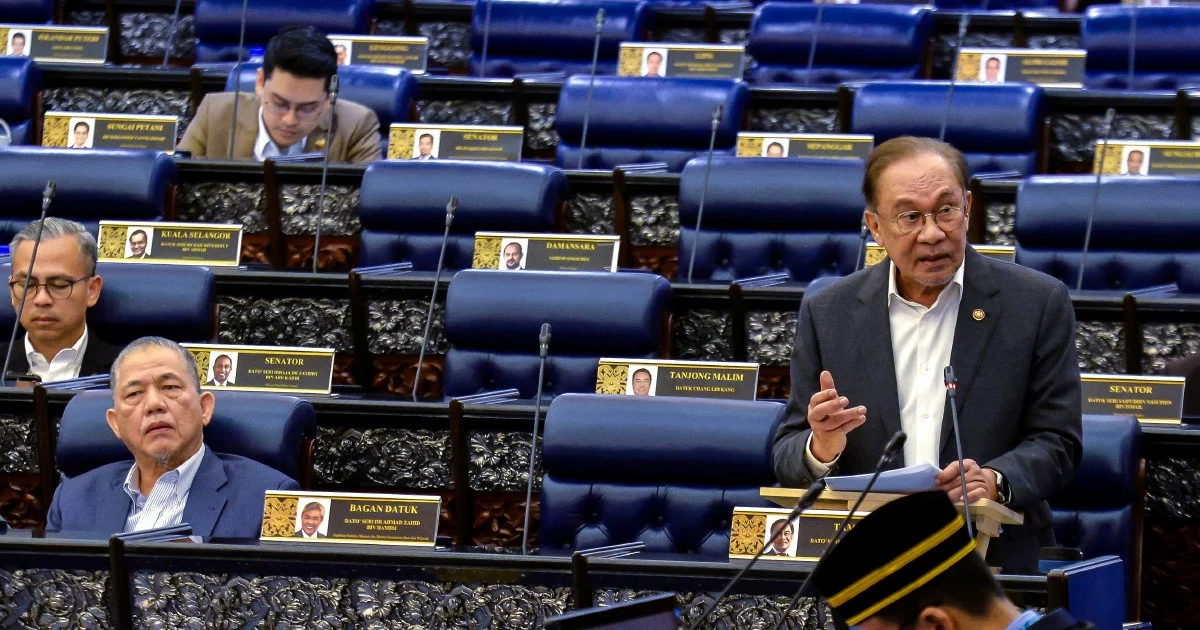
Malaysia's household borrowing has reached a significant milestone, with total household debt climbing to RM1.73 trillion by the end of March 2026, Prime Minister Datuk Seri Anwar Ibrahim revealed. This figure translates to 84.4 per cent of the nation's gross domestic product, underscoring the heavy reliance of Malaysian families on credit to finance consumption, housing, vehicles, and education across the economy.
The scale of household indebtedness presents a multifaceted challenge for policymakers, economists, and households themselves. At 84.4 per cent of GDP, Malaysia's household debt ratio demonstrates that for every ringgit of economic output generated nationally, Malaysian households collectively owe roughly 84 sen in outstanding loans and credit facilities. This proportion reflects broader trends seen across the Asia-Pacific region, where rising living costs, education expenses, and property values have driven families to tap deeper into credit markets to sustain their lifestyles and aspirations.
For Malaysian consumers, the accumulation of debt stems from multiple sources. Mortgage financing typically represents the largest component, as property ownership remains a cornerstone of wealth-building and family security in Malaysian culture. Beyond property, personal loans, car financing, credit card balances, and increasingly, hire-purchase agreements for consumer goods, contribute substantially to the overall debt burden. The proliferation of digital financial services and buy-now-pay-later platforms has further expanded borrowing options, though these have also normalised debt as an integral part of household financial management.
The economic implications of such elevated household debt levels warrant careful examination. While debt itself is not inherently problematic—productive borrowing for home ownership or education can enhance long-term wealth creation—the scale raises questions about financial resilience. Economic shocks, employment disruptions, or unexpected health crises can quickly overwhelm households already stretched by existing obligations. The pandemic demonstrated this vulnerability, when many Malaysian families faced sudden income losses yet remained burdened by fixed debt commitments.
Interest rate movements have particular significance for Malaysian households. Any adjustment to monetary policy by Bank Negara Malaysia that increases borrowing costs directly impacts monthly repayments for variable-rate loans, affecting disposable income available for other essential expenses. Rising rates can also trigger defaults, particularly among borrowers at the margins of affordability, potentially cascading into broader financial system pressures. Regulators must therefore carefully balance economic stimulus needs against financial stability concerns.
Regional comparisons provide useful context for understanding Malaysia's household debt position. Several developed Asian economies, including Singapore and South Korea, maintain higher household debt ratios, reflecting mature credit markets and higher income levels. However, Malaysia's ratio exceeds many regional peers and developing economies, suggesting that Malaysian families are borrowing at levels comparable to more advanced economies, while their income growth and job security may not provide equivalent protection.
The concentration of debt among specific demographic groups amplifies concerns. Younger households and first-time property buyers often carry disproportionate debt burdens relative to their earning capacity, leaving limited financial cushion. Urban professionals juggling multiple loans—mortgages, education financing, vehicle loans—represent another vulnerable segment. Should employment in sectors like tourism, manufacturing, or services contract unexpectedly, these households would face immediate pressure.
The role of financial inclusion and credit accessibility adds nuance to this picture. For many Malaysians, borrowing has enabled home ownership and education that would otherwise remain inaccessible. Microfinance and consumer credit have lifted some households out of poverty by enabling entrepreneurship and skill development. The challenge lies in ensuring that credit expansion remains sustainable and that borrowers possess sufficient financial literacy to make informed decisions about their debt levels and repayment capabilities.
Bank Negara Malaysia and the Securities Commission have implemented various consumer protection measures, including debt counselling services, loan restructuring frameworks, and affordability assessments for new credit products. These regulatory efforts aim to prevent excessive leverage while preserving credit access for productive purposes. However, the persistence of high household debt suggests that education, income growth, and employment stability remain critical factors requiring policy attention beyond prudential regulation alone.
Looking forward, Malaysia faces the dual imperative of fostering economic growth while ensuring household financial health. Wage stagnation in certain sectors, inflation affecting basic necessities, and property price appreciation that outpaces income growth collectively constrain households' capacity to reduce debt burdens. Policy responses must address not only debt levels but the underlying structural factors—income inequality, skills development, job quality, and living cost pressures—that drive households to borrow extensively.
The RM1.73 trillion figure also reflects Malaysia's substantial financial services industry and the depth of credit markets, indicators of economic development. Yet this development carries obligations. Financial institutions offering credit must balance profitability with responsible lending practices that do not incentivise unsustainable borrowing. Simultaneously, government policies promoting financial inclusion and affordable housing must be calibrated to prevent credit bubbles that could destabilise the broader economy when they inevitably deflate.

