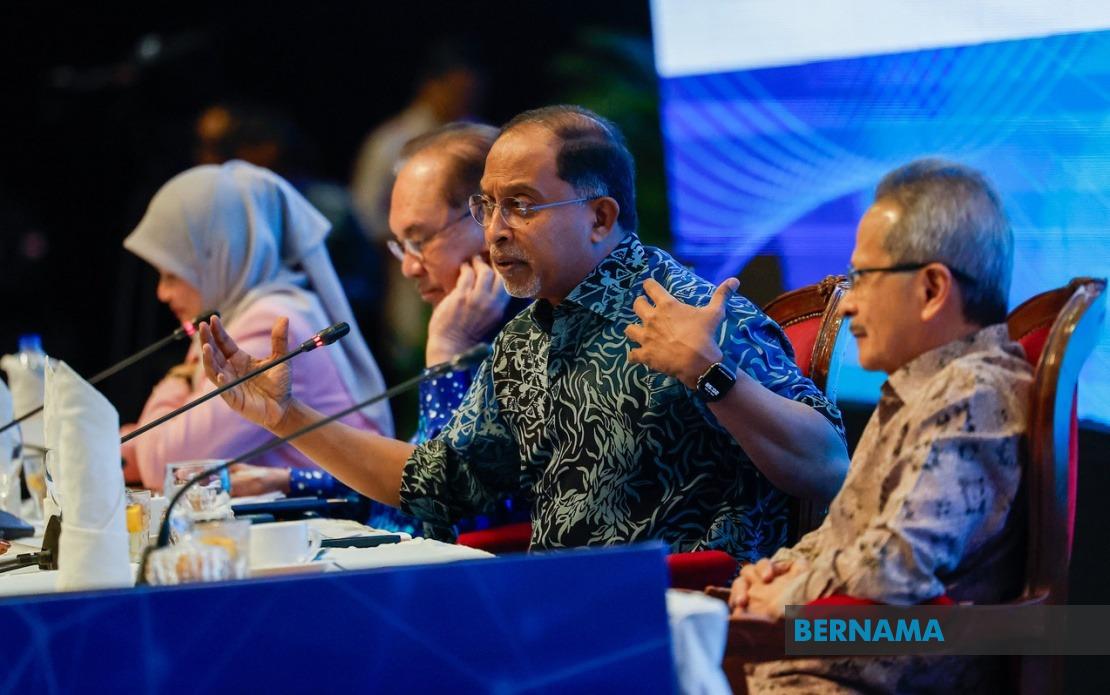
The future trajectory of Malaysia's higher education system hinges on modernising the legal framework that has governed universities for over five decades, according to Higher Education Minister Datuk Seri Dr Zambry Abd Kadir. Speaking at the MADANI Malaysian Scholars Forum Series 13 at the University of Malaya, Zambry articulated the case for comprehensive legislative reform, flagging the Universities and University Colleges Act 1971 (AUKU) as a primary candidate for review. The forum, which examined the role of the AUKU in shaping Malaysia's educational future, attracted Prime Minister Datuk Seri Anwar Ibrahim as moderator and featured Education Minister Datuk Seri Fadhlina Sidek among other panellists.
The push for reform reflects growing recognition within Malaysia's education establishment that existing regulations have become impediments to institutional development. Zambry acknowledged that constraints stemming from decades-old legislation restrict universities from operating with the flexibility required in an increasingly competitive global knowledge economy. By maintaining that the higher education ecosystem faces diminishing relevance under outdated regulatory structures, the minister positioned legislative modernisation not as a discretionary enhancement but as essential infrastructure renewal. This framing carries particular weight given Malaysia's aspirations to position itself as a regional education hub and attract international academic talent and partnerships.
Central to the reform agenda is the restoration and guarantee of academic freedoms that many scholars argue have been constrained by historical provisions within AUKU. Zambry identified the expansion of academic freedom, freedom of expression, and enhanced student empowerment as critical objectives within the modernised framework. These elements address longstanding concerns among Malaysian academics and civil society observers regarding restrictions on intellectual discourse and institutional autonomy. For universities seeking to compete internationally and attract top researchers, such freedoms represent essential competitive advantages, particularly in attracting doctoral students and research collaborators from overseas.
The Ministry of Higher Education is pursuing a bold consolidatory approach through the proposed drafting of a unified higher education act. Rather than undertaking fragmented amendments to existing legislation, the ministry is exploring the creation of a comprehensive "One Higher Education Act" designed to bring various sectoral regulations into coherent alignment. This integrative approach acknowledges that Malaysia's current regulatory environment comprises multiple overlapping instruments that can create confusion and inefficiency. A consolidated framework would theoretically streamline governance, reduce administrative burden, and provide clearer guidance to institutions navigating compliance obligations.
To ensure the reform process draws upon diverse stakeholder perspectives, an Independent Committee has been established to systematically collect and evaluate memorandums and recommendations from academics and student representatives. This consultative methodology reflects a deliberate attempt to build legitimacy and ownership across the university sector rather than imposing top-down changes. The involvement of academics and students themselves in shaping legislative proposals should theoretically enhance the quality and acceptability of eventual reforms. For Malaysian higher education institutions accustomed to hierarchical decision-making, this participatory approach signals a potential shift toward greater inclusivity in governance deliberations.
Parallel to higher education sector reforms, Education Minister Fadhlina Sidek articulated the Ministry of Education's commitment to expanding access through what she termed a "humane education" philosophy. This approach prioritises the recognition and cultivation of individual student potential rather than treating learners as undifferentiated units subject to standardised measurement. Fadhlina's emphasis on equitable access extending to marginalised communities through initiatives such as Schools in Hospital and rehabilitation centre programmes demonstrates awareness of how geographic and social barriers restrict educational opportunity. For a developing nation, such targeted interventions address both equity and economic productivity concerns by ensuring talent remains underdeveloped within excluded populations.
The expansion of free pre-school access represents a significant policy commitment aimed at reducing family financial burdens while establishing foundations for learning at critical developmental stages. By making early childhood education universally accessible, the Ministry recognises that educational advantage increasingly begins before formal schooling, with consequences that compound throughout a student's trajectory. This upstream investment approach contrasts with reactive interventions later in a student's educational journey and aligns with international evidence regarding cost-effectiveness of early childhood investment. For Malaysian families, particularly those in lower income brackets, removal of pre-school fees potentially unlocks developmental opportunities previously constrained by cost.
Fadhlina's critique of examination-centric education models reflects growing international consensus that narrowly focusing on test scores fails to develop the capacities required in modern economies. Her articulation that learners arrive at school with diverse intellectual, emotional, and aspirational profiles—some accompanied by anxieties or difficulties requiring support—humanises the educational process in ways that standardised assessment systems typically obscure. By reframing educational outcomes beyond examination grades and labour market human capital, the ministry signals commitment to holistic development that encompasses psychological resilience, ethical formation, and civic engagement.
The emphasis on developing "balanced, visionary individuals" with emotional intelligence and moral grounding speaks to concerns that education systems organised primarily around economic instrumentalism may cultivate technically skilled but ethically underdeveloped graduates. This formulation carries particular relevance in Southeast Asia, where rapid economic change and social transformation have sometimes outpaced development of civic institutions and shared value frameworks. Malaysian policymakers appear increasingly cognisant that sustainable development requires citizens possessing not merely technical competencies but also judgment, empathy, and commitment to collective welfare.
These parallel initiatives in higher education legislative reform and primary-secondary education philosophy represent complementary efforts to reconfigure Malaysia's entire educational ecosystem. The movement toward academic freedom and institutional autonomy at the university level aligns with the humanistic educational approach being promoted in earlier schooling stages. Together, these reforms suggest a strategic pivot toward education systems that develop human capabilities more comprehensively than traditional models emphasising examination performance or narrow vocational preparation. For Malaysia's long-term competitiveness and social cohesion, such multidimensional educational development may prove more consequential than incremental improvements in test scores.
The timeline and specific legislative mechanisms through which these reforms will materialise remain unclear, and bureaucratic implementation challenges typically characterise large-scale educational restructuring. Nevertheless, the articulation of a reform vision by senior ministerial figures with Prime Ministerial engagement suggests that legislative modernisation enjoys political support at the highest levels. For Malaysian universities, students, academics, and families, the success or failure of these initiatives to deliver meaningful change will substantially influence whether the country's education system can effectively serve both individual flourishing and national development aspirations in coming decades.

