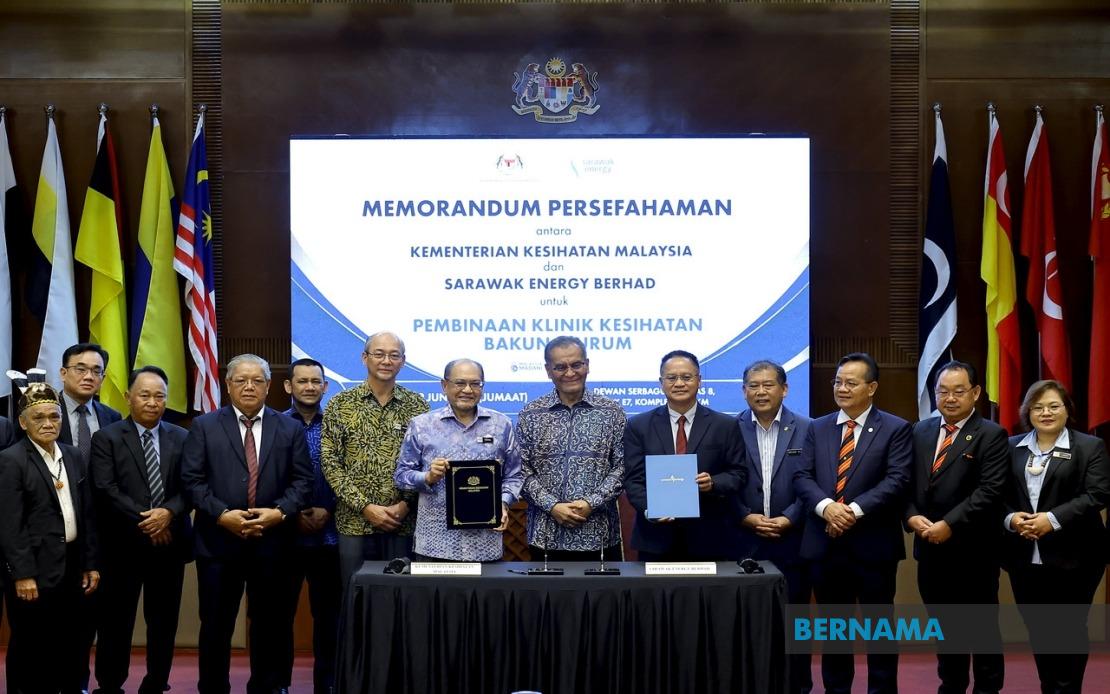
The Malaysian Health Ministry has entered the concluding phase of dismantling bureaucratic obstacles that have constrained the production and training of medical specialists, Health Minister Datuk Seri Dr Dzulkefly Ahmad announced at a press conference in Putrajaya on June 19. His statement came during the formal signing of a cooperation agreement between the ministry and Sarawak Energy regarding construction of the Bakun-Murum Health Clinic, reflecting the government's concurrent focus on both infrastructure expansion and human resource development in the healthcare sector.
Dr Dzulkefly acknowledged that systemic constraints within the ministry's structures and processes have impeded specialist training pathways, though he stressed that resolution efforts are nearing completion. These bottlenecks represent a critical vulnerability in Malaysia's healthcare system, where the ability to train and retain specialists directly influences service capacity across both urban and rural regions. The minister's candid recognition of the problem signals a shift toward greater transparency about healthcare workforce challenges that have accumulated over several years.
The backdrop to these remarks is Malaysia's documented shortage of approximately 11,000 medical specialists, a figure spanning both public healthcare institutions and private medical facilities. This deficit has amplified concerns regarding the public healthcare system's capability to accommodate escalating patient loads and medical complexity, particularly as non-communicable diseases and an ageing population place increasing strain on specialist services. The shortage cuts across multiple disciplines—cardiology, oncology, orthopedics, mental health, and emergency medicine—creating critical gaps in regional and tertiary care.
Dr Dzulkefly emphasized that the ministry's strategy for expanding the specialist workforce operates within a phased framework explicitly synchronized with infrastructure development timelines. Rather than pursuing rapid recruitment of specialists without corresponding facility upgrades, the government has adopted a deliberate approach that ensures new specialists have adequate facilities, equipment, and support systems to deliver quality care. This cautious methodology reflects financial constraints and the reality that specialist positions demand both higher resource allocation and appropriate working environments.
The expansion programme cannot be accelerated in isolation from broader healthcare infrastructure improvements, the minister explained. Increasing specialist numbers must proceed incrementally and continuously, tailored to current healthcare needs and institutional priorities. The ministry has developed detailed planning mechanisms to ensure alignment between workforce expansion and facility development, preventing the creation of specialist positions that lack requisite infrastructure or support. This synchronization prevents bottlenecks at the institutional level even as the ministry addresses administrative hurdles at the policy level.
While comprehensive reforms are being finalized, the Health Ministry has implemented an interim cluster crisis management system to mitigate immediate operational pressures. This framework facilitates cooperation among hospitals sharing regional boundaries and associated primary health clinics, enabling flexibility in personnel deployment and reorganization according to operational demands. The cluster approach allows the ministry to redistribute specialists and health professionals dynamically across interconnected facilities, maximizing resource utilization during peak demand periods and addressing critical gaps in understaffed locations.
The cluster system represents a pragmatic bridging mechanism that preserves service continuity whilst longer-term structural solutions progress through bureaucratic and planning channels. Dr Dzulkefly acknowledged the considerable pressure faced by healthcare workers operating within constrained specialist ratios, characterizing the interim arrangement as essential for maintaining uninterrupted care delivery. Without such buffering mechanisms, the current specialist shortage would translate immediately into service disruptions, extended wait times, and potential quality degradation.
For Malaysian patients and the broader public health system, these developments carry significant implications. Addressing specialist training bureaucracy could accelerate the production of Malaysian-trained specialists, reducing dependence on overseas recruitment and retention challenges. The synchronization of workforce expansion with infrastructure development should eventually yield a more sustainable healthcare system better positioned to handle growing demand without perpetual resource crises.
Regionally, Malaysia's experience mirrors challenges confronting other Southeast Asian nations managing specialist shortages amid rapid urbanization and healthcare demand growth. The ministry's focus on systematic resolution rather than reactive measures may offer instructive lessons for neighbouring countries grappling with similar workforce deficits. The emphasis on aligning human resources with infrastructure development represents a more holistic approach than pure recruitment drives.
The resolution of these bureaucratic constraints will require coordinated action across multiple ministry divisions, including medical education oversight bodies, healthcare financing authorities, and facility planning departments. Dr Dzulkefly's emphasis on finalization timelines suggests pressure to demonstrate tangible progress, reflecting political recognition that healthcare workforce issues resonate directly with public satisfaction and system performance.
Looking ahead, the success of these reforms will be measured by the rate at which specialist positions are created, filled, and retained within the public healthcare system. The cluster management system's effectiveness during the transition period will likely inform whether interim arrangements require modification or can be phased out as structural bottlenecks are eliminated. For Malaysian patients and healthcare professionals, these initiatives represent critical steps toward addressing a long-standing constraint on healthcare system capacity.