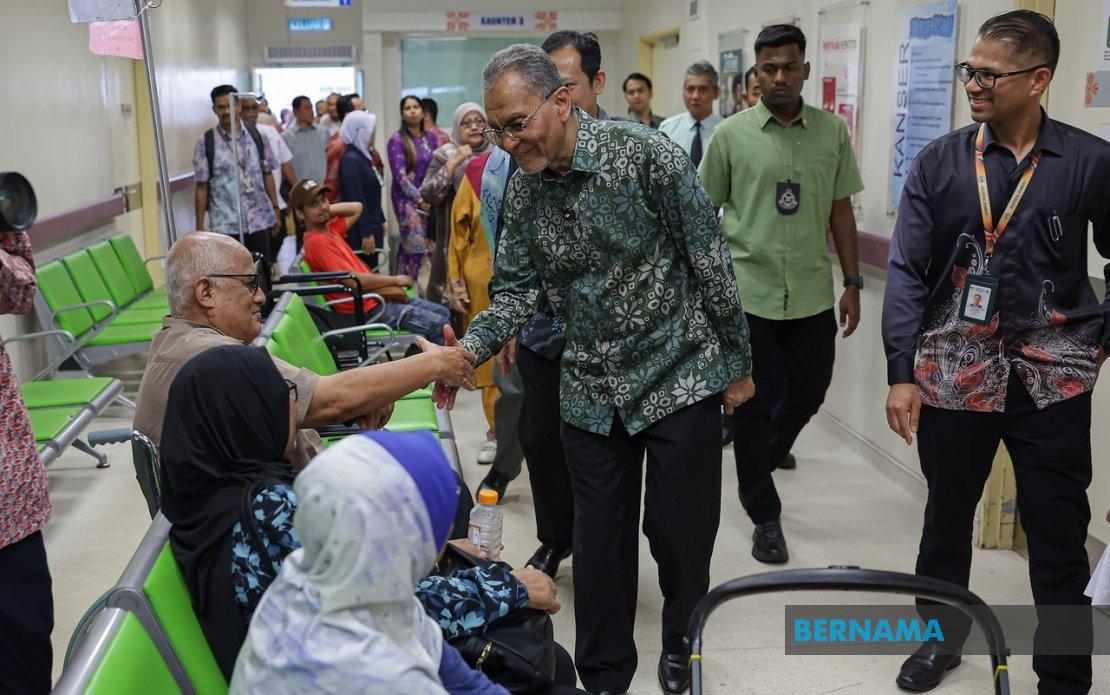
Malaysia's effort to establish a dedicated workplace mental health framework is advancing, with the Ministry of Health committing to completing a comprehensive policy draft by September or October this year. Health Minister Datuk Seri Dr Dzulkefly Ahmad outlined the timeline while addressing officials and media in Rembau following the ministry's Negeri Sembilan Merdeka celebration at Hospital Rembau, signalling the government's growing recognition that employee mental wellbeing deserves formal policy architecture alongside traditional occupational safety measures.
The anticipated policy emerges from a structured consultation process involving multiple government bodies and industry stakeholders. The Ministry of Human Resources, the Department of Occupational Safety and Health, the Malaysian Employers Federation, and the Malaysian Trades Union Congress will all contribute perspectives to shape guidelines that reflect diverse workplace realities across Malaysia's economy. This multi-stakeholder approach acknowledges that mental health in employment contexts cannot be addressed in isolation—it requires buy-in from those managing human resources, enforcing safety standards, representing business interests, and protecting workers' rights.
The government's decision to prioritise workplace mental health aligns with Malaysia's commitment to the United Nations Sustainable Development Goals, particularly SDG 3 on health and wellbeing. However, the policy's scope extends well beyond international commitments. Dr Dzulkefly indicated that the framework will address substantive workplace factors driving mental distress, not merely reactive support measures. Work-life balance, structural workload management, and organisational support mechanisms will feature prominently, reflecting emerging evidence that mental health outcomes depend on systemic workplace conditions rather than counselling services alone.
This represents a significant shift in how Malaysia approaches occupational health. Traditionally, workplace health initiatives focused on physical safety—ergonomics, hazard prevention, injury management. The new policy acknowledges that burnout, excessive workload, and poor work-life integration constitute genuine health threats equivalent to physical workplace hazards. By institutionalising mental health within occupational safety frameworks, Malaysia joins progressive economies recognising that employee mental wellbeing directly influences productivity, retention, workplace safety, and healthcare system demand.
For Malaysian employers, the policy will likely establish baseline expectations regarding mental health provisions. Small and medium enterprises, which employ the majority of Malaysia's workforce, should prepare for evolving compliance requirements. Whether through mandatory mental health training for managers, confidential counselling access, or workload assessment protocols, businesses will need to embed mental health considerations into human resources practices. The policy's final form will determine whether compliance represents significant investment or represents formalisation of emerging best practices.
Workers' organisations particularly stand to influence the policy's final shape. The Malaysian Trades Union Congress can advocate for protections ensuring that mental health support does not become a substitute for addressing structural workplace problems—ensuring employers cannot dismiss burnout concerns by offering counselling while maintaining unsustainable workloads. The balance between individual support and organisational accountability will likely emerge as a central policy tension during consultation phases.
Meanwhile, Dr Dzulkefly outlined complementary health system reforms using a cluster hospital model designed to distribute specialist services more equitably across Malaysia. Under this approach, secondary and tertiary care capacity will be strengthened within existing hospital networks rather than through costly new infrastructure. Lead hospitals will provide specialist expertise to non-specialist facilities, improving access to paediatrics, obstetrics, ophthalmology, and otolaryngology services in underserved regions. For Malaysian patients outside major urban centres, this architecture promises faster specialist care without requiring centralisation of services.
The cluster model reflects pragmatic healthcare planning responding to Malaysia's geographical and demographic realities. Building new specialist hospitals requires capital investment and concentrated medical expertise that smaller states cannot justify or sustain. Instead, enhancing specialist capacity within existing hospital networks leverages current infrastructure while strengthening primary healthcare foundations. This approach should particularly benefit rural and semi-urban populations currently facing long waiting periods and travel burdens for specialist consultations.
The integration of these two initiatives—workplace mental health policy and hospital clustering—suggests a coordinated health ministry strategy addressing mental health across prevention, workplace intervention, and treatment settings. A functioning workplace mental health framework will reduce unnecessary healthcare utilisation, while an efficient hospital network ensures adequate specialist capacity when workplace interventions prove insufficient. Together, they represent Malaysia's attempt to build health system resilience addressing both prevention and service delivery.
The September-October timeline, while ambitious, appears realistic given preliminary consultation frameworks already underway. However, the true measure of success will not be draft completion but implementation fidelity. Policies remain academic exercises unless supported by adequate funding, clear enforcement mechanisms, and institutional commitment. Malaysia's health system will need to dedicate resources to policy dissemination, employer education, and monitoring compliance, particularly among smaller organisations lacking dedicated occupational health infrastructure.
The coming months will reveal whether consultation processes produce genuine consensus or superficial agreement masking fundamental disagreements about cost-sharing, compliance expectations, and dispute resolution mechanisms. Employers may resist provisions they perceive as burdensome or costly; unions may push for strong protections against mental health discrimination; and government agencies may face capacity constraints implementing oversight. The final policy will reflect these tensions and represent the government's priorities in balancing business competitiveness with worker protection.

