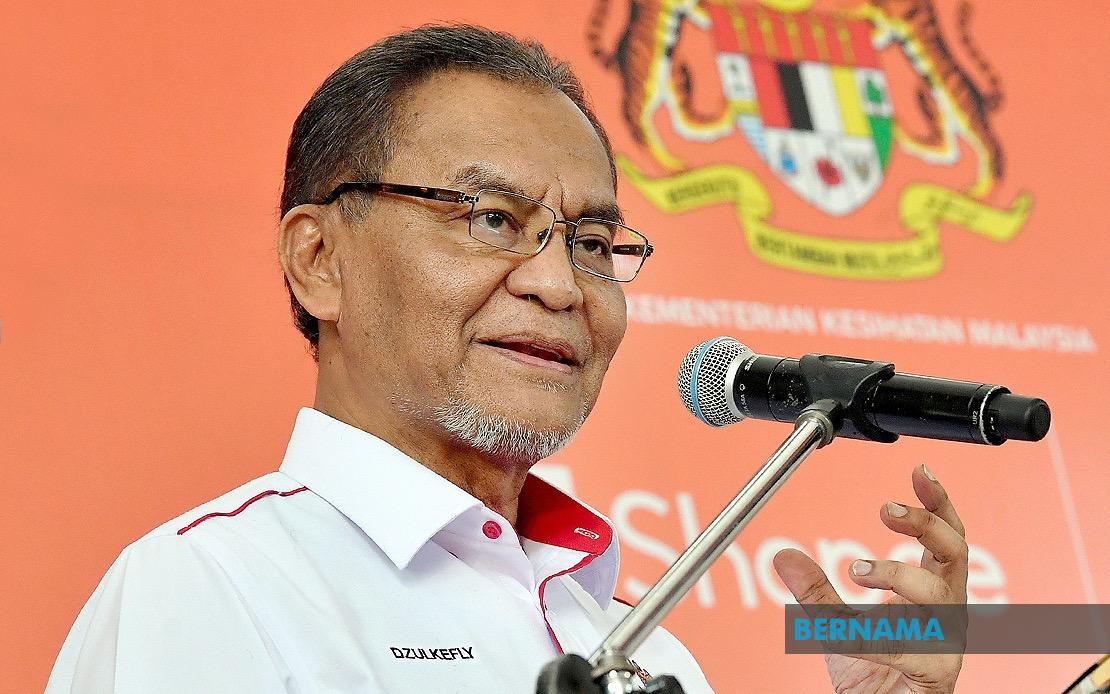
Malaysia's Health Ministry has set an ambitious timeline to resolve one of the nation's most pressing healthcare workforce challenges, announcing plans to grant permanent positions to all housemen immediately upon completing their training by 2028. Health Minister Datuk Seri Dr Dzulkefly Ahmad unveiled the commitment as part of a broader governmental reform initiative aimed at stabilizing the country's medical professional ecosystem, a sector that has faced chronic staffing pressures and employment uncertainty in recent years.
The pledge represents a significant shift in employment practices within the public health system, where contractual arrangements have historically defined the early careers of junior medical professionals. By guaranteeing permanent positions upon housemanship completion—the mandatory supervised training period required for newly qualified doctors—the ministry signals a commitment to workforce stability that could reshape recruitment and retention patterns across the healthcare sector. This approach directly addresses grievances raised by medical graduates and junior doctors who have previously endured prolonged periods of contractual employment with uncertain futures.
Dr Dzulkefly attributed the initiative to work being undertaken through the Inter-Ministerial Joint Task Force, which coordinates healthcare policy across government departments. The taskforce's involvement reflects recognition that healthcare staffing challenges require coordinated action beyond the Health Ministry alone, potentially involving the Public Service Department, Ministry of Finance, and other agencies responsible for employment policies and budgetary allocations. This collaborative framework suggests the government views workforce stabilization as essential to broader public service reform objectives.
The ministry's current-year performance already demonstrates momentum toward these goals. An estimated 4,500 contract medical officers will transition into permanent positions during the current financial year, while the ministry has approved 800 new positions annually as part of its expansion strategy. These figures indicate tangible progress on absorption targets, though questions remain about whether such absorption rates can be sustained consistently through 2028 without straining budgetary resources or compromising the quality of permanent appointments.
Operating expenditure realignments across government have prompted concerns about potential recruitment freezes in public sector agencies, but Dr Dzulkefly explicitly denied that healthcare hiring would be affected. The ministry remains on track to fill more than 18,000 vacancies across all service schemes by 2026, according to his statement, suggesting that workforce expansion continues despite broader fiscal constraints. This commitment may require political prioritization of health spending or creative restructuring of existing allocations to support the ambitious hiring trajectory.
Beyond immediate employment guarantees, the ministry is simultaneously addressing deeper systemic issues within the healthcare professional pipeline. The minister tasked the newly appointed deputy director-general of Health in the Medical portfolio with overhauling specialist training pathways, recognizing that sustained healthcare quality depends not merely on hiring numbers but on developing sufficient local expertise. Medical specialist shortages represent a complex, long-term challenge that cannot be resolved through employment restructuring alone, necessitating parallel investments in training infrastructure and programme quality.
The government is considering multiple approaches to specialist production, including enhancement of local Master's degree programmes and continuation of the Parallel Pathway scheme, which allows qualified medical graduates to enter specialty training without conventional sequential progression. Establishing a sustainable, internationally competitive training ecosystem requires balancing accessibility with rigorous quality standards—a task complicated by the need to retain both trainees and qualified specialists within the Malaysian healthcare system, where overseas opportunities frequently draw away talent.
The employment overhaul carries significant implications for junior medical professionals entering the system. Young doctors have increasingly reported burnout and career uncertainty during extended contractual periods, with some departing to overseas positions or alternative career paths. Guaranteeing permanent status upon housemanship completion could improve retention of early-career talent, potentially reversing attrition trends that have strained workforces in regional hospitals and less competitive specialties. This psychological shift—from provisional employment to established career pathway—may prove as valuable as the financial security improvement itself.
For Malaysian healthcare consumers, these workforce developments carry tangible implications. Stable medical staffing should reduce the patient impact of sudden departures or coverage gaps in clinical departments. Improved junior doctor welfare and career prospects may enhance service quality, as less burned-out professionals typically deliver superior patient care. However, the pathway to 2028 involves transitional challenges, and implementation success depends on sustained political commitment and adequate budgetary support across multiple budget cycles and potential government transitions.
The regional context also matters for Malaysia's healthcare ambitions. Southeast Asian nations compete for medical talent, and employment stability represents a competitive advantage in retaining graduates. Singapore, Thailand, and other developed regional economies offer various incentives for medical professionals; Malaysia's permanent employment guarantee positions the nation as offering career security, potentially relevant to both attracting returnee Malaysians abroad and stabilizing current workforces.
Implementation challenges remain significant despite stated commitments. Absorbing thousands of professionals into permanent status annually requires coordination across hiring, payroll, benefits administration, and professional development systems. Budget cycles and treasury approvals may constrain execution during years of fiscal constraint. Furthermore, the quality of permanent positions matters—if permanent roles lack advancement prospects or competitive remuneration relative to overseas alternatives, the employment guarantee alone may prove insufficient to retain talent long-term.
The minister's emphasis on systemic reform rather than temporary fixes suggests recognition that workforce stability requires foundational changes in how the health sector manages human resources. From recruitment timelines to career progression frameworks to specialist training pathways, comprehensive transformation may ultimately prove more significant than any single employment policy modification. The 2028 timeline provides accountability benchmarks against which future progress can be measured.

