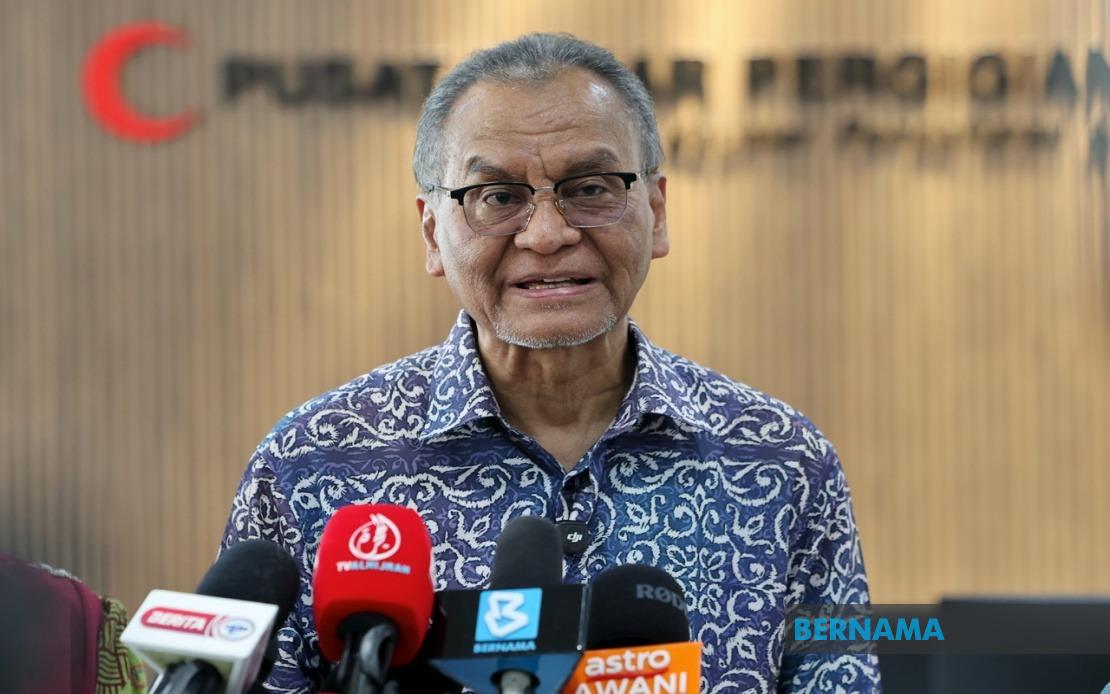
The Ministry of Health remains in the deliberation phase regarding the inclusion of dengue vaccines within Malaysia's National Immunisation Programme, according to Health Minister Datuk Seri Dr Dzulkefly Ahmad. Speaking at the official opening of the Negeri Sembilan Dental Specialist Centre in Seremban, the minister acknowledged the urgency of the dengue situation while stressing the need for thorough institutional processes before such a significant healthcare policy decision can be finalised.
The cautious approach reflects the complexity surrounding vaccine procurement and integration into the national health system. While one dengue vaccine has already secured registration from the National Pharmaceutical Regulatory Agency and entered private healthcare facilities, the ministry's hesitation stems from multiple considerations beyond mere regulatory approval. Dr Dzulkefly emphasised that officials are conducting extensive cost-benefit analyses, particularly examining a dengue vaccine sourced from Japan, to determine whether mass implementation through public channels represents sound fiscal policy for the government.
The price barrier remains a central preoccupation for Malaysian health planners. Newly licensed dengue vaccines command premium pricing in global markets, reflecting their recent development and limited production capacity. For a middle-income country like Malaysia tasked with providing universal healthcare across a population exceeding 33 million, integrating an expensive new vaccine into the NIP carries substantial budgetary implications. The minister's acknowledgment that officials are "waiting for reasonable ones" suggests the Health Ministry may be monitoring vaccine pricing trends and hoping for cost reductions as market competition increases and manufacturing scales up.
The dengue threat, however, continues to mount with considerable urgency. As of Epidemiological Week 33 in 2026—encompassing data through August 22—Malaysia had documented over 61,000 dengue infections nationwide, representing a sharp 60.8 percent increase relative to the equivalent timeframe in the previous year. The disease trajectory has proven particularly severe, with 58 deaths recorded during this period. These figures underscore why dengue prevention has ascended the health ministry's priority hierarchy and generated public pressure for decisive interventions.
In response to the escalating case numbers, the MOH has mobilised significant operational resources. The ministry established a dedicated dengue operations room and deployed medical personnel to identified hotspot zones, concentrating efforts in Kuala Lumpur and Selangor where transmission intensity has peaked. Simultaneously, authorities have intensified deployment of Wolbachia-infected mosquitoes as a biological control mechanism, representing an alternative intervention strategy that complements conventional vector suppression and vaccine development approaches.
Dr Dzulkefly's remarks underscored a fundamental reality in contemporary public health governance: disease control transcends ministerial capacity and demands coordinated action across governmental and civil society actors. The minister explicitly noted that dengue elimination cannot rest solely on health ministry shoulders but requires active partnership with local authorities, municipal governments, and specialised agencies responsible for environmental management and urban planning. This institutional perspective reflects the reality that Aedes mosquito breeding sites flourish in residential environments, commercial premises, and construction areas where local enforcement and community participation prove essential.
Beyond the dengue vaccine question, the minister detailed the ministry's broader dental health initiatives, particularly the newly operational Negeri Sembilan Dental Specialist Centre. This RM32 million facility represents a structural innovation within Malaysia's public dental infrastructure, marking the nation's first standalone dental specialist referral centre outside the traditional hospital framework. Operational since September 2025, the facility has already processed 11,085 patient cases by June, demonstrating substantial demand for specialist-level dental interventions previously concentrated in hospital settings.
The centralised Negeri Sembilan facility functions as a regional hub servicing five administrative zones—Negeri Sembilan, Selangor, Kuala Lumpur, Putrajaya, and Melaka—collectively representing a catchment population exceeding 11.89 million residents. The infrastructure expansion has yielded impressive capacity metrics: the addition of 18 modern dental treatment chairs has elevated daily patient throughput by nearly 90 percent, from 80 to 150 patients daily, whilst simultaneously compressing specialist consultation waiting periods from two months to between two and three weeks. These efficiency gains reflect modern scheduling systems, advanced diagnostic imaging technology, and dedicated clinical training facilities supporting continuous professional development for dental personnel.
The ministry has committed to replicating this centralised zonal model across Malaysia's remaining territories in phased implementation. The expansion strategy prioritises geographical clustering—commencing with the central zone based in Negeri Sembilan, proceeding to the Borneo zone encompassing Sabah and Sarawak, and subsequently advancing to individual state-level rollouts. This methodical approach aims to equilibrate access to specialist dental services across Malaysia's diverse geography, addressing historical urban-rural disparities in oral healthcare availability that have characterised Malaysia's public health system.
Complementing facility expansion, the MOH is augmenting its mobile dental clinic network, which delivers preventive care and basic treatment to underserved communities. The ministry expects to receive eight additional Mobile Dental Clinics by year-end, with deployment planned across Sabah, Perlis, Penang, Selangor, Putrajaya, and Johor. These itinerant facilities extend basic dental services—particularly preventive screening and primary treatment—to populations in remote and peripheral urban areas with limited fixed clinic infrastructure. The minister characterised dental health as fundamental preventive medicine, particularly relevant to Malaysia's mounting non-communicable disease burden.
The Health Ministry is simultaneously reviewing proposals to integrate expanded dental screening and treatment provisions into the government's PeKa B40 assistance scheme, which targets the lowest-income households. Dr Dzulkefly indicated that implementation would commence following formal approval processes, reflecting institutional recognition that oral health constitutes an equity dimension of primary healthcare provision. The integration would extend preventive dental services to economically marginalised populations whilst simultaneously addressing the ministry's strategic emphasis on non-communicable disease prevention through accessible primary healthcare.
The juxtaposition of dengue vaccine deliberation and dental service expansion reveals the multifaceted challenges confronting Malaysia's health system. While infectious disease outbreaks demand immediate intervention, underlying health infrastructure deficiencies require sustained investment and systematic restructuring. The ministry's cautious approach to dengue vaccine integration—despite escalating case numbers—reflects realistic constraints on public health budgets and institutional capacity. However, the parallel advancement of dental specialised services demonstrates that Malaysian health authorities are attempting simultaneous progress across multiple healthcare domains, balancing urgent infectious disease control with longer-term preventive health system strengthening.

