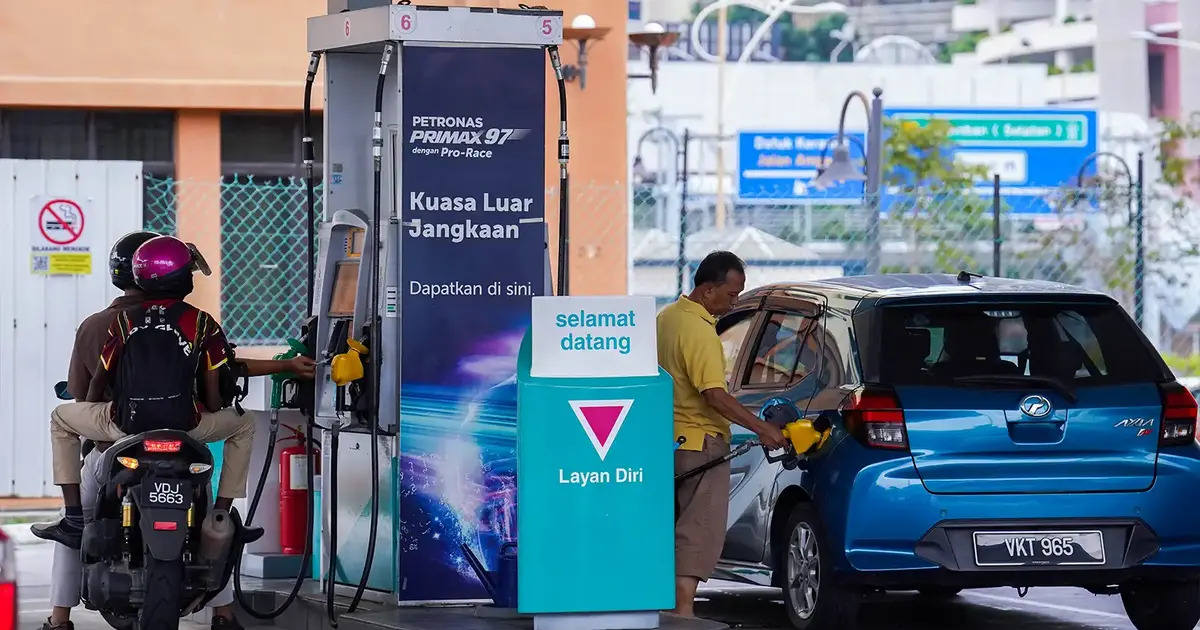
The Malaysian government faces a mounting fiscal challenge as fuel subsidies are projected to consume RM40 billion from the national budget in 2026, a figure that underscores the persistent strain of maintaining artificially depressed pump prices for consumers. Prime Minister Anwar Ibrahim acknowledged this substantial commitment while attempting to allay public concerns about energy security, confirming that the nation's domestic petroleum reserves and production capacity remain sufficient to meet domestic consumption requirements without external supply disruptions.
This projection carries profound implications for Malaysia's fiscal planning and economic priorities. The RM40 billion allocation represents a significant portion of government expenditure that competes directly with spending on infrastructure, healthcare, education, and social services. For context, such an outlay rivals or exceeds the annual budgets of entire government ministries, highlighting how fuel subsidies consume resources that policymakers might otherwise deploy towards long-term development initiatives. The magnitude of this figure reflects both the volume of fuel consumed domestically and the gap between global market prices and the artificially capped retail rates that Malaysian motorists enjoy at petrol stations.
Malaysia's reliance on fuel subsidies operates within a broader Southeast Asian pattern of energy policy. While neighbouring countries including Thailand and Indonesia have undertaken various subsidy reforms or introduced targeted assistance mechanisms, Malaysia has maintained relatively generous fuel pricing for the general public. This approach reflects political sensitivity around cost-of-living issues and the electoral consequences of sudden fuel price increases, a lesson reinforced by historical episodes of public discontent following subsidy cuts. The government's continued commitment to subsidy provision, despite its budgetary weight, demonstrates the political calculus that leaders navigate when balancing fiscal responsibility against immediate consumer concerns.
The stability of Malaysia's petroleum supply, as emphasised by PM Anwar, rests on the nation's enduring role as an energy producer and exporter. Malaysia holds proven oil reserves and maintains active exploration and production activities that have sustained output across multiple decades. However, the transition towards global energy diversification and the long-term implications of peak oil economics warrant acknowledgment. While current supplies appear adequate, the government's emphasis on supply stability may also reflect awareness that international crude oil prices and global market dynamics remain outside Malaysian control, creating uncertainty that extends into subsidy cost calculations.
The projection to RM40 billion in 2026 likely incorporates assumptions about global petroleum prices, domestic consumption patterns, and exchange rate fluctuations. Crude oil markets have demonstrated considerable volatility over recent years, influenced by geopolitical tensions, production decisions by major exporters, and shifts in global energy demand. Should international prices spike unexpectedly, the subsidy bill could exceed current projections, further pressuring government finances. Conversely, a sustained period of lower global prices might mitigate the fiscal burden, though this scenario remains speculative in an environment of sustained global economic uncertainty.
For Malaysian households and businesses, fuel subsidies represent a form of hidden welfare transfer that particularly benefits motorists and commercial transport operators. The system distributes resources broadly across society rather than through targeted mechanisms, raising equity questions about whether subsidy benefits flow most to those most in need. Middle and upper-income households that own vehicles and accumulate higher fuel consumption receive disproportionate benefits compared to public transport users or lower-income households without personal vehicles. This distributional challenge has prompted international organisations and domestic policy analysts to advocate for subsidy reform paired with targeted cash transfers to vulnerable populations.
The government's current trajectory suggests persistence with existing subsidy arrangements through at least 2026, absent significant policy reorientation. This stance contrasts with ongoing international pressure for energy subsidy reform and the sustainability concerns raised by climate change considerations. Maintaining fuel price caps inherently encourages consumption and complicates Malaysia's climate commitments, as subsidised petrol discourages shifts towards public transport or electric vehicles. The RM40 billion figure thus represents not only a fiscal cost but also an implicit policy choice regarding energy consumption patterns and environmental priorities.
Investors and economists monitoring Malaysian fiscal health will interpret the rising subsidy projection as relevant to medium-term budget sustainability. Credit rating agencies and international financial institutions scrutinise government expenditure patterns and subsidy burdens as indicators of fiscal discipline and long-term viability. While Malaysia's overall fiscal position remains manageable, persistent subsidy growth trends could accumulate into a constraint on government policy flexibility, particularly if coupled with revenue pressures or declining commodity export earnings.
The emphasis that PM Anwar placed on supply adequacy appears designed to separate discussions of fuel pricing from energy security concerns. This rhetorical distinction acknowledges that subsidy debates sometimes incorporate latent anxieties about resource scarcity, despite abundant current supplies. By clarifying that supply remains stable, the government sought to frame the subsidy question as purely one of fiscal management and consumer support rather than survival-level resource constraints. This framing matters for public confidence in both energy security and government credibility, as Malaysians must distinguish between politically-driven subsidy policies and genuine supply vulnerabilities.
Looking forward, the convergence of rising subsidy costs with evolving global energy transitions will likely intensify policy debates within government circles. Renewable energy expansion, electric vehicle adoption, and international climate agreements all push against the logic of sustaining petroleum subsidies indefinitely. Yet the political costs of subsidy reform remain substantial, creating a persistent tension between fiscal prudence and electoral considerations that successive governments must navigate, even as the RM40 billion projection looms larger in budgetary discussions.

