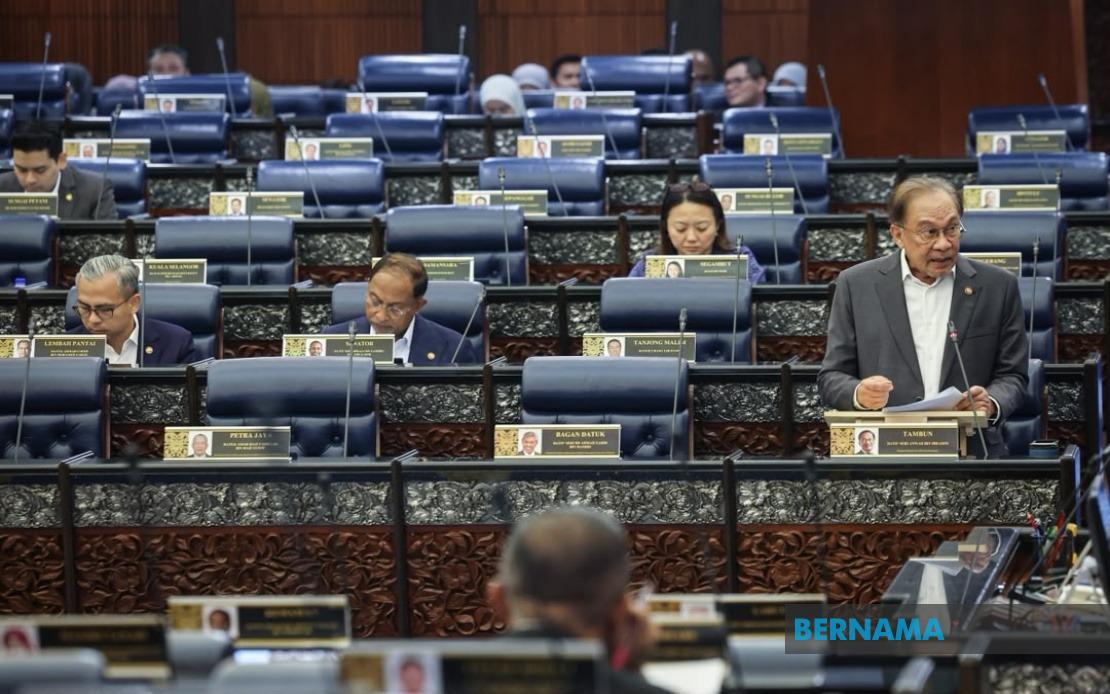
Prime Minister Datuk Seri Anwar Ibrahim has pushed back against suggestions that Malaysia's petrol prices have lost their competitive edge, asserting in parliament that domestic fuel costs remain markedly lower than those prevailing in major crude oil-exporting nations. Speaking in the Dewan Rakyat on July 14, Anwar highlighted comparative pricing data to underscore the government's continued commitment to keeping fuel affordable for ordinary Malaysians, a cornerstone of the administration's cost-of-living agenda.
The centrepiece of Anwar's rebuttal was the BUDI MADANI initiative, which maintains the price of RON95 petrol at RM1.99 per litre. By positioning this against contemporary prices in Saudi Arabia, now exceeding RM2.40 per litre, the Prime Minister sought to demonstrate that Malaysia's subsidy regime delivers tangible benefit to consumers relative to other hydrocarbon-rich economies. The contrast becomes sharper when measured against historical benchmarks. When the government previously campaigned for a price ceiling of RM1.50, Saudi Arabia was charging approximately 50 sen per litre—a significantly lower baseline that reflected fundamentally different economic and policy circumstances.
Anwar's comments directly addressed a supplementary parliamentary question from Datuk Rosol Wahid, the Hulu Terengganu member representing Perikatan Nasional, who had raised the subject of fuel price differentials across different political administrations. Rosol Wahid's inquiry implicitly referenced both the tenure of Datuk Seri Najib Razak and Anwar's earlier pledge, articulated when he served in the opposition, to reduce petrol prices for Malaysian motorists. The framing suggested a need to reconcile past campaign rhetoric with present realities.
Beyond Saudi Arabia, the Prime Minister extended his comparison to encompass Qatar and the United Arab Emirates, both significant producers and exporters of petroleum products. Qatar has similarly maintained fuel prices above Malaysia's current level, while the UAE—despite its status as a major oil-producing nation—has even enacted price increases within the preceding two months. This last observation carries particular weight, as it inverts the conventional assumption that oil-rich nations would universally offer their citizens the cheapest fuel globally. Instead, it reflects broader economic management choices, exchange rate fluctuations, and domestic pricing policies that diverge across the region.
The substance of Anwar's parliamentary statement signals an effort to reframe the domestic fuel price debate in comparative regional terms. Many Malaysian commentators and opposition politicians have periodically questioned whether domestic petrol prices remain competitive, particularly as global crude benchmarks fluctuate. By invoking data from neighbouring and peer economies, the Prime Minister attempted to shift the narrative from absolute price levels to relative positioning—implicitly arguing that Malaysian consumers benefit from more generous subsidisation than do their counterparts in wealthier petro-states.
The BUDI MADANI subsidy mechanism itself represents a significant fiscal commitment. Maintaining RON95 at RM1.99 requires government expenditure to bridge the gap between the price consumers pay at the pump and prevailing international crude costs, adjusted for refining and distribution expenses. This mechanism became necessary as global energy markets experienced volatility following geopolitical tensions and supply chain disruptions. The decision to lock in this price point reflects a deliberate policy choice to prioritise household purchasing power and business competitiveness over budget consolidation.
Anwar's response also carries implicit political weight. The opposition and critics have occasionally weaponised fuel price grievances, suggesting that the government has reneged on electoral promises or failed to deliver on the cost-of-living front. By reiterating that Malaysia's petrol prices rank among the lowest in the broader region—particularly when juxtaposed against other hydrocarbon exporters—Anwar positioned the government's fuel strategy as responsible stewardship rather than electoral failure. The framing subtly shifts blame for any perceived unaffordability away from government policy toward global market forces.
The comparative pricing data also holds relevance for Malaysia's broader economic messaging. As the government seeks to position the country as a competitive investment destination and stable emerging market, fuel cost comparisons inform both business operating costs and consumer-side economic assumptions. Multinational corporations and logistics operators factor fuel expenses into site selection and supply chain decisions. Lower petrol prices theoretically enhance Malaysia's attractiveness relative to neighbouring economies, though the effect remains marginal for most industrial decisions.
Looking forward, the government's ability to sustain the RM1.99 price point will depend on international crude trajectory and fiscal sustainability. Should global oil prices decline substantially, the subsidy burden eases, potentially permitting price reductions or budget reallocation. Conversely, a sustained spike in crude costs would create mounting fiscal pressure, potentially forcing uncomfortable policy adjustments. The parliamentary exchange highlighted that fuel pricing remains a politically sensitive issue, with both ruling and opposition factions monitoring the government's consistency between campaign pledges and policy outcomes.
Anwar's parliamentary defence reflects a pragmatic acknowledgment that fuel prices, while materially important for household budgets, operate within global market constraints that individual governments cannot fully override. By situating Malaysia within a regional comparative framework and highlighting subsidisation relative to peer economies, the Prime Minister attempted to recast the fuel price narrative as one of relative advantage rather than absolute affordability. Whether this reframing satisfies domestic constituencies concerned about cost-of-living pressures remains an open question, but it demonstrates the administration's continued emphasis on justifying subsidy expenditure through benchmarking exercises.

