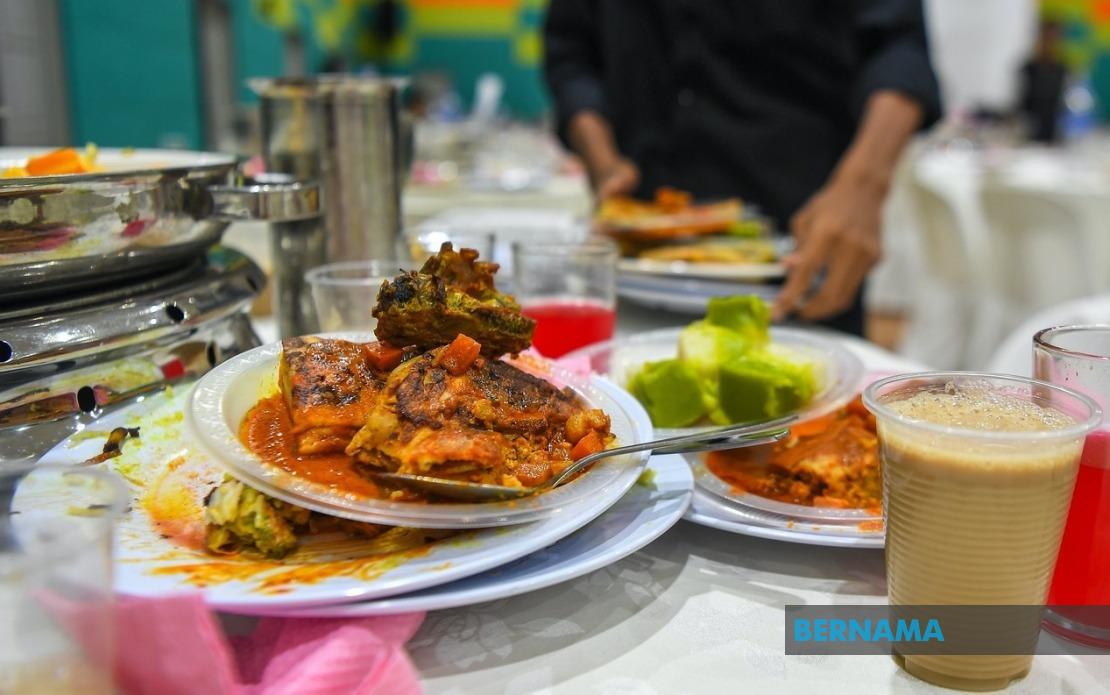
As Malaysia's Chief Statistician Datuk Seri Dr Mohd Uzir Mahidin prepared to retire after nearly nine years at the helm of the Department of Statistics Malaysia, he highlighted a paradox afflicting the nation's increasingly prosperous households: the wealthier families become, the more food they discard. Speaking to Bernama before stepping down from a role he had held since 2017, Mahidin identified a clear correlation between household income levels and the volume of edible food destined for landfills, a pattern especially pronounced in economically vibrant urban centers and higher-income states across the country.
The challenge, Mahidin explained, stems from a fundamental shift in consumption behaviour that accompanies economic advancement. As Malaysians move beyond meeting their basic nutritional requirements, purchasing decisions become increasingly disconnected from actual household needs. Families now routinely acquire goods far in excess of what they will genuinely consume, driven by promotional pricing, convenience, and the psychological comfort that abundance provides. This overconsumption represents not merely personal choice but a cultural mindset that has taken root as living standards have improved—one where food abundance is treated as an indicator of prosperity rather than a resource to be managed prudently.
The disconnect between purchase and consumption manifests in multiple ways within Malaysian households. Parents frequently stock up during promotional periods without coordination with other family members, leading to duplicate purchases that languish in refrigerators until spoilage forces disposal. Children, unaware of parental shopping decisions, may independently acquire identical items, compounding the waste. Additionally, the modern Malaysian consumer increasingly relegates price as a measure of value; when items are heavily discounted or readily available, their perceived worth diminishes, making waste seem inconsequential rather than problematic. This economic psychology—where scarcity traditionally confers value—has been fundamentally inverted in affluent households where abundance itself has become commonplace.
Urban and rural Malaysia present starkly different food waste profiles, though both demonstrate rising trend lines. In metropolitan areas, the sheer frequency of social obligations creates exceptional waste volumes. Mahidin observed that weekend celebrations often occur simultaneously across communities, with identical menus repeated across five or six concurrent functions. Guests, responding to multiple invitations, attend selectively and primarily to participate in the celebration itself rather than consume the meal, resulting in substantial uneaten portions. The commercialisation of kenduri catering in rural areas has similarly transformed traditional food practices, replacing home-prepared meals with professionally catered services where portion control is less stringent and food appreciation diminishes. Consequently, while rural communities historically wasted less food due to economic necessity, this protective mechanism is eroding as market-based food provision expands into previously self-sufficient regions.
Geographic wealth disparities further illuminate the problem. States with elevated per capita incomes, particularly Selangor, demonstrate significantly higher food waste rates than less economically developed regions, a phenomenon Mahidin attributed partly to the concentration of social functions in prosperous areas. Where fewer celebratory gatherings occur, naturally less food reaches disposal stages. This geographic dimension carries important policy implications for state-level waste management strategies, suggesting that wealthier, more developed regions require proportionally greater investment in food waste reduction programmes and consumer education initiatives.
The National Household Indicators Survey 2025 provides granular data quantifying this waste crisis. Malaysian households discard between 31.9 and 97.3 kilogrammes of food per capita annually—a staggering range that reflects both the prevalence of the problem and significant variation across different household types and income brackets. The survey revealed that processed and cooked foods constitute the principal waste category, with 94.1 per cent of households reporting discard of prepared meals compared to 88.7 per cent for raw ingredients. Within cooked food waste, rice predominates at 16.7 per cent, followed by vegetables at 15.8 per cent and purchased takeaway meals at 13.8 per cent. For raw ingredients, vegetables lead wastage rates at 29.1 per cent, with fruits accounting for 22.4 per cent and fish or seafood at 15 per cent. These figures underscore both the diversity of wasted food types and the particular vulnerability of perishable items to disposal.
Perhaps most troubling for environmental and sustainability goals, the survey discovered that 79.3 per cent of households disposed of food indiscriminately alongside general waste, while only 20.7 per cent separated food waste for distinct treatment. This practice reflects both inadequate household infrastructure for food waste separation and the absence of established cultural norms around such behaviour. Unlike some regional neighbours who have implemented mandatory food waste segregation systems, Malaysia lacks widespread systematic separation, meaning substantial volumes of organic matter enter landfills where decomposition generates methane and contributes to environmental degradation. The low separation rate suggests that awareness campaigns alone have proven insufficient; structural changes and consumer incentives remain necessary to establish this as routine practice.
Mahidin's analysis reveals that food waste represents not primarily a problem of poverty or insufficiency, but rather one of abundance poorly managed. The traditional economic relationship between price and perceived value has inverted; items obtained cheaply through promotions or e-commerce platforms lose their perceived worth, making waste seem acceptable. This psychology extends beyond food to other categories including clothing, where deep discounts similarly encourage overconsumption followed by disposal. Building a culture that values food appreciation despite its accessibility requires multifaceted intervention: consumer education emphasizing the environmental and ethical costs of waste, redesigned promotional strategies that discourage bulk purchasing beyond genuine household needs, and infrastructure supporting food waste separation and composting.
The retirement of Mahidin after 36 years of public service marks a transition point for Malaysia's statistical agency, which has undergone substantial transformation under his leadership to position itself as the nation's strategic data institution. His final observations on food waste patterns highlight data's power to illuminate societal challenges often obscured by conventional narratives focused on poverty or scarcity. In Malaysia's context, the inverse problem—waste amid plenty—demands equally urgent attention as living standards continue rising.
Addressing this challenge requires recognising that food waste is fundamentally a symptom of unexamined affluence and disconnected purchasing patterns rather than inevitable consequence of development. Southeast Asian regional peers, as they experience similar income-driven lifestyle changes, will increasingly confront comparable waste challenges. Malaysia's experience suggests that technological solutions alone—better refrigeration, longer shelf-life products—cannot resolve behavioural issues rooted in changed cultural attitudes toward abundance. Instead, coordinated strategies encompassing education, infrastructure, policy incentives, and social norm recalibration appear necessary. As waste streams expand alongside prosperity, the imperative to cultivate food appreciation proportional to material plenty becomes increasingly urgent for environmental sustainability and resource security across the region.

