Malaysia's approach to renewable energy and export strategy came under scrutiny at the inaugural Minister's Cup debate competition, held in conjunction with the 7th International Sustainable Energy Summit (ISES) 2026 in Kuala Lumpur this week. The event represented a significant moment for a nation grappling with the dual challenge of transitioning away from fossil fuels whilst maintaining energy security for its population and strengthening regional partnerships. Twenty university students from across the country engaged in structured debate around a compelling central question: whether Malaysia should pursue expanded exports of renewable energy-based electricity to neighbouring countries while simultaneously ensuring adequate domestic supply.
The motion, framed in both English and Malay, directly addresses one of Southeast Asia's most pressing policy dilemmas. Regional energy demand continues to surge, driven by rapid industrialisation and technological advancement across the Association of Southeast Asian Nations. Yet individual countries face resource constraints and varying renewable capacity. Malaysia, blessed with abundant solar resources and increasingly sophisticated renewable infrastructure, finds itself positioned at a potential nexus of regional energy cooperation. However, expanding exports requires careful calibration to avoid compromising the electricity needs of Malaysian households, factories, and services. The debate format provided students with an intellectual framework to explore this complexity, moving beyond simplistic rhetoric into the practical trade-offs that policymakers must navigate.
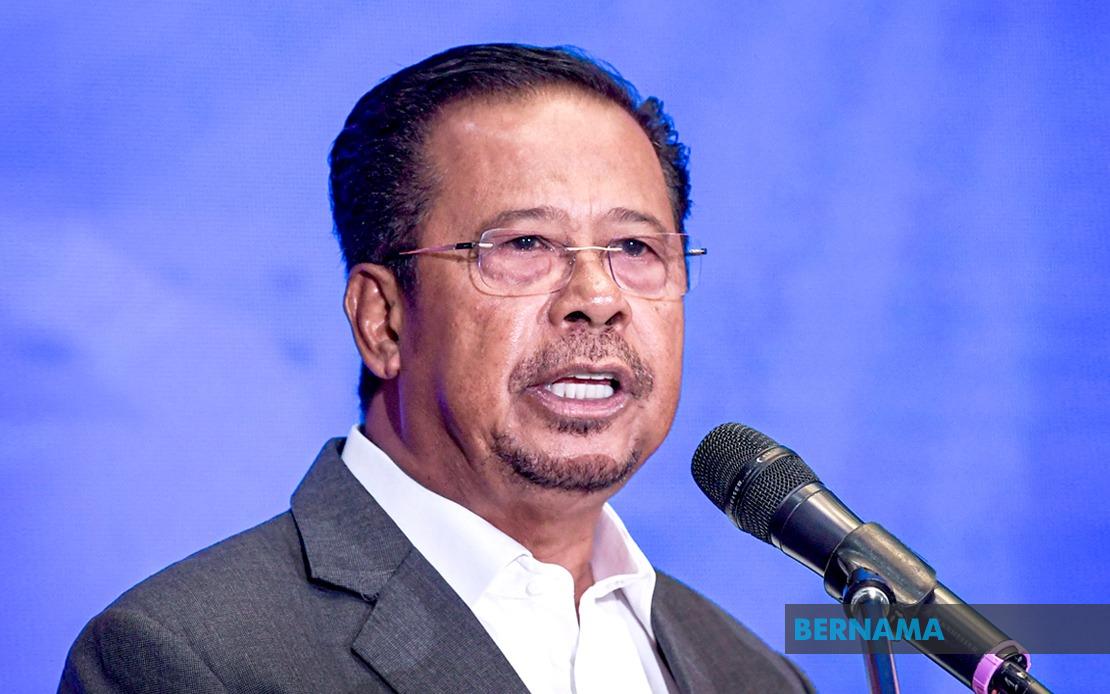
Deputy Minister of Energy Transition and Water Transformation Datuk Seri Abdul Rahman Mohamad presided over the awards ceremony, presenting the championship trophy to the Government team and recognising the Best Debater award. The presence of Chief Secretary to the Government and Sustainable Energy Development Authority Malaysia (SEDA) chairman Tan Sri Dr Wan Ahmad Dahlan Abdul Aziz underscored the high-level commitment to the initiative. By positioning senior government figures at the event, authorities signalled that student participation in policy discourse carries genuine weight within Malaysia's governance ecosystem. This reflects a broader acknowledgment that energy transition represents not merely a technical challenge but a generational conversation requiring buy-in from young Malaysians who will inherit the consequences of decisions made today.
The competition forms the flagship programme of the Malaysia Energy Literacy Programme (MELP) 2026, a national initiative stewarded by SEDA Malaysia with oversight from a steering committee chaired by Datuk Seri Abdul Rahman Mohamad. MELP aims to fundamentally reshape how ordinary Malaysians understand energy production, distribution, and consumption. Rather than treating energy as an abstract commodity consumed at the flick of a switch, the programme seeks to cultivate informed citizenship grounded in verified information and systems thinking. This philosophical approach differs markedly from traditional top-down energy education, which often emphasises conservation messages without exploring the policy architecture underlying energy systems. By incorporating debate as a pedagogical tool, MELP acknowledges that deep understanding emerges through structured argumentation and exposure to competing perspectives.
Izzad Zalman Abdul Kader, SEDA's Strategic Communications director, articulated the reasoning behind channelling young people toward debate platforms. He emphasised that competitions of this nature strengthen energy literacy by creating safe spaces where students can engage critically with government policies, formulate reasoned challenges, and articulate alternative viewpoints. This represents a notable shift in governance communication, moving beyond the broadcasting of policy directives toward genuine dialogue. Kader noted that debate uniquely equips audiences to hear multiple perspectives simultaneously, a feature increasingly rare in polarised media landscapes. When complex issues such as renewable energy transition are presented through adversarial debate, listeners encounter not propaganda but substantive reasoning from multiple angles, allowing them to develop mature, evidence-based judgments rather than adopting prefabricated positions.
Muhammad Uwais Mohd Hazril Munir @ Umar, a 20-year-old Universiti Malaya Faculty of Law student, captured the Best Debater award by demonstrating exceptional ability to translate technical energy concepts into accessible language. Uwais highlighted how debate serves a crucial function in demystifying complex policy areas for general audiences. Energy policy often remains shrouded in technical jargon and dominated by specialist discourse, creating a knowledge gap between policymakers and the public. By staging debates accessible to student audiences and, through media coverage, to the broader population, initiatives like the Minister's Cup begin closing this gap. The adversarial format, wherein each side must articulate compelling arguments for their position, forces speakers to explain underlying logic and evidence rather than relying on assumed knowledge or authority. This democratisation of energy discourse holds particular significance in Malaysia, where citizens increasingly expect transparency and participation in decisions affecting their futures.
Afiq Athmar Mohamed, a 21-year-old Universiti Malaya Faculty of Business and Economics student, highlighted the synergistic value of collaboration between government ministries, agencies, and media in organising such competitions. Afiq observed that coordinated efforts to mainstream energy issues across educational and public spheres create momentum that individual initiatives cannot achieve alone. When SEDA, the Ministry of Energy Transition and Water Transformation, and media partners align their efforts, energy literacy transitions from a peripheral concern into a central component of national discourse. This coordinated approach has particular resonance in Southeast Asia, where regional energy challenges require coordinated responses across borders. If Malaysia establishes itself as a leader in energy education and citizen engagement, it positions itself advantageously for regional energy cooperation and potentially attracts expertise and investment in renewable technology sectors.
The competition's emphasis on renewable energy export specifically reflects Malaysia's evolving strategic interests. The nation has invested substantially in solar capacity expansion and grid modernisation, positioning itself to potentially become a net exporter of renewable electricity rather than remaining solely dependent on fossil fuel imports and regional power purchases. However, transitioning to this position requires managing domestic electricity demand whilst channelling surplus capacity toward exports. The debate motion captures this tension directly. Students engaging with the topic must consider economic opportunities represented by renewable energy exports, geopolitical implications of energy interdependence within Southeast Asia, technical feasibility of cross-border electricity transmission, and equity considerations regarding access to affordable electricity for all Malaysians regardless of geographic location or income level. These multifaceted considerations cannot be reduced to simple yes-or-no answers, making debate an intellectually appropriate forum for exploration.
For younger Malaysians, participation in energy policy debates carries broader implications for civic engagement and democratic citizenship. Rather than passively receiving information from authorities or media, students become active producers of knowledge and perspective. This shift from consumer to participant in policy discourse cultivates investment in national outcomes. Young Malaysians who have publicly argued positions on energy export strategy, listened to counterarguments, and refined their thinking through structured debate develop ownership of energy transition as a shared national project. When these individuals subsequently encounter energy policy through news media, government announcements, or electoral campaigns, they engage as informed rather than uninformed citizens. They recognise trade-offs and complexities rather than falling prey to oversimplified rhetoric. Over time, as cohorts of energy-literate young people mature into voters, professionals, and leaders, they constitute a constituency capable of demanding evidence-based policy and holding governments accountable to commitments made regarding renewable energy transition.
The Minister's Cup debate also illuminates Malaysia's positioning within regional energy architecture. Southeast Asian nations increasingly recognise that renewable energy capacity varies significantly across the region, creating opportunities for trade in renewable electricity and green hydrogen. Countries with abundant solar or hydroelectric resources might export to neighbours with less favourable natural endowments or higher population density. Malaysia, blessed with tropical solar resources and existing grid infrastructure, could emerge as a regional energy hub. However, realising this vision requires citizens and leaders who understand the technical, economic, and social dimensions of such transformation. By cultivating energy literacy among university students now, Malaysia invests in the human capital required to implement regional energy cooperation when opportunities arise. The debate competition, therefore, transcends the specific question of renewable energy exports to represent an investment in Malaysia's capacity to lead energy transition discussions across Southeast Asia.
Beyond the immediate context of ISES 2026 and the Minister's Cup, the competition reflects broader recognition that energy transition represents a defining challenge for Malaysian policymakers, businesses, and citizens across this decade and beyond. The nation has committed to reducing carbon emissions, attracting foreign investment in renewable energy manufacturing and deployment, and ensuring energy security as fossil fuel reserves deplete. These objectives require unprecedented coordination across government agencies, private sector actors, educational institutions, and civil society. Public buy-in and understanding constitute essential ingredients for success. When students debate whether Malaysia should export renewable electricity whilst meeting domestic demand, they are not engaging in abstract intellectual exercise. They are rehearsing arguments that will determine whether Malaysia achieves energy transition smoothly and equitably, whether regional energy cooperation becomes reality, and whether future generations inherit a sustainable energy system or scramble to manage the consequences of delayed action. The Minister's Cup debate thus represents far more than a student competition—it constitutes an investment in Malaysia's energy future, channelled through the cultivation of informed, engaged young citizens capable of grasping and shaping the nation's energy trajectory.

