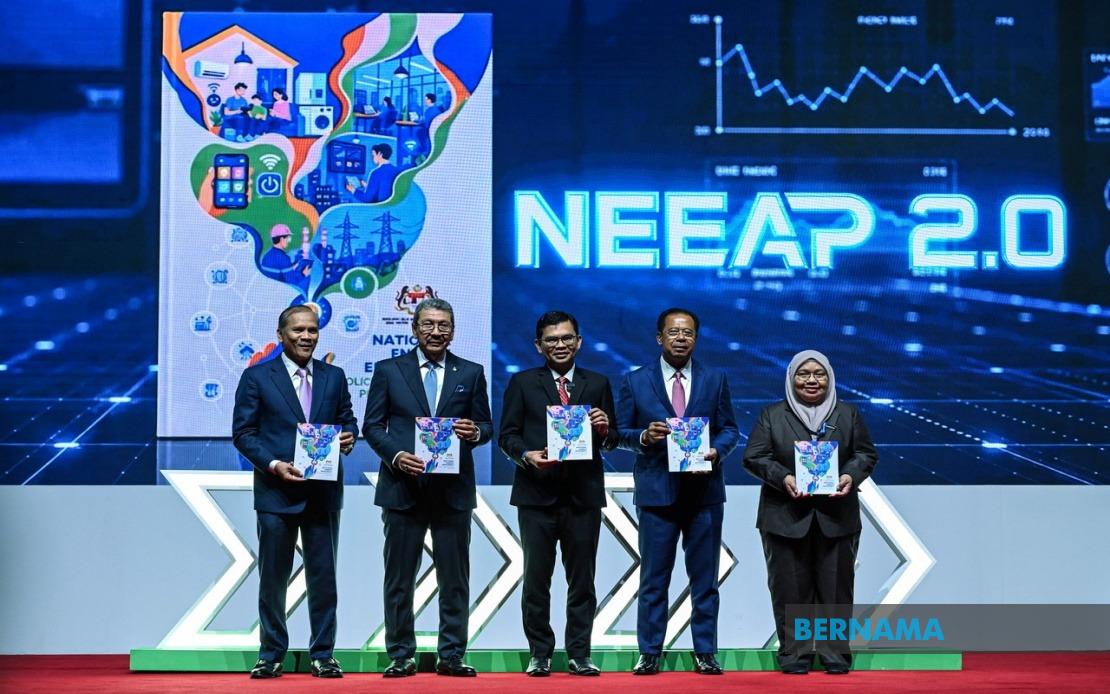
Malaysia has unveiled an ambitious decade-long energy efficiency strategy that promises to reshape how the country generates, uses and manages its power resources. The National Energy Efficiency Policy and Action Plan 2026-2035, or NEEAP 2.0, launched in Putrajaya by the Ministry of Energy Transition and Water Transformation, represents a comprehensive roadmap designed to wring maximum value from the nation's energy consumption while simultaneously creating meaningful economic opportunities.
The financial case for implementation is striking. Over the ten-year period through 2035, NEEAP 2.0 is projected to deliver RM85 billion in cumulative net energy savings—a figure that underscores the substantial waste currently embedded in Malaysia's industrial, commercial and residential infrastructure. Beyond cost reductions, the plan is anticipated to catalyse RM36 billion in private sector investment, signalling confidence from the business community in efficiency-driven ventures and suggesting a growing market for energy management technologies and services.
Job creation represents a significant co-benefit often underappreciated in energy policy discussions. The framework is expected to generate approximately 29,000 new employment positions across the economy, from skilled engineering and technical roles in manufacturing and installation to advisory and auditing positions in the emerging efficiency services sector. For a nation navigating post-pandemic labour market adjustments, this employment boost addresses both immediate job scarcity and helps develop the skilled workforce essential for managing Malaysia's energy transition.
The environmental credentials are equally compelling. Implementation is estimated to reduce carbon dioxide equivalent emissions by 26 million tonnes by 2035, a reduction of meaningful scale for a nation committed to achieving net-zero status by 2050. This trajectory is critical not only for meeting international climate commitments but also for improving air quality and public health outcomes across Malaysia's urban centres, where air pollution remains a persistent concern for residents and policymakers alike.
At the technical heart of NEEAP 2.0 lies an 11.6 per cent efficiency improvement target compared with business-as-usual projections. This ambitious goal translates into cumulative energy savings of 815,000 terajoules—an almost incomprehensible figure until placed in context. The ministry's comparison is instructive: these savings equate to the entire electricity consumption of Peninsular Malaysia sustained for nearly two years. Such magnitude illustrates both the current inefficiency embedded across Malaysia's economy and the transformative potential of systematic, coordinated action.
The plan builds upon foundations laid by its predecessor, maintaining focus on high-impact sectors that drive Malaysia's economic engine while broadening participation across industrial, commercial and domestic spheres. This multi-sectoral approach acknowledges that energy waste transcends particular industries—manufacturing plants, shopping complexes, office towers and family homes all contribute substantially to overall consumption patterns and all harbour significant savings potential. By engaging all segments simultaneously, the strategy maximises aggregate impact.
Alignment with Malaysia MADANI development aspirations positions energy efficiency not as a green obligation imposed from above but as a practical component of broader national prosperity objectives. The framework explicitly connects efficient energy use to improved living standards, sustainable development and preservation of resources for future generations. This framing proves particularly valuable in Malaysia's pluralistic society, where appeals to environmental stewardship alone might resonate unevenly, but arguments rooted in economic prosperity and social wellbeing command broader support.
For regional observers, NEEAP 2.0 signals Malaysia's determination to differentiate its energy profile from conventional carbon-intensive development models adopted by some neighbouring economies. As Southeast Asia's second-largest economy by some measures, Malaysia's energy choices influence broader regional trajectories and investment flows. An efficiency-first approach potentially attracts multinational enterprises increasingly scrutinised on environmental, social and governance metrics by investors and consumers.
Implementation challenges remain substantial. Coordinating action across fragmented energy markets, building technical capacity in smaller enterprises, securing consumer participation in behavioural change, and ensuring equitable distribution of efficiency benefits across income groups all demand sophisticated execution. The plan's success hinges not merely on policy design but on sustained funding, adequate institutional capacity, effective monitoring and willingness to adapt strategies when empirical results diverge from projections.
The broader significance extends beyond immediate economic metrics. By consciously decoupling energy consumption growth from economic expansion—a concept known as energy intensity reduction—Malaysia charts a course toward prosperity that need not inevitably increase environmental pressures. This developmental model proves increasingly critical as climate science underscores the urgency of global emissions reductions. For Malaysian policymakers, investors and citizens, NEEAP 2.0 represents both practical near-term opportunity and strategic positioning for a global economy increasingly defined by carbon-conscious decision-making.

