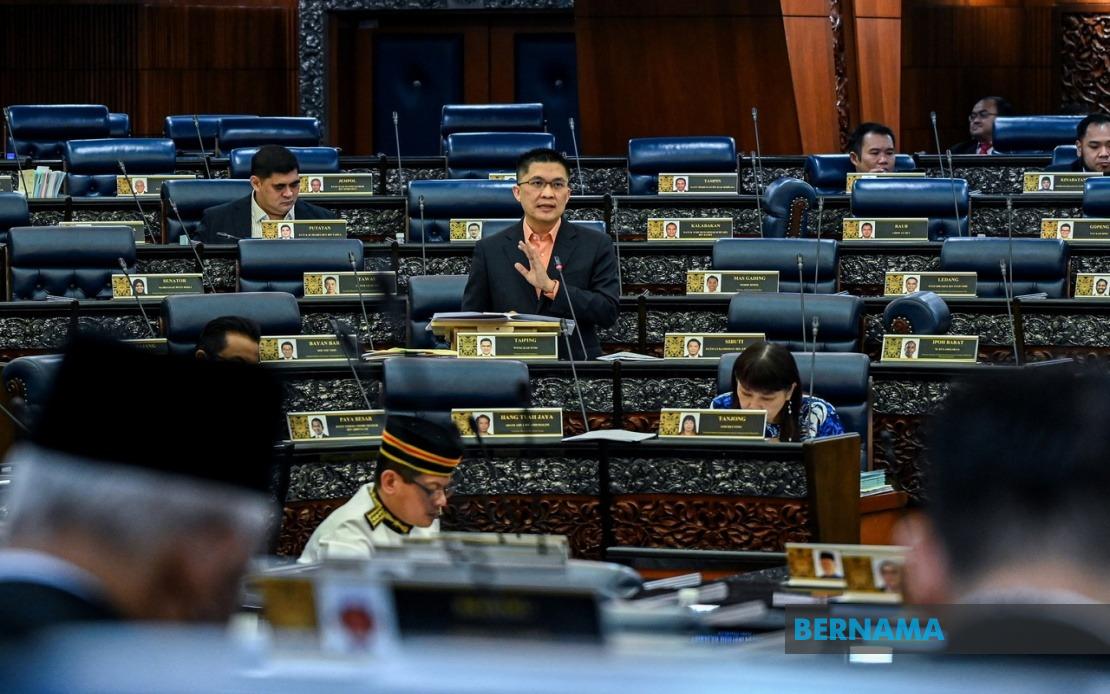
The Ministry of Education has positioned digital equity as a cornerstone of its long-term educational strategy, unveiling concrete plans to ensure every student and teacher nationwide gains reliable internet access and develops essential digital skills. Deputy Education Minister Wong Kah Woh outlined the comprehensive approach during parliamentary proceedings, emphasizing that the initiative represents a fundamental shift towards inclusive learning opportunities across Malaysia's diverse geography.
The digital infrastructure expansion will operate under the Malaysia Education Blueprint (RPM) 2026-2035, a forward-looking framework designed to address persistent gaps between urban and rural educational facilities. Wong stressed that securing high-speed connectivity for all institutions—whether situated in developed city centers or remote communities—remains non-negotiable, with the ministry actively identifying appropriate technologies suited to local conditions. This nuanced approach acknowledges that different regions may require tailored solutions, rather than imposing uniform approaches that could prove ineffective in challenging terrain or underserved areas.
Central to the implementation strategy is the Digital Educational Learning Initiative Malaysia (DELIMa) platform, an integrated repository housing comprehensive digital learning materials accessible to both educators and students. Wong confirmed that all relevant digital content has already been uploaded to the system, positioning it as an immediately deployable resource once connectivity infrastructure reaches target schools. The platform's significance extends beyond mere content storage; it represents institutional commitment to democratizing access to quality educational materials that were previously confined to well-resourced institutions.
The ministry's commitment to equitable device distribution addresses a critical dimension of digital inequality often overlooked in purely infrastructure-focused initiatives. By systematically ensuring that computers, tablets, and other learning tools reach schools proportionally based on need rather than proximity to urban centers, the education system can prevent the emergence of a two-tiered learning environment. Wong emphasized that this fair allocation mechanism recognutes that rural schools often serve larger student populations relative to available resources, requiring deliberate corrective allocation strategies.
Progress under the previous Malaysian Education Development Plan (PPPM) 2013-2025 provides measurable evidence that targeted interventions can substantially reduce achievement gaps. The data presented during parliamentary discussion reveals striking improvements: average grade score differentials between urban and rural SPM candidates narrowed by 26.23 percent, gender-based certificate eligibility gaps contracted by 52.78 percent, and socioeconomic status-related disparities shrank by 57.75 percent. These figures demonstrate that systematic policy implementation produces tangible results, lending credibility to projections for the new blueprint period.
The Digital Competency Score framework establishes a standardized measurement system for assessing student proficiency in digital literacy and technology use. By targeting intermediate-level competency as a baseline for all learners, the ministry acknowledges that digital skills have become fundamental to educational success and future economic participation. This benchmarking approach contrasts with earlier ad-hoc technology adoption efforts, instead embedding digital competency within formal curriculum standards and assessment mechanisms.
Complementing infrastructure investments, the Digital Education Policy provides governance and strategic direction for integrating technology across pedagogical practices. This policy-level commitment ensures that expensive hardware investments don't languish as disconnected tools but instead become integrated components of coherent teaching and learning ecosystems. The policy framework addresses questions of teacher training, curriculum alignment, content quality standards, and assessment methodologies—critical dimensions that determine whether digital tools enhance or merely supplement traditional instruction.
Teacher capacity and well-being emerge as equally critical components of the digital transformation agenda. The ministry has introduced seven distinct measures since 2023 designed to reduce instructional workload, including streamlining administrative documentation processes that frequently consume classroom preparation time. By removing redundant record-keeping requirements, educators gain bandwidth to engage meaningfully with digital tools and platforms rather than treating technology as an additional burden layered atop existing responsibilities. This recognition that teacher satisfaction directly impacts implementation success distinguishes the blueprint from purely technology-centric approaches.
The broader Malaysian context makes this commitment particularly significant. Southeast Asia's education systems increasingly recognize digital access as fundamental rather than supplementary, particularly following pandemic-induced acceleration of remote and hybrid learning models. Countries competing for high-skilled talent and attracting knowledge-economy investments must demonstrate capacity to develop digitally literate workforces. Malaysia's deliberate focus on rural inclusion positions it advantageously within regional comparisons, potentially creating competitive advantages in technology adoption and digital entrepreneurship.
Implementation challenges remain substantial, particularly regarding maintenance of aging infrastructure, teacher training capacity given the scale of educator population requiring upskilling, and ensuring that connectivity improvements prove durable rather than subject to service deterioration. The blueprint's success will ultimately hinge on sustained funding commitments extending beyond electoral cycles and political administrations, institutional capacity to manage complex procurement and deployment logistics, and genuine collaboration between federal and state education authorities.
The ministry's emphasis on monitoring through quantified metrics—tracking intermediate digital competency achievement and documenting progress in narrowing regional disparities—suggests accountability mechanisms intended to maintain momentum. This data-driven approach enables mid-course corrections and evidence-based resource reallocation, distinguishing the strategy from aspirational policy documents lacking implementation discipline. For Malaysian stakeholders invested in educational equity and economic competitiveness, the blueprint represents the most comprehensive digital inclusion initiative undertaken to date.

