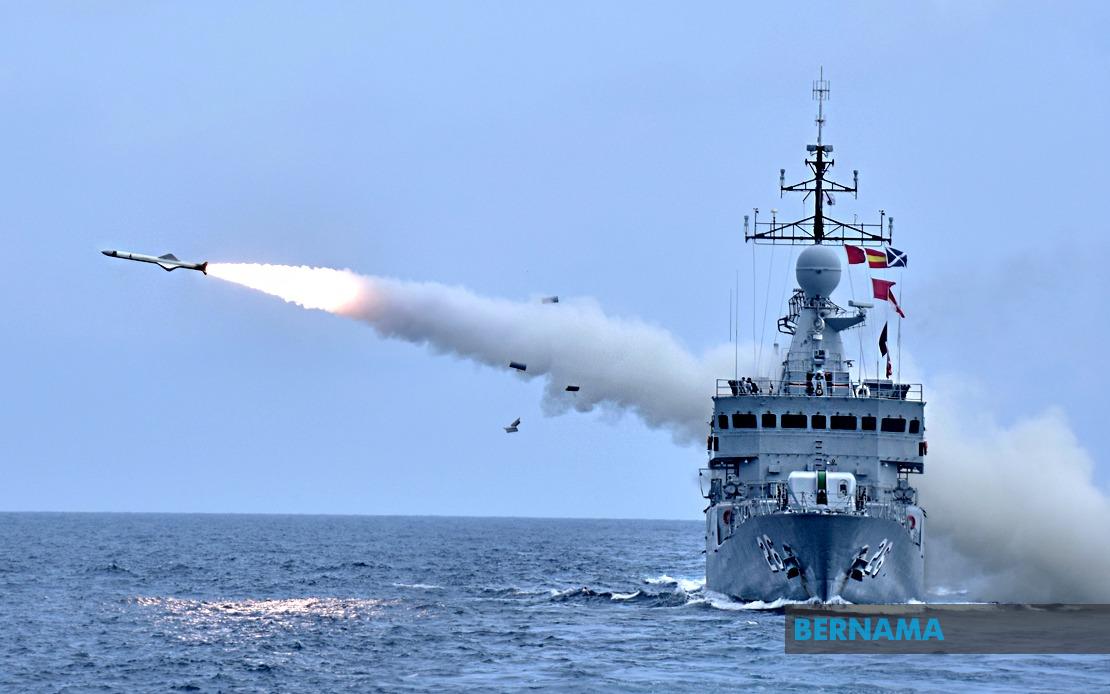
Malaysia's growing defence budget reflects a fundamental shift in how the government conceptualises national security threats, Defence Minister Datuk Seri Mohamed Khaled Nordin said, pointing to emerging challenges that extend well beyond conventional military concerns. The spike in military spending, potentially reaching hundreds of millions to billions of ringgit, addresses not only the traditional balance of power dynamics in Southeast Asia but also evolving dangers including cyberattacks and coordinated information warfare campaigns that can destabilise nations without firing a shot.
The strategic landscape confronting Malaysia has transformed dramatically over recent years. Beyond the visible deployment of naval and air assets by competing powers, defence planners must now contend with digital incursions and organised misinformation that can erode public confidence, manipulate political discourse, and undermine critical infrastructure. These threats operate across borders with minimal warning and require entirely different defensive postures than conventional deterrence. The Defence Ministry's assessment reflects a maturing understanding that 21st-century security encompasses domains that scarcely existed in previous strategic doctrines.
Regional military activity has intensified considerably as major powers vie for influence and strategic advantage in one of the world's most economically vital regions. Mohamed Khaled characterised this dynamic not as Malaysia identifying any specific nation as an adversary, but rather as an objective reality requiring serious preparation. When one power augments its military footprint or operational capabilities, neighbouring states invariably calibrate their own defences in response—a predictable action-reaction cycle that gradually raises tension and complexity throughout the zone. For a medium-sized nation like Malaysia, surrounded by these currents of competition, maintaining adequate defence capacity becomes an insurance policy against miscalculation or accident.
The risk of unintended escalation looms larger as military forces crowd into confined geographical spaces. When numerous vessels, aircraft, and installations operate in proximity, the margin for error shrinks dramatically. A miscommunication, a radar misinterpretation, or a minor incident can cascade into something far more serious if proper channels for dialogue and de-escalation do not exist. This reality underpins Malaysia's investment in modernised command-and-control systems, enhanced surveillance, and expanded naval and air capabilities designed to detect, deter, and defend rather than provoke or initiate conflict.
Developments in the southern Philippines, particularly in waters adjacent to Sabah, exemplify how regional incidents can reverberate across borders. While Malaysia does not necessarily expect direct involvement in every disturbance, the proximity and the potential for spillover effects demand vigilance. Unrest or military operations in that area carry immediate implications for Malaysian security and for stability throughout the South China Sea. Nonetheless, Mohamed Khaled reiterated Malaysia's respect for the Philippines' sovereign right to pursue its own defence strategies and international partnerships based on its own assessment of threats and interests.
Maintaining robust bilateral relations with the Philippines—a fellow ASEAN member and neighbour—remains paramount even as both nations strengthen military capabilities. Malaysia deliberately avoids framing regional security developments as a choice between rival blocs or powers. Such binary thinking ill-serves Malaysia's core interests, which centre on preserving peace, stability, and prosperity across Southeast Asia. Open communication channels and diplomatic engagement provide essential counterbalances to military preparations, ensuring that capabilities-building does not inadvertently poison relationships or create unnecessary suspicion.
The Malaysian Armed Forces modernisation programme constitutes a longstanding commitment stretching back decades, not a recent or reactive initiative. However, the decision to gradually raise defence expenditure to 1.5 per cent of Gross Domestic Product by 2030 reflects a sober reassessment of adequacy and necessity. Strategic installations such as Pulau Layang-Layang require enhanced defensive infrastructure to safeguard Malaysia's interests and territorial integrity. These investments serve Malaysia's own security objectives rather than targeting or countering any particular neighbour, yet they do signal Malaysia's determination to maintain a credible defence posture commensurate with its geopolitical standing.
Malaysia's policy approach rests on a dual foundation: building sufficient military strength to protect sovereignty and national interests, while simultaneously championing dialogue, restraint, and diplomatic resolution of disputes. This balance requires considerable diplomatic skill and political consistency, resisting pressure to align decisively with either major power while preserving space to cooperate with all actors on matters of mutual benefit. The government seeks a regional environment characterised by predictability, rules-based conduct, and mechanisms for managing competition without escalation into conflict.
The Code of Conduct negotiations in the South China Sea embody this hope. Establishing clear guidelines, communication protocols, and behavioural expectations can substantially reduce the risk of misunderstanding and accidental conflict, even amid persistent disagreements over sovereignty and maritime claims. Malaysia advocates vigorously for concluding a robust Code that all parties respect and implement faithfully. Progress on this front would help transform the region from a zone of strategic competition into one governed by agreed principles that permit economic activity, freedom of navigation, and peaceful coexistence.
ASEAN centrality—the principle that the regional bloc serves as the primary forum for dialogue and consensus-building on regional matters—represents Malaysia's preferred framework for managing tensions and opportunities alike. This approach affords smaller and medium-sized nations a collective voice that they might lack individually when confronted by great power assertiveness. By maintaining ASEAN unity and coherence, Malaysia and its neighbours can preserve agency over their own futures, promote their interests, and shape the regional order according to their values and preferences rather than passively accepting outcomes imposed by external forces. Defence spending, therefore, becomes not an end in itself but a means of securing the space within which Malaysia can pursue this diplomatic vision.

