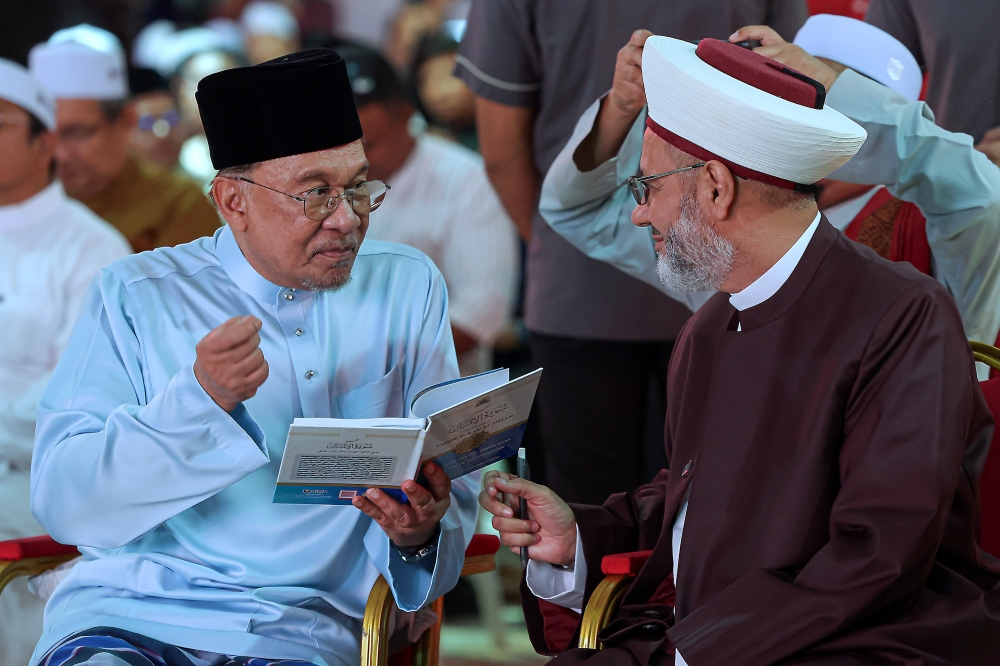
Prime Minister Datuk Seri Anwar Ibrahim has publicly commended Ahmed Al-Tayyeb, the Grand Imam of Al-Azhar, for his steadfast commitment to promoting moderation and interfaith harmony across the international community. Speaking on July 31, Anwar highlighted Al-Tayyeb's influential position as a leading voice for balanced Islamic teachings in an increasingly polarised world, positioning the 1,000-year-old institution as a bulwark against extremist interpretations.
Al-Azhar, one of the most prestigious Islamic educational and religious institutions globally, has long served as a reference point for Sunni Islamic thought and jurisprudence. The Grand Imam's authority extends far beyond Egypt's borders, influencing Muslim communities across the Middle East, North Africa, and beyond. Al-Tayyeb's tenure has been marked by consistent messaging that Islam fundamentally promotes peace, coexistence, and respect for human dignity—principles that resonate strongly with Malaysia's own constitutional framework and multicultural governance model.
Anwar's endorsement of the Grand Imam reflects Malaysia's strategic positioning as a nation that bridges Islamic authenticity with modern pluralism. Since assuming office, Anwar has worked to reframe Malaysia's international image as a moderate Muslim-majority democracy while addressing domestic religious sensitivities. His public recognition of Al-Tayyeb signals alignment with religious leadership that eschews sectarian division and instead emphasises common ground among different faith traditions.
The timing of Anwar's statement carries additional significance within the broader context of regional and global developments. Rising religious tensions in several parts of the world, coupled with the weaponisation of faith-based narratives by extremist groups, have heightened the importance of voices advocating for theological moderation. Al-Tayyeb has distinguished himself through decades of engagement with interfaith organisations, diplomatic initiatives, and educational programmes aimed at countering radicalisation and promoting mutual understanding.
Malaysia's acknowledgement of Al-Tayyeb's contributions aligns with Putrajaya's own institutional frameworks for managing religious affairs. The Department of Islamic Development Malaysia (JAKIM), the Islamic Religious Councils in various states, and the Council of Rulers all operate within a similar paradigm—balancing Islamic orthodoxy with constitutional secularism and multireligious society management. Anwar's remarks suggest a desire to strengthen coordination and ideological alignment with comparable institutions internationally.
The Grand Imam's work extends to challenging extremist propaganda through scholarly rebuttal and theological argumentation. His public statements have addressed terrorism, sectarian violence, and distorted interpretations of Islamic texts that radical movements exploit for recruitment. Al-Tayyeb has also engaged with Western scholars, policy makers, and religious figures to build understanding and dismantle stereotypes about Islam. Such initiatives resonate with Malaysia's foreign policy objectives of promoting dialogue and regional stability.
From a Southeast Asian perspective, Anwar's statement underscores the region's interest in maintaining Islamic institutions and leadership that reinforce stability rather than destabilisation. Indonesia, the world's largest Muslim-majority nation, and other ASEAN members have similar stakes in global religious moderation. The region's experience with terrorism, communal violence, and violent extremism has created strong incentives for governments to support and amplify moderate Islamic voices on the world stage.
Anwar's appreciation for Al-Tayyeb also reflects Malaysia's commitment to the Abraham Accords framework and broader initiatives promoting interfaith cooperation. Whether through United Nations platforms, Organisation of Islamic Cooperation (OIC) forums, or bilateral engagements, Malaysia has positioned itself as an advocate for dialogue-based approaches to international relations. Al-Tayyeb's prominence in such spaces makes him a natural ally for Anwar's vision of Malaysia as a bridge between the Islamic world and Western democracies.
The Grand Imam's educational contributions merit particular attention. Al-Azhar's schools and universities train Islamic scholars, teachers, and religious leaders who subsequently influence communities worldwide. By endorsing Al-Tayyeb, Anwar indirectly supports the dissemination of moderate Islamic pedagogy to students across multiple continents, including in Southeast Asia where Al-Azhar graduates often serve as influential preachers and intellectuals.
However, tensions between institutional moderation and grassroots religious sentiment persist in both Malaysia and the broader Muslim world. While Anwar champions figures like Al-Tayyeb internationally, domestic constituencies sometimes view such positioning as insufficiently protective of Islamic interests or overly accommodating to secular governance. Navigating these competing pressures remains an ongoing challenge for Malaysian leadership.
The Prime Minister's statement likely also signals Malaysia's intent to deepen engagement with Egyptian institutions and religious leadership. Bilateral relations between Malaysia and Egypt span multiple dimensions—economic, security, and cultural—and religious dialogue represents an underexplored avenue for collaboration. Al-Azhar's international standing could facilitate institutional partnerships beneficial to both nations' religious education and interfaith initiatives.
Looking forward, Anwar's endorsement of Al-Tayyeb exemplifies how contemporary Muslim-majority democracies are leveraging respected religious figures to legitimise moderate governance approaches domestically while simultaneously enhancing their international standing. The recognition validates strategies that prioritise theological authority alongside political legitimacy—a balancing act crucial for nations managing plural societies and significant Muslim constituencies simultaneously.

