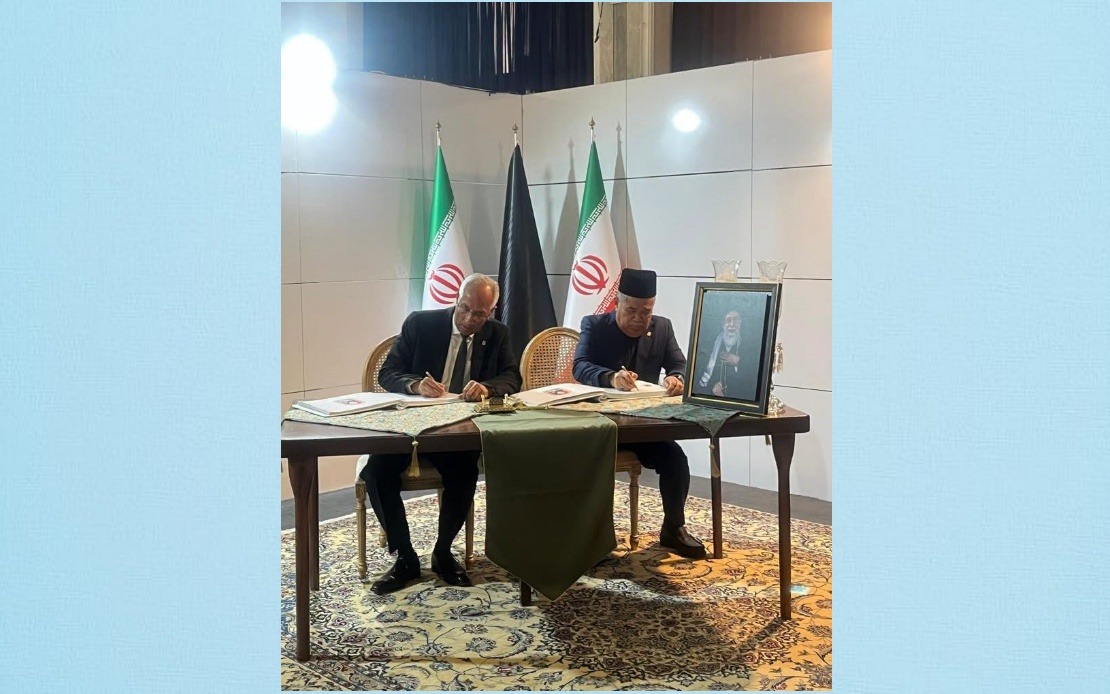
Malaysia's Agriculture and Food Security Minister Datuk Seri Mohamad Sabu travelled to Iran this week as head of a government delegation attending ceremonial tributes to the country's deceased former Supreme Leader, Ali Khamenei. The formal respects took place at Tehran's Grand Mosalla, marking a significant diplomatic gesture from Kuala Lumpur towards the Islamic Republic at a time of heightened regional tensions. Upon arrival, Mohamad was received by Mohammad Bagher Ghalibaf, Speaker of the Iranian Parliament, and Abbas Araghchi, Iran's Foreign Minister, underscoring the high-level nature of Malaysia's representation.
The mourning ceremonies extend across multiple cities and span several days, reflecting the significance attached to Khamenei's death and the traditional Islamic observances surrounding it. After proceedings conclude in Tehran, the ceremonial programme moves southward to the shrine city of Qom, then crosses into Iraq to Najaf and Karbala—cities that hold profound religious meaning for Shia Muslims worldwide. The final phase of these rites culminates at the Imam Reza Shrine in Mashhad, Iran's second-largest city, where Khamenei's remains are scheduled for burial on July 9. This itinerary symbolises a journey through some of Shia Islam's holiest sites, with each location selected for its spiritual significance to the faith.
Khamenei's death occurred on February 28 in circumstances that remain disputed internationally. Official Iranian sources attribute the incident to a combined military operation involving both the United States and Israel, though those nations have neither confirmed nor detailed involvement. The passing of Iran's paramount leader, who held the position for more than three decades, represented a watershed moment in Middle Eastern geopolitics. The extended interval between his death and these elaborate state commemorations—more than 100 days—reflects the procedural complexities involved in honouring a figure of Khamenei's stature within both Islamic tradition and Iran's constitutional framework.
Mohamad's decision to lead Malaysia's delegation personally carries diplomatic weight beyond ceremonial protocol. As a cabinet minister and senior figure within the Malaysian government, his presence signals respect for Iran's sovereignty and acknowledges the historical ties between Malaysia and the Islamic Republic. For Malaysian observers, the visit also reflects the country's consistent approach of maintaining pragmatic engagement with major Muslim-majority nations across diverse political contexts. This balancing act—honouring a significant religious and political figure while managing broader international relationships—represents a delicate diplomatic calculation that Malaysia has navigated throughout its modern history.
The religious dimension of Mohamad's attendance carries particular resonance in Malaysia's multicultural context. His participation in Islamic funeral rites at one of Islam's most important shrines demonstrates how Malaysian leaders honour obligations within the broader Muslim world whilst representing their own government. The prayers offered, including supplications for divine mercy upon Khamenei and forgiveness of his sins, reflect standard Islamic practice at such occasions. For Malaysia's Muslim-majority population, such representations of official respect towards significant Islamic figures reinforce the government's commitment to Islamic principles in its foreign policy framework.
Iran's reception of the Malaysian delegation with high-level official welcomes indicates Tehran's appreciation for Malaysia's diplomatic posture. In an era when Iran faces international isolation from Western powers and their regional allies, bilateral engagement from Southeast Asian nations holds particular value. Malaysia's willingness to send a senior minister to participate in state mourning ceremonies demonstrates a form of solidarity that extends beyond typical diplomatic courtesies. Such gestures accumulate over time, building reservoirs of goodwill that can facilitate cooperation on broader regional issues affecting Muslim-majority nations.
The timing of these ceremonies carries geopolitical implications for Southeast Asia and the broader Muslim world. The transition of leadership in Iran, following Khamenei's death, represents a critical juncture in regional affairs with potential consequences for energy markets, maritime security, and the balance of power in the Persian Gulf. Malaysia's active participation in these commemorative events positions the country as a stakeholder in Iran's future trajectory. For Malaysian policymakers and observers, understanding Iran's internal dynamics and succession processes remains strategically important given the nation's influence over critical sea lanes through which Malaysian trade transits.
The delegation's journey through multiple sacred sites across Iran and Iraq also illustrates the interconnected religious geography of Shia Islam. For Malaysia's significant Shia Muslim communities, these pilgrimages to Najaf and Karbala hold profound spiritual importance. By acknowledging these journeys through high-level governmental participation, Malaysia demonstrates respect for the religious practices of its own citizens who maintain ties to these holy centres. This inclusive approach to foreign policy—recognising the diverse sectarian affiliations within Malaysia's Muslim population—reflects a sophisticated understanding of religious pluralism within Islam itself.
Looking forward, the succession dynamics in Iran and Malaysia's response to the post-Khamenei era will merit close attention from regional observers. The establishment of new leadership in Tehran will shape not only Iran's domestic policies but also its engagement with Southeast Asian partners including Malaysia. The relationships forged through delegations attending state ceremonies often provide informal channels for diplomatic dialogue that prove valuable when formal negotiations become necessary. Through Mohamad's presence and the respectful conduct of the Malaysian delegation, Malaysia has reinforced its positioning as a reliable interlocutor in Middle Eastern affairs, a reputation that serves the country's interests across multiple dimensions of foreign policy.

