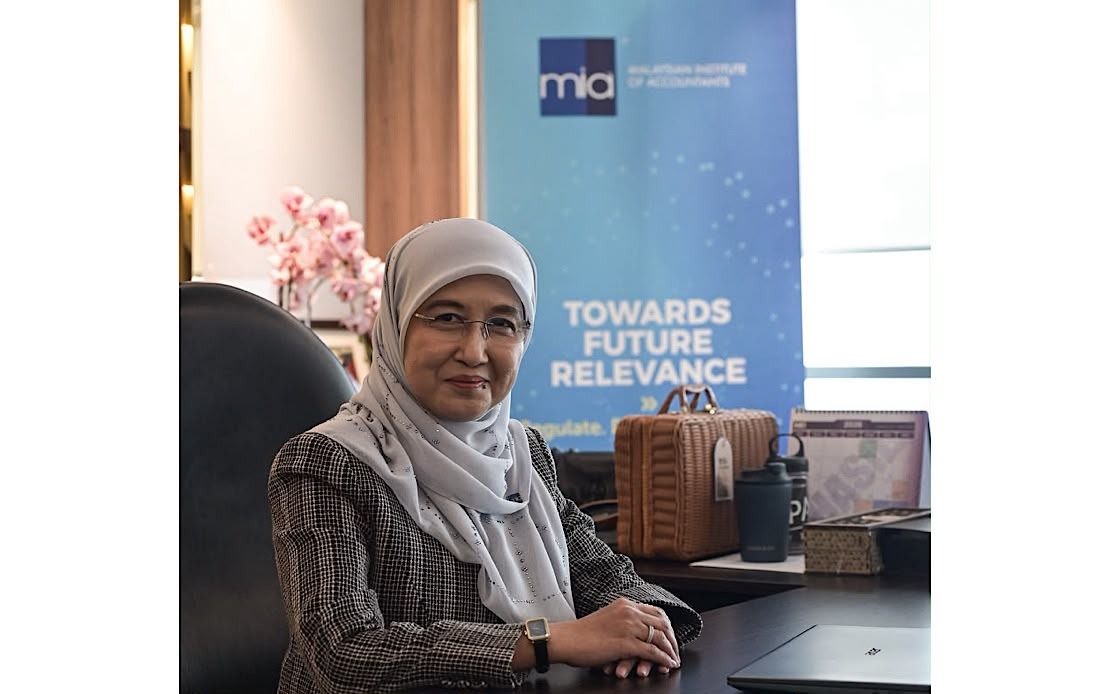
Malaysia's accountancy sector stands at a critical juncture where the profession must simultaneously advance technologically whilst reinforcing its foundation in trust and integrity to sustain the nation's economic competitiveness. This balance forms the crux of recent guidance from the Malaysian Institute of Accountants, which recognises that rapid digitalisation and mounting sustainability expectations demand a fundamental reshaping of how accountants practise their craft and contribute to business decision-making across the region.
Datuk Saniza Said, who became MIA's inaugural woman president in December 2025, articulated a vision in which accountants transcend their traditional role as financial recordkeepers to emerge as multifaceted business strategists. The profession now encompasses responsibilities spanning financial assurance, advisory services, and the protection of stakeholder confidence—roles that require practitioners to exercise both professional scepticism and nuanced judgement in navigating complex commercial environments. This expanded remit reflects how Malaysian businesses increasingly look to their accountancy teams not merely to record what has happened, but to anticipate and shape what comes next.
Central to this evolution is an unwavering commitment to ethical principles and public interest. Saniza emphasised that transparency, accountability, and integrity must form the bedrock upon which all other professional competencies are built. In an era when financial misconduct grows increasingly sophisticated and public trust in institutions faces persistent challenges, the accountancy profession's ability to demonstrate genuine commitment to these principles becomes a competitive asset for Malaysia itself. By positioning accountants as guardians of financial integrity, the nation reinforces its reputation as a destination where investors can rely on robust governance and credible financial disclosure.
The technological transformation reshaping the accountancy landscape need not threaten professional livelihoods if approached strategically. Saniza articulated a pragmatic perspective: artificial intelligence and automation will inevitably assume routine bookkeeping and data compilation tasks, yet the irreplaceable human element—professional judgment, contextual understanding, and accountability—cannot be mechanised. This distinction matters enormously for Malaysia's talent pipeline. Rather than fearing technology as a job destroyer, the profession should recognise automation as a liberating force that redirects human effort toward higher-value work where accountants' expertise commands genuine premium value.
G. Shanmugam, MIA's chief executive officer, elaborated on this transformation by noting that the accountancy profession is approaching what he termed a tipping point. Emerging technologies including artificial intelligence, data analytics, and automation are fundamentally reordering which tasks warrant human attention and which do not. This recalibration creates opportunities for accountants to concentrate on functions demanding strategic insight: analysing complex datasets to uncover business patterns, advising management on risk exposure, formulating forward-looking strategies, and guiding organisations through the labyrinth of sustainability reporting and assurance. The profession thereby evolves from transaction processing toward genuine value creation.
A particularly significant dimension of this transformation involves accountants developing foresight capabilities—the ability to help organisations anticipate future challenges and opportunities rather than merely explaining the past. Shanmugam described how contemporary management and stakeholders increasingly expect their accountants to function as trusted advisers capable of answering forward-looking questions: what emerging trends should we monitor, what risks lie ahead, and how should our strategy evolve? This requires accountants to master data and predictive analytics, enabling them to identify patterns within vast information sets and translate those patterns into actionable business insights. For Malaysian businesses operating in increasingly competitive regional markets, access to this calibre of financial guidance becomes strategically indispensable.
Sustainability considerations further expand the accountancy profession's scope and relevance. MIA's recent launches of its Sustainability Blueprint and Sustainability Roadmap provide structured pathways for members to develop the competencies necessary for sustainability reporting and potential assurance services. As regulatory frameworks and investor expectations around environmental, social, and governance disclosures intensify—trends notably evident across Southeast Asia—accountants equipped to navigate this terrain become invaluable organisational assets. Malaysian accountants who develop these specialised capabilities position themselves and their firms advantageously in a region increasingly focused on sustainable business practices.
The institutional infrastructure supporting this professional transformation is substantial. MIA currently serves approximately 42,000 members, a cohort expanding at a steady rate of 1.5 to 2.0 per cent annually. To ensure this growing membership remains contemporary and competent, the institute conducts roughly 1,000 Continuing Professional Development programmes each year, supplemented by conferences, online learning platforms, and networking initiatives designed specifically for upskilling. This commitment to continuous learning reflects recognition that technological and business landscapes evolve too rapidly for professionals to rely solely on foundational qualifications obtained years earlier.
For Malaysia's younger generations entering the accountancy profession, the technological transformation carries distinctly positive implications. As automation absorbs repetitive administrative work, fresh graduates increasingly transition directly into analytical, managerial, and advisory roles where intellectual challenge and career development potential are substantially greater. This shift renders accountancy careers considerably more attractive to digitally-native talent seeking dynamic, engaging work rather than administrative drudgery. Rather than eliminating accounting positions, emerging technologies are fundamentally restructuring the nature of accounting work, making professional practice more intellectually stimulating and creating novel career pathways previously unavailable.
The broader significance of this accountancy sector evolution extends beyond professional circles to affect Malaysia's standing as a regional financial hub. Financial markets and investors rely fundamentally on accountancy professionals to furnish independent, credible assurance regarding corporate financial disclosures. This trust function underpins Malaysia's reputation as a destination where financial information proves reliable and governance standards remain robust. As the accountancy profession successfully navigates technological transformation whilst maintaining its ethical moorings, it strengthens the entire ecosystem of confidence upon which Malaysia's financial competitiveness depends.
Moving forward, MIA's aspiration positions Malaysia's accountancy profession as simultaneously trusted, future-ready, and globally respected—a profession that embraces innovation without compromising foundational values. This vision proves particularly salient for the Southeast Asian region, where economic growth, digital adoption, and sustainability imperatives converge to create both demands and opportunities for accountancy professionals capable of operating at the intersection of tradition and transformation. The profession's ability to deliver on this vision will significantly influence Malaysia's capacity to maintain and enhance its competitive position in an increasingly complex global economy.

