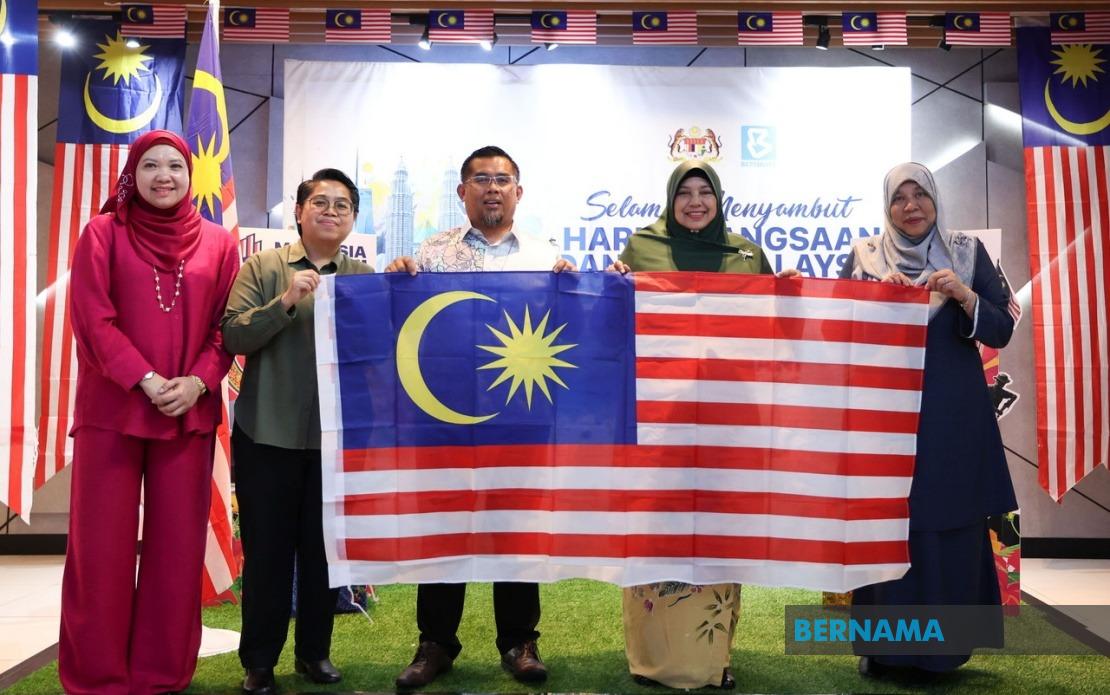
The 2026 National Day and Malaysia Day (HKHM) celebrations will represent a significant departure from recent years, with the Communications Ministry rolling out a comprehensive slate of 16 subsidiary programmes designed to deepen patriotic sentiment and reinforce communal bonds across the nation's diverse population. Speaking on Bernama Radio's Fokus 30 programme, Harun Ali, secretary of the Communications Ministry's Management Services Division, outlined how these initiatives aim to democratise the independence commemoration by extending participation opportunities beyond urban centres and elite circles. The expanded agenda reflects a deliberate recalibration of national celebration strategy, moving away from top-down ceremonialism towards inclusive, grassroots-level engagement.
Among the headline initiatives are the Kembara Merdeka Jalur Gemilang campaign, a National Month Decoration Competition, Ekspresi Merdeka, and the Kita MADANI Carnival, alongside assorted community and cultural undertakings. Each programme targets specific demographics and geographic constituencies, ensuring that Malaysians from varying socioeconomic backgrounds, age groups, and regional locations can find meaningful ways to contribute to the national commemoration. This structured diversity in programming signals recognition within government circles that a one-size-fits-all approach to civic celebration risks alienating segments of the population who feel disconnected from traditional, centralised ceremonies.
The most substantial logistical shift involves relocating the Merdeka Eve Celebration's centrepiece from Putrajaya to Stadium Merdeka, a venue freighted with symbolic resonance in Malaysian historical consciousness. The stadium stands as the birthplace of Malaysian independence itself, having hosted the proclamation ceremony decades earlier, thereby investing the 2026 celebrations with genealogical continuity and pedagogical power. This choice underscores a strategic emphasis on educational dimensions of national commemoration, anchoring contemporary celebration in historical authenticity rather than administrative convenience. Prime Minister Datuk Seri Anwar Ibrahim will deliver a special Merdeka Address at the stadium as the clock approaches midnight, an orchestrated moment designed to crystallise national resolve and articulate the Government's vision for Malaysia's continued development.
A novel attraction destined to capture public imagination is "Melukis Senja," an aerial performance incorporating Aero 3's acrobatic squadron. The display will feature precision flying manoeuvres generating smoke trails and coordinated fireworks illuminating Putrajaya's skyline, creating a spectacular visual narrative that transcends linguistic and cultural barriers. Such experiential spectacles serve multiple functions simultaneously: they provide memorable imagery amenable to social media dissemination and viral circulation, offer photogenic moments for traditional media coverage, and generate the emotional resonance that emotional commemoration demands. The investment in high-production-value entertainment reflects contemporary understandings of how national identity is constructed and circulated through visual culture in the digital age.
Harun Ali emphasised throughout his broadcast appearance that contemporary national independence should not be accepted as a given or assumed as permanent, stressing that the foundational freedoms Malaysians enjoy today represent hard-won achievements secured through struggles whose significance risks fading from collective memory. This rhetorical framing serves an important function in the current political landscape, particularly as Malaysia navigates complex questions about national unity, constitutional governance, and social cohesion. By consistently reminding citizens that independence came at considerable cost, government communications attempt to cultivate what might be termed "gratitude nationalism," positioning the state as custodian of hard-won achievements rather than merely an administrative apparatus providing services.
The planned programmes deliberately extend celebratory activities throughout the entire national month, rather than concentrating commemorative energy into brief ceremonial moments. This distributed approach acknowledges that modern Malaysians maintain varied work schedules, family commitments, and geographic dispersal patterns, making single-venue events logistically and practically challenging for broad participation. By creating multiple entry points and extended temporal windows for engagement, the Communications Ministry signals responsiveness to demographic and lifestyle realities. Such accessibility considerations carry particular relevance for Southeast Asian contexts where rapid urbanisation, internal migration, and labour market diversification have fractured traditional community structures that once naturally facilitated collective participation in national observances.
Central to Harun Ali's messaging was an explicit call for Malaysians to demonstrate patriotic commitment through the symbolic act of flying the Jalur Gemilang flag. This seemingly straightforward exhortation carries layers of political and social significance, particularly in a nation where flag displays have occasionally become contested terrain reflecting underlying tensions around nationalism, religious identity, and political affiliation. By encouraging flag-flying as "manifestation of pride and gratitude," the Communications Ministry frames this action as an apolitical, universally available expression of national belonging. However, the historical complexity of flag symbolism in Malaysian discourse means that such calls inevitably carry undertones that astute observers will decode through various interpretative lenses.
The Communications Ministry's overarching framing of these 2026 programmes emphasises the government's commitment to ensuring broad societal participation in national commemoration. This rhetorical emphasis on inclusivity and democratic accessibility distinguishes contemporary celebration practices from earlier eras when HKHM observances often remained confined to official ceremonies and institutional participation. The stated goal of "enlivening" celebrations through diversified programming suggests recognition that passive spectatorship no longer adequately sustains national identity formation in contemporary Malaysian society. Citizens increasingly expect not merely to observe national occasions but to co-author celebratory experiences through active participation in subsidiary programming.
For regional observers, Malaysia's evolving approach to national day commemoration carries broader implications about how Southeast Asian societies are negotiating the tension between preserving historical memory and adapting celebration practices to contemporary demographic and technological conditions. The emphasis on multi-platform engagement, from traditional stadium gatherings to aerial spectacles to community competitions, reflects regional patterns across Southeast Asia where governments increasingly recognise that national identity must be actively reproduced and reinforced rather than passively assumed. The 2026 HKHM celebrations thus represent not merely a calendar event but rather a test case in how Malaysia's governmental structures are recalibrating civic engagement strategies for the contemporary era.

