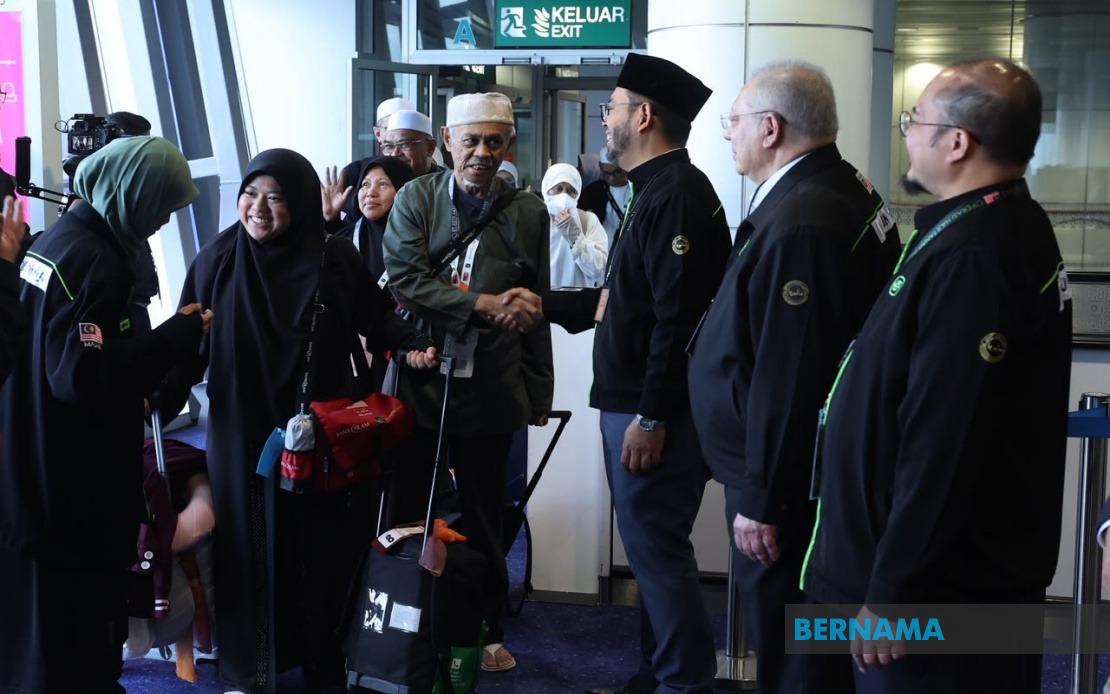
The return of 258 Malaysian pilgrims on Tuesday marked the formal conclusion of the 1447H/2026 haj season, bringing to a close what officials have characterised as a notably smooth and well-executed pilgrimage period. The group touched down at Kuala Lumpur International Airport at 12.10 pm local time aboard Malaysia Airlines flight MH 8385, having departed Madinah the previous evening at 10.14 pm Saudi time, signalling the end of months of coordinated logistical operations involving thousands of personnel across multiple government agencies and private service providers.
Dr Zulkifli Hasan, Minister in the Prime Minister's Department (Religious Affairs), officiated the welcoming ceremony alongside Deputy Minister Marhamah Rosli and Tabung Haji chairman Tan Sri Abdul Rashid Hussain. In his remarks, Zulkifli emphasised the magnitude of the achievement, noting that despite external pressures stemming from the ongoing conflict in West Asia, Malaysia managed to conduct comprehensive haj operations without significant incident or disruption to any of its pilgrims. The minister's emphasis on safety and health outcomes reflected broader anxieties within the region about security and stability during the pilgrimage season, making Malaysia's unblemished record particularly noteworthy.
Beyond domestic accomplishment, Malaysia earned international recognition for its performance during the season. The country was bestowed the Labbaikum Diamond Award, which Saudi Arabia's Ministry of Haj and Umrah recognises as the world's most prestigious honour for excellence in haj management and service delivery. This accolade carries significant weight within the Organisation of Islamic Cooperation and signals to the international community that Malaysia operates according to standards that exceed global benchmarks for pilgrimage administration. The award reflects not merely logistical efficiency but also the quality of care extended to pilgrims throughout their sacred journey.
Zulkifli attributed the season's success to a multifaceted approach involving institutional competence, human discipline, and systematic preparation. He commended personnel from Tabung Haji, the Health Ministry, Malaysia Airlines, the Immigration Department, and various logistics providers for their collective effort in orchestrating the complex movement of tens of thousands of Malaysians to and from Saudi Arabia. The minister further highlighted the role of individual pilgrims themselves, noting that their orderliness and commitment to pre-departure training programmes significantly facilitated smooth operations both during transit and throughout the pilgrimage itself.
Tabung Haji's preparation regimen emerged as a critical factor in ensuring pilgrim compliance and minimising complications during the season. The institution conducted intensive educational courses in the months preceding departure, equipping participants with knowledge about health protocols, logistical procedures, security considerations, and spiritual expectations for the journey. This investment in human preparation proved instrumental in reducing disputes, confusion, and the kind of coordination failures that can plague large-scale pilgrimages when proper groundwork is absent. The data point that all pilgrims returned in good health underscores how preventive measures and careful planning translate into tangible outcomes.
Several technological and infrastructural innovations implemented during the 1447H season demonstrated Malaysia's commitment to incremental improvement in pilgrimage administration. The MyNIISe system streamlined visa management procedures, reducing bureaucratic delays that traditionally plague last-minute documentation. Accommodation standards were enhanced through the provision of sofa beds and improved tent facilities in the Holy Land, addressing complaints from previous seasons about sleeping conditions. Additionally, Tabung Haji established round-the-clock bus services connecting mosques to accommodation sites, ensuring that pilgrims could access facilities and perform worship obligations without transport constraints. These enhancements, though operational in nature, meaningfully improved the lived experience of pilgrims and contributed to the overall positive feedback about the season.
Looking forward, Malaysian haj authorities are adopting a deliberate evaluation methodology to identify further refinements. Tabung Haji has already commenced post-mortem analyses and structured reviews examining which elements functioned optimally and which areas warrant adjustment. This institutional learning approach positions Malaysia to sustain and build upon its reputation for excellence in subsequent seasons. Rather than treating this year's success as a plateau, officials are actively soliciting feedback and conducting systematic assessments to identify overlooked gaps or emerging needs.
A National Haj Muzakarah, or consultative conference, is scheduled for August to bring together stakeholders from government, religious bodies, healthcare providers, and relevant service sectors to deliberate on issues identified during the season and propose enhancements for future operations. This structured forum allows for democratic discussion of improvements and creates institutional memory around successes and challenges. The conference format reflects an Islamic governance principle of collective consultation and demonstrates that Malaysia views haj administration as an ongoing collaborative endeavour rather than a closed bureaucratic process.
For Malaysian Muslims seeking to undertake the haj in coming years, the successful completion of the 1447H season offers reassurance about the competence and commitment of national institutions charged with coordinating this foundational Islamic obligation. The Labbaikum Diamond Award signals that Malaysia occupies a position of recognised excellence within global haj administration, a distinction that has implications beyond religious practice by enhancing the nation's soft power and standing within the Islamic world. As geopolitical tensions continue affecting Middle Eastern stability, Malaysia's capacity to conduct uninterrupted, world-class haj operations strengthens its diplomatic position and reputational standing across the Organisation of Islamic Cooperation member states and the broader Muslim community.

