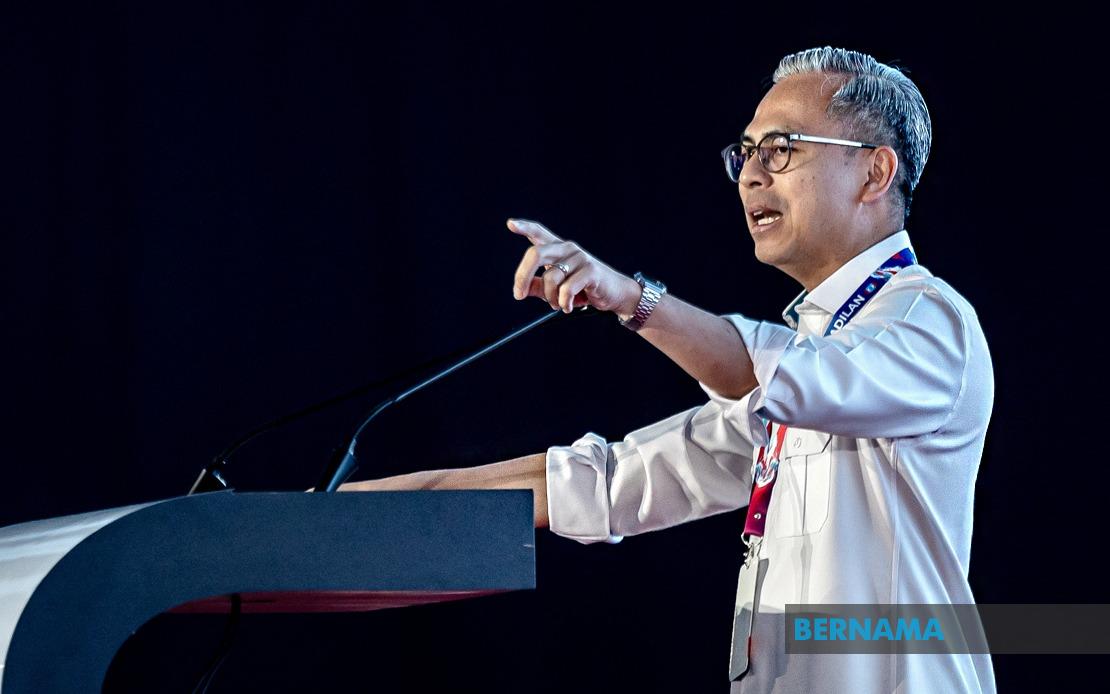
Communications Minister Datuk Seri Fahmi Fadzil has detected a meaningful shift in how ordinary Malaysians engage with their national symbol, noting that public consciousness regarding the Jalur Gemilang's specific design elements has noticeably deepened in recent months. Speaking during a visit to Melaka, Fahmi highlighted that growing segments of the population now pay careful attention to the flag's structural details—particularly the number of stripes and the precise colour sequence—a development he interprets as reflecting broader respect for national institutions during Malaysia's annual patriotic observances.
The minister's observations point to a grassroots cultural transformation where citizens have begun policing flag standards among themselves. Fahmi recounted how ordinary people now routinely count the Jalur Gemilang's stripes when encountering the flag in public spaces and verify that the final stripe remains white, turning what might have been overlooked details into a spontaneous community practice. This peer-correcting behaviour, where Malaysians gently advise one another about proper flag protocol, suggests that flag etiquette has evolved from a top-down compliance issue into something internalized within social norms.
The absence of fresh complaints lodged with his ministry during this review period underscores what appears to be improving compliance with national flag standards across the country. Where previous years may have generated concerns about improperly displayed or damaged flags, the current environment reflects what Fahmi characterises as heightened voluntary vigilance. This shift carries implications for how the government might approach enforcement of flag protocols going forward, potentially reducing the need for heavy-handed intervention when communities themselves maintain informal accountability.
While the overall trajectory is positive, Fahmi acknowledged awareness of a specific incident involving an allegedly incomplete Jalur Gemilang displayed in Batu Buruk, Terengganu. Rather than personally intervening in what appeared to be a localized matter, the minister appropriately deferred to investigating authorities, respecting institutional boundaries and the investigative process. This measured approach suggests governmental confidence that systemic improvement in flag respect renders individual incidents less consequential than they might have been previously.
An unexpected but practical development has emerged from Malaysia's vehicle-owning population, where magnetic Jalur Gemilang stickers are increasingly displacing traditional fabric flags as the preferred method for patriotic vehicle decoration. This transition offers tangible benefits for car owners—eliminating concerns about paint damage or body deterioration from flag attachments whilst maintaining visible national expression. Fahmi characterized this pragmatic shift as genuinely positive, recognizing that convenience factors often determine whether citizens engage in patriotic displays, and that removing friction points ultimately serves national interests.
Preparations for the twin celebrations of National Day and Malaysia Day are advancing according to plan, with Fahmi confirming that logistical arrangements across multiple coordinating bodies remain on track. The Ministry of Education's contribution to the festivities—including human graphic performances that will unfold in Putrajaya—represents the coordinated effort now characteristic of these observances, drawing upon educational institutions as vehicles for national expression. Supporting these visual spectacles are refined logistics systems designed to accommodate the scale of simultaneous celebrations across the federation.
The capital will host two distinctive Merdeka Eve events reflecting different organizational philosophies and scales. The Ministry of National Unity will anchor one observance at Merdeka Stadium, where Prime Minister Datuk Seri Anwar Ibrahim is scheduled to deliver remarks addressing the nation at a pivotal moment in Malaysia's calendar. Simultaneously, Kuala Lumpur City Hall will orchestrate celebrations at Dataran Merdeka, the traditional symbolic heart of Malaysian independence commemoration. Coordinating these parallel events requires careful timing and communication, with Fahmi indicating that a dedicated coordination meeting scheduled for the following day will finalize remaining procedural details.
Beyond ceremonial preparations, Fahmi's visit to Melaka encompassed a secondary but equally important dimension of government service—direct engagement with vulnerable citizens requiring targeted assistance. His visits to stroke patients R. Sathia Devi, 70, and Abu Zarin Nordin, 64, residing in Pangsapuri Kiara and Kampung Tun Razak respectively, reflected an administrative approach that extends beyond flag symbolism into tangible welfare support. These encounters allowed the ministry to assess individual circumstances and coordinate interventions spanning nutritional support through milk supplies, Social Welfare Department engagement, and rehabilitative treatment pathways.
The identification of families in need exemplifies coordination between the Information Department and ministerial offices, creating practical referral mechanisms for citizens facing health crises. Fahmi's commitment to explore alternative therapeutic avenues such as acupuncture alongside conventional rehabilitation demonstrates willingness to consider holistic approaches to recovery. By translating field observations into concrete follow-up actions rather than treating such visits as symbolic gestures, the government aims to demonstrate that ministerial attention translates into measurable improvements in citizen welfare and quality of life.

