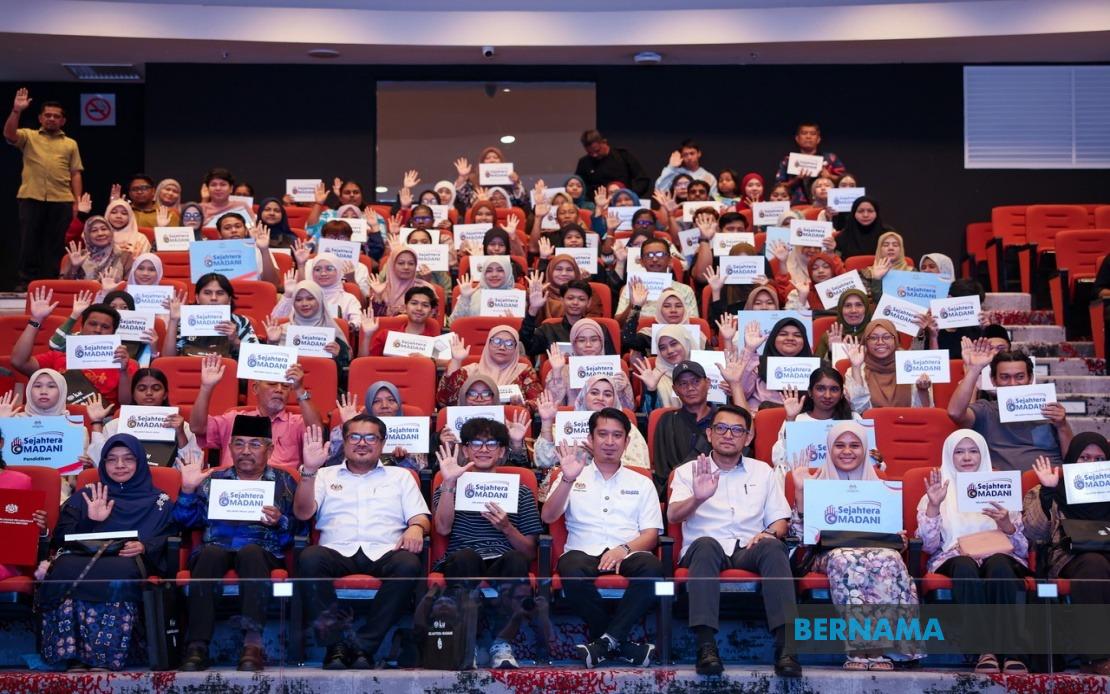
Malaysia's higher education sector has embraced a structured approach to managing generative artificial intelligence following the Ministry of Higher Education's introduction of comprehensive usage guidelines in 2024. The framework has enabled universities across the country to establish institutional policies that harness the technology's benefits while protecting academic standards and ethical conduct. Speaking at the Melaka International Trade Centre during the SPM Excellence Awards and Higher Education Appreciation Ceremony, Deputy Minister Adam Adli Abdul Halim underscored how the guidelines have created a common foundation for campuses to build tailored responses to AI-related challenges.
The ministry's directive prompted individual universities to develop their own governance structures aligned with the central framework, creating a coherent yet flexible ecosystem for managing generative AI across Malaysia's higher education landscape. Each institution crafted specific standard operating procedures and response mechanisms reflecting their particular circumstances while adhering to the ministry's overarching principles. This layered approach has proven more effective than leaving universities to navigate the technology independently, as it combines centralized ethical standards with institutional autonomy. The strategy recognises that different campuses serve different student populations and academic disciplines, necessitating contextualised implementation rather than a one-size-fits-all mandate.
Despite the guidelines' introduction, universities continue encountering instances of AI misuse, yet the structured framework now equips them with proven methodologies to investigate and resolve such breaches systematically. Rather than treating violations arbitrarily, institutions can apply consistent procedures that serve both as corrective measures and educational opportunities for students. The guidelines establish clear delineation between legitimate supplementary tool use and prohibited complete reliance on AI-generated content. This distinction proves crucial in an academic environment where tool familiarity is increasingly essential but where independent thinking and critical analysis remain foundational competencies. By codifying expectations, universities have reduced ambiguity that might previously have led to disputed academic integrity decisions.
Students enrolling in Malaysian higher education institutions now face mandatory disclosure requirements when incorporating generative AI into their academic work. This transparency mechanism allows educators to evaluate not merely the quality of submissions but the extent and appropriateness of AI integration within particular assignments. Rather than attempting to detect AI usage retrospectively through technical means, the disclosure-based approach encourages honest engagement and teaches students to think deliberately about when and how emerging tools should feature in their learning journey. The approach reflects recognition that AI technology will inevitably become embedded in professional workflows across sectors, making ethical decision-making about its application more valuable than futile resistance.
The consequences of circumventing these protocols are substantial and clearly communicated to the student body. Using generative AI to produce essays, journal articles, or other coursework without proper declaration and without adhering to established academic ethics standards constitutes a breach that can trigger disciplinary proceedings, potentially including revocation of earned qualifications. This serious enforcement framework signals institutional commitment to safeguarding the value of degrees awarded by Malaysian universities. Students must recognise that their academic credentials carry weight precisely because institutions maintain rigorous standards; permitting widespread AI-enabled plagiarism or academic dishonesty would ultimately devalue qualifications for all graduates. The explicit linking of AI misuse to academic integrity violations rather than treating it as a separate category helps students understand the underlying ethical principles rather than viewing rules as arbitrary restrictions.
Crucially, the guidelines emphasise that technology cannot substitute for the intellectual discipline that underpins higher education. Generative AI functions most appropriately as an ancillary resource that supports learning and research processes rather than replacing the cognitive work students must undertake. Students remain obligated to employ rigorous research methodologies and maintain proper academic referencing standards, ensuring that any AI-generated material is contextualised within their own analytical framework. This insistence on preserving traditional academic practices alongside technological adoption reflects wisdom accumulated over centuries of university education. While AI can accelerate certain tasks or help students overcome writer's block, it cannot develop the domain expertise, critical reasoning, or creative synthesis that distinguish genuine scholarship from sophisticated content assembly.
The guidelines also implicitly recognise that generative AI's rapid evolution requires universities to maintain flexibility in their policies. Rather than issuing prescriptive rules about specific tools or techniques, the framework provides principles that educators and administrators can apply to emerging scenarios. This principle-based approach better equips institutions to adapt as technology continues developing and as understanding of AI's capabilities and limitations deepens. Malaysian universities can thus avoid the trap of outdated regulations that become obstacles to beneficial innovation while remaining unable to address unforeseen misuse patterns.
Beyond academic integrity mechanisms, Malaysia's Ministry of Higher Education has simultaneously pursued complementary initiatives to support student welfare and educational access. During the same ceremony in Melaka, four exceptional SPM achievers received laptops whilst one hundred university students received Kasih SISWA tablets as part of the broader Sejahtera MADANI initiative. These provisions specifically target students from eKasih households who demonstrated academic excellence, recognising that financial barriers can impede capable young Malaysians from realising their potential. By combining technological governance frameworks with direct support for disadvantaged students, the ministry addresses multiple dimensions of educational quality and equity simultaneously.
The timing of these developments reflects Malaysia's strategic positioning within a rapidly digitising world. Regional competitors across Southeast Asia face identical challenges integrating generative AI into educational systems, yet Malaysia's proactive ministerial approach positions local institutions as leaders in thoughtful technology governance. Universities that successfully balance innovation with integrity become more attractive to discerning students and international partners. As generative AI becomes increasingly central to professional practice across sectors from medicine to engineering to creative industries, Malaysian graduates who understand both how to leverage these tools effectively and how to apply ethical judgment regarding their deployment will possess competitive advantages in the regional job market.
The Ministry's framework also acknowledges that academic staff require support in implementing new guidelines. Lecturers must themselves understand generative AI's capabilities to assess student work credibly, and they face pressure to update assessment methods that remain meaningful in an AI-augmented environment. Some assessment approaches that previously tested memorisation or routine problem-solving now require restructuring to emphasise synthesis, application, and creativity. Universities implementing the guidelines must therefore invest in faculty development programs helping educators become confident judges of AI integration while designing assessments that AI cannot trivially complete. This institutional commitment to supporting teaching staff elevates the likelihood that guidelines will be applied consistently and meaningfully rather than becoming mere bureaucratic exercises.
Moving forward, Malaysia's higher education sector faces the ongoing challenge of remaining nimble as generative AI capabilities expand. Students who currently study under these guidelines may encounter versions of the technology with substantially greater capabilities before they complete their degrees. Continuous dialogue between educators, ministry officials, and technology experts will help ensure guidelines remain relevant and effective. The foundational principle—that AI serves learning rather than replacing it—provides stable ground upon which institutions can build adaptive responses to technological change, ensuring that Malaysian universities maintain their commitment to rigorous, ethical scholarship even as the tools available to students and scholars continue evolving.

