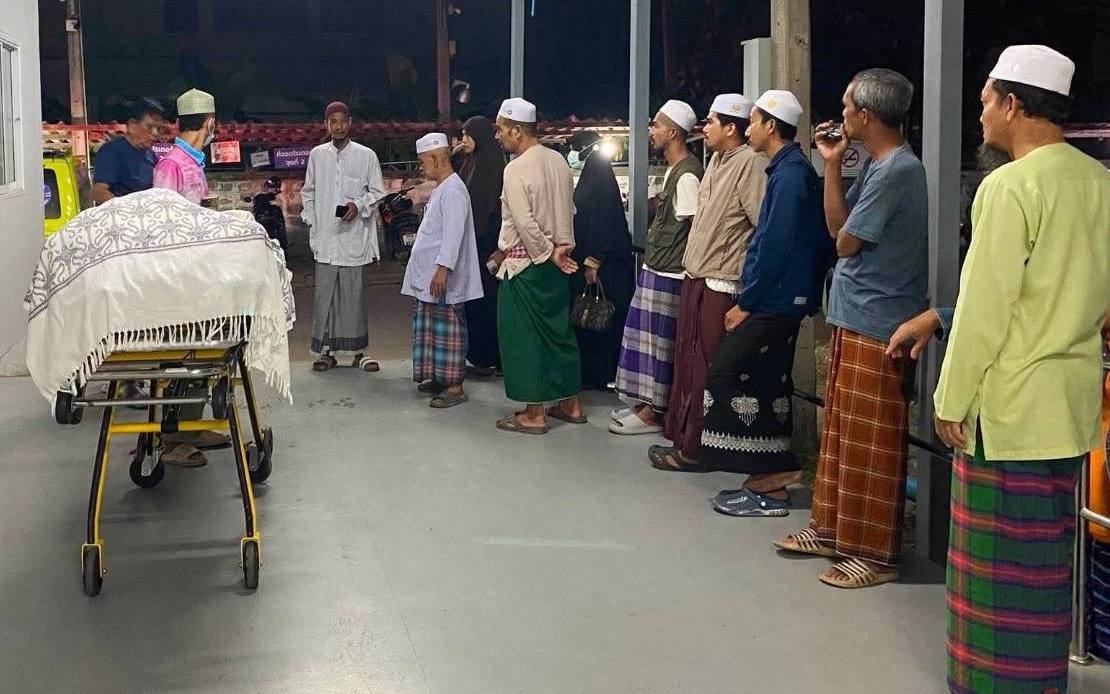
A tragic accident in southern Thailand has claimed the life of a young Malaysian student, highlighting ongoing safety concerns for Malaysians living and studying across the border. The fatal collision occurred on Saturday afternoon in the Bannang Sareng area of Mueang Yala district, when a motorcycle carrying two Malaysian nationals crashed into an electricity pole, leaving one dead and the other fighting for survival in hospital.
The deceased victim, a 20-year-old pillion rider from Perlis, suffered severe head injuries and was pronounced dead at the scene. His companion, a 22-year-old rider from Kuala Kedah in Kedah, sustained serious injuries that have left him unconscious in the Intensive Care Unit at Yala Central Hospital. According to Col Chatchai Sakdee, the Mueang Yala Police Chief, preliminary investigations indicate that the motorcycle operator lost control of the vehicle before striking the pole, though authorities are continuing their examination of the circumstances surrounding the crash.
Both men were students at Pondok Padang Pusu, an Islamic boarding school located in Yarang District, Pattani, where they were enrolled in Quranic memorisation programmes. They had been en route to the institution at the time of the collision, part of the daily routine for countless young Malaysians attending Islamic educational facilities throughout southern Thailand. This context underscores a broader pattern: thousands of Malaysian families send their children across the border each year to study at pesantren and pondok institutions, creating a significant cross-border student population whose safety requires vigilant oversight.
The Malaysian Consulate in Songkhla has confirmed the nationality of both victims and is actively engaging with the situation. However, the diplomatic mission faces a procedural holding pattern, awaiting contact from the families of the injured and deceased to facilitate necessary administrative arrangements. The process of repatriating remains and coordinating care for the seriously injured requires coordination between Malaysian and Thai authorities, a responsibility that falls on consular staff who must navigate both jurisdictions' legal frameworks and hospital protocols.
The incident raises persistent questions about road safety conditions in southern Thailand, where a combination of factors—including variable enforcement of traffic regulations, road infrastructure challenges, and the mixture of vehicle types sharing highways—has contributed to elevated accident rates in recent years. Motorcycles, which remain the dominant form of personal transportation across the region, are particularly vulnerable in collisions with fixed objects such as utility poles. For young foreign riders, unfamiliarity with local road conditions and traffic patterns may compound these inherent risks.
The tragic loss resonates particularly keenly within Malaysia's Islamic education circles, where cross-border pesantren enrollment represents a well-established educational pathway. Institutions like Pondok Padang Pusu attract students seeking intensive Quranic memorisation training, combining religious instruction with residential accommodation. These schools typically serve as tight-knit communities where students from different Malaysian states form lasting bonds, making accidents involving their members feel acutely personal to the broader student body and alumni networks.
For Malaysian families with children studying in southern Thailand, this tragedy serves as a sobering reminder of the hazards inherent in daily life across the border. While road travel between dormitories and educational institutions is routine, it remains unpredictable. Parents and school administrators alike grapple with balancing the educational opportunities these institutions provide against genuine safety concerns that surface with devastating regularity.
The consular office's ongoing efforts to contact the families reflect standard diplomatic protocols, yet they also highlight the logistical challenges inherent in cross-border crises. Information flows must traverse language barriers, bureaucratic systems, and the emotional shock that accompanies such sudden tragedy. The injured student's unconscious state adds urgency to coordination efforts, as medical decisions may require family input while treatment windows remain time-sensitive.
Thailand's southern provinces, while culturally and historically connected to Malaysia through shared Muslim Malay communities, remain jurisdictionally distinct. This distinction becomes acutely relevant during emergencies, requiring Malaysian officials to advocate for their citizens' interests within Thai medical, police, and legal systems. The incident underscores why maintaining robust consular presence and emergency response protocols in border regions remains essential for protecting Malaysian nationals abroad.
As investigations continue, authorities in both countries will likely examine whether road conditions, traffic signage, or motorcycle maintenance factors contributed to the loss of control. Such findings, when eventually released, could inform safety recommendations for the broader community of young Malaysians regularly traversing southern Thailand's highways. Meanwhile, the focus remains on the injured rider's recovery and supporting the bereaved family through arrangements that cross international lines and administrative systems.

