A Malaysian man's brief and unsuccessful venture into transnational fraud has landed him in jail, highlighting how even fleeting involvement with organised crime syndicates can carry severe legal consequences. Yip Chee Ming, 30, received a 16-month and two-week jail sentence on Friday after pleading guilty to membership in an organised crime group. His curious case underscores the sprawling network of scam operations that continue to plague Southeast Asia, despite law enforcement efforts to dismantle them.
Yip's entry into the criminal underworld was remarkably informal. In October 2024, a friend named Jason approached him with an unusual job opportunity—becoming a scam caller for a Cambodian-based syndicate. Rather than dismiss the proposition outright, Yip agreed to explore the offer. The two were subsequently added to a Telegram group by Tang Soon Wah, identified as one of the syndicate's leadership figures. Tang extended an invitation for them to travel to Cambodia to inspect the operation's physical headquarters, a five-storey facility in Phnom Penh that employed security personnel to control access.
The syndicate itself operated at an industrial scale. Between September 2024 and September 2025, the organisation orchestrated at least 528 reported scam incidents, extracting approximately S$52.5 million from victims. The group specialised in government official impersonation schemes, cold-calling Singaporeans and deceiving them into believing they were communicating with legitimate authorities. The operation maintained a hierarchical structure: leadership managed overall strategy and compensation, supervisors and trainers oversaw individual callers, and a dedicated money laundering division converted illegally obtained funds into cryptocurrency. Court documents revealed the syndicate contained at least 78 suspected members operating across multiple jurisdictions.
After returning to Malaysia to deliberate, Yip and Jason decided to proceed. They flew to Cambodia on November 21, 2024, and Yip began his tenure the following day. The compensation package seemed attractive on paper—US$1,800 in cryptocurrency monthly, plus a one percent commission on each successful fraud. His role required impersonating a bank officer while reading from scripts designed to convince victims to transfer funds. However, Yip possessed neither the aptitude nor the persuasive ability required for the position.
Despite faithfully adhering to the provided scripts, Yip failed to defraud anyone on his first day. He attempted again on November 23, but met with identical failure. Recognising that Yip was a liability to operations, Tang summarily terminated his employment that same day and erased their Telegram correspondence. The entire episode lasted approximately 36 hours. Court documents contain no information regarding how Yip eventually returned to Malaysian territory.
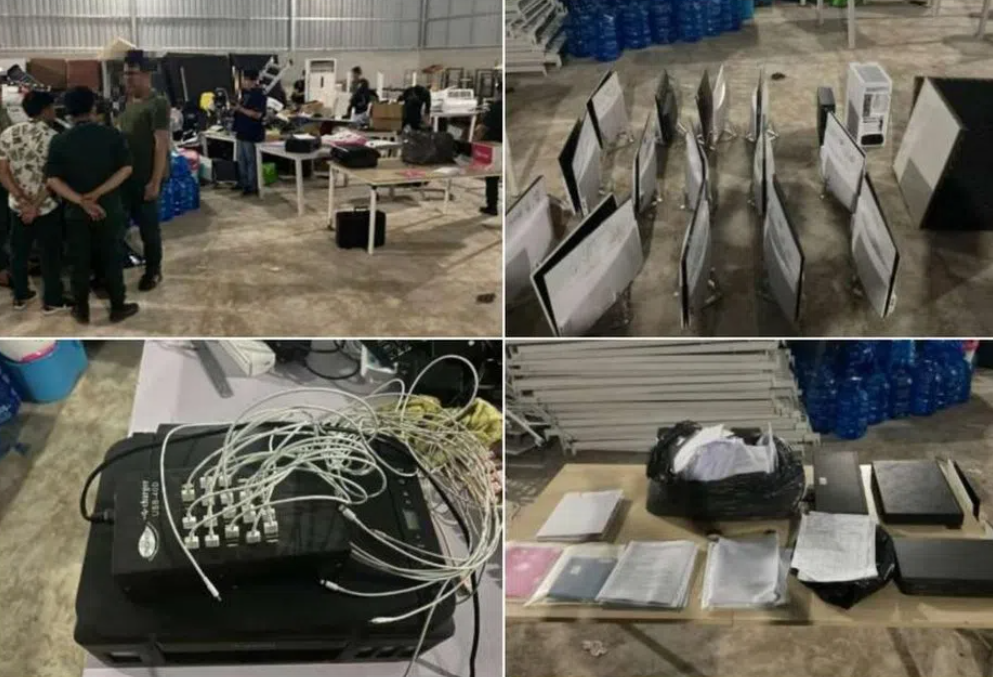
Yip's arrest came nearly ten months later, on September 9, 2025, during a coordinated enforcement operation between Singapore Police and the Cambodian National Police. He was among twelve individuals charged in connection with the syndicate. Nine of the accused were Singaporean citizens: Deon Tan Ke Yuan, 25; Lester Ng Jing Hai, 29; Christy Neo Wei En, 29; Heiqal Lee, 30; Tay Jun Xiang, 32; Ng Wei Kang, 33; Zachary Lee Jia An, 35; Melvin Tan Wenzheng, 35; and Lau Haoxiang, 39. The remaining defendants included Yip and fellow Malaysian Muhamad Asyraf Anuar, 29, as well as Filipina De Villar Rizalyn Panganiban, 34.
While Yip's direct victim count remained zero, his guilty plea acknowledged the seriousness of complicity in organised crime infrastructure. During sentencing, prosecutors highlighted an additional cheating charge that was considered. The court applied aggravating factors typical to transnational organised crime cases, resulting in the substantial 16-month and two-week custodial term. Under Singapore law, membership in an organised crime group carries maximum penalties of five years imprisonment and fines up to S$100,000.
The case illuminates a troubling trend in Southeast Asian fraud. Despite overall reductions in scam incidents during 2025, government impersonation fraud cases surged dramatically. The specific category registered 3,363 reported cases in 2025, more than doubling the 1,504 cases recorded in 2024. This scam type now ranks as the fifth most prevalent fraud category in Singapore. The proliferation suggests that criminals have refined their tactics and messaging, making such schemes increasingly convincing to unsuspecting members of the public.
For Malaysian readers and observers across the region, Yip's case serves as a cautionary narrative about the accessibility of transnational criminal recruitment and the legal jeopardy that follows. The ease with which individuals are approached through social networks and peer referrals demonstrates that criminal syndicates operate with relative impunity in several Southeast Asian jurisdictions, particularly Cambodia, where they reportedly maintain physical compounds with minimal interference. The involvement of multiple nationalities underscores the transnational nature of modern organised fraud, with operatives drawn from Malaysia, Singapore, the Philippines, and elsewhere.
The case also reveals the compartmentalised structure of sophisticated scam operations, where money laundering, training, and caller functions remain deliberately segregated. This organisational design provides redundancy; when Yip proved ineffective, his removal posed no significant disruption to overall syndicate operations. The meticulous use of encrypted platforms like Telegram and the deliberate deletion of communications reflect operational security practices typically associated with drug trafficking or terrorism financing networks.
Cambodia's emergence as a hub for transnational organised fraud represents a significant challenge for regional law enforcement. The nation's combination of lenient penalties, lax regulatory oversight, and strategic geographical positioning have made it an attractive base for criminal entrepreneurs targeting wealthier Southeast Asian neighbours. Joint operations like the September 2025 police action demonstrate growing cross-border cooperation, yet the scale and profitability of these networks suggest that enforcement efforts remain substantially outpaced by criminal innovation.
For Malaysian citizens, the implications extend beyond cautionary tales. The presence of Malaysians within these operations—both as recruiters like Tang and as junior operatives like Yip—indicates that the country remains a significant source of both victims and perpetrators. Enhanced public awareness campaigns, stricter penalties for transnational crime facilitation, and improved inter-agency coordination with regional partners represent potential policy responses. Until such measures gain traction, individuals with limited employment prospects will continue receiving recruitment overtures for positions in Cambodia, frequently with tragic consequences for themselves and their intended victims across the region.

